Villa La Angostura, Bariloche, Peninsula Valdez

If you don’t like mountains or hiking then look away now (although there are some bonus whales at the end). As predicted at the end of my last post, we really, really have enjoyed our time in Bariloche, Villa La Angostura and San Martin. In the latter we spent our first full day hiking up to a lake from where snow-topped mountains peeked above forested hills.

On our second full day in San Martin we embarked upon a 29km hike which included a 1km height gain up to a 1,700m peak. It was an exhausting climb there, particularly through knee-high snow towards the top. But, when we reached the summit, in every direction we looked we could see more of those snowy mountains, as well as a few immense volcanoes. Beneath us was the verdant valley through which we’d just walked. I’d rate this hike as one of the best we’ve ever undertaken.

Another highly-rated hike came just a couple of days later. But first we were treated to a jaw-dropping bus journey from San Martin to Villa La Angostura. This route winds through the mountains and forests, passing turquoise lakes and rapid rivers. For three hours I couldn’t tear my eyes away from the spectacular scenery beyond the window. 

โ€‹

โ€‹
โ€‹After we arrived we collected our escort dog (every time we go for a walk in this region a dog attaches itself to us for an impromptu walk) and headed to the large lake which was shrouded with woodland. A very small river connected this lake to another. This smaller – but still huge – lake had a magnificent setting amongst the mountains.

Now it was time for that other highly-rated hike. It was a big challenge, starting steeply upwards, traversing through an icy river (necessitating bare feet and rolled-up trousers), more uphill and then wading for an hour through waist-high snow. Exhausting but truly memorable.

The scenery and hiking here are on a par with the Alps. The fondue, however, is not, but I admire the effort to mimic all things Alpine. Another big difference is the Mapuche population. This indigenous tribe fought off both the Incas and the Conquistadors. Absorbed into the new independent countries of Chile and Argentina, the Mapuche folk found that they’d lost huge amount of territory. The tiny pockets which remain today feel as though they’re considerably more connected to the environment than the encroaching Western suburbs.

Cerro Negro, above Villa La Angostura

 
After so much hiking our muscles are sore and I’ve developed a bad cold. So, what do we do? Yep, more hiking. This time we headed down, towards the lake and where a large wooded peninsula is connected to the mainland by a tiny isthmus. We took a boat to the far end of the peninsula – a journey so gloriously scenic the time flew by – then commenced the walk back.

The road on which we came to this place took us onwards and didn’t get any less spectacular. We arrived into Bariloche and checked into Penthouse 1004, a hostel at the top of a ten-floor building and with incredible views over lake and mountain. The town itself is bursting with chocolate shops and cutesy Alpine architecture.

It began to rain. We thought it wouldn’t stop and would seriously dent our hiking plans. But then the forecast provided a brief window of sun and so we set off once again for the mountains.

One of the best hot chocolates I’ve ever enjoyed was served in the remote mountain hut Refugio Frey nestled in the peaks behind Bariloche. It sits surrounded by serrated peaks and we waded through thick snow, four hours uphill. When we arrived it looked closed but then a rugged mountain man emerged and told us it was open.

Refugio Frey in deep snow

“Tea? Coffee?” the refugio manager asked as soon as we stepped in, exhausted and bedraggled.

“Don’t suppose you have hot chocolate?” I replied.

“Of course!”

Thus we found ourselves enjoying a hot, chocolatey delight in this small stone hut looking out on a view so incredible it seemed unreal. Sadly we then had to return, through deep snow, under dripping trees and over swollen streams.

Somehow I managed to book in advance the perfect place in which to recover from all this hiking. Our room in the Charming Lodge & Spa, just outside of Bariloche, came with its own steam room and sauna. It also had a large jacuzzi in the bedroom, which was wrapped in windows overlooking the lake far below and those multitudinous mountains we’d spent the past several days walking in.

Refreshed, well-exercised and blown away by Argentina’s spectacular Lake District, we went to the Tren Patagonico station. There were a few hours to spare before the train departed but, burdened with luggage, we had no choice but to sit in the waiting room, looking at old photos of the steam trains which used to ply this route. The room grew busier and busier, soon we were boarding the weekly overnight train to San Antonio Oeste.

Tren Patagonico from Bariloche to San Antonio Oeste

Such a rare train has traffic stopping and people coming out of their houses to wave. The dining car was busy with passengers and served a perfectly decent steak. That night I fell asleep hoping that the partially buried rails wouldn’t result in too many derailments and that we would be delivered at least only a couple of hours late.

We were lucky. The train arrived at 07:05 and we were on a coach to Puerto Madryn shortly after 9. There we boarded a bus to Puerto Piramides on Peninsula Valdez. Here be whales. Lots of ’em.

We could see them from land (as well as a large colony of sea lions), but we could see them much, much easier from a boat. In fact, we watched as a mother and calf right whale appeared a couple of metres in front of us, the water so clear that we could watch the behemoths rise up from the depths then snort out water as they surfaced, soaking us in the process. Truly incredible.
โ€‹
โ€‹

โ€‹

Colonia, Punte del Este, Cabo Polonio, Montevideo, Buenos Aires, San Martin de los Andes

In the boarding area of the Colonia Express are videos of the ferry attendants smiling with manic delight at passengers who look as though they’re on their way to a 5* all-inclusive Seychelles resort. Today’s reality, however, was somewhat different. The attendants held on for dear life as they struggled to distribute bags to ill passengers as the ship was hurled violently about, skimming towards Uruguay.

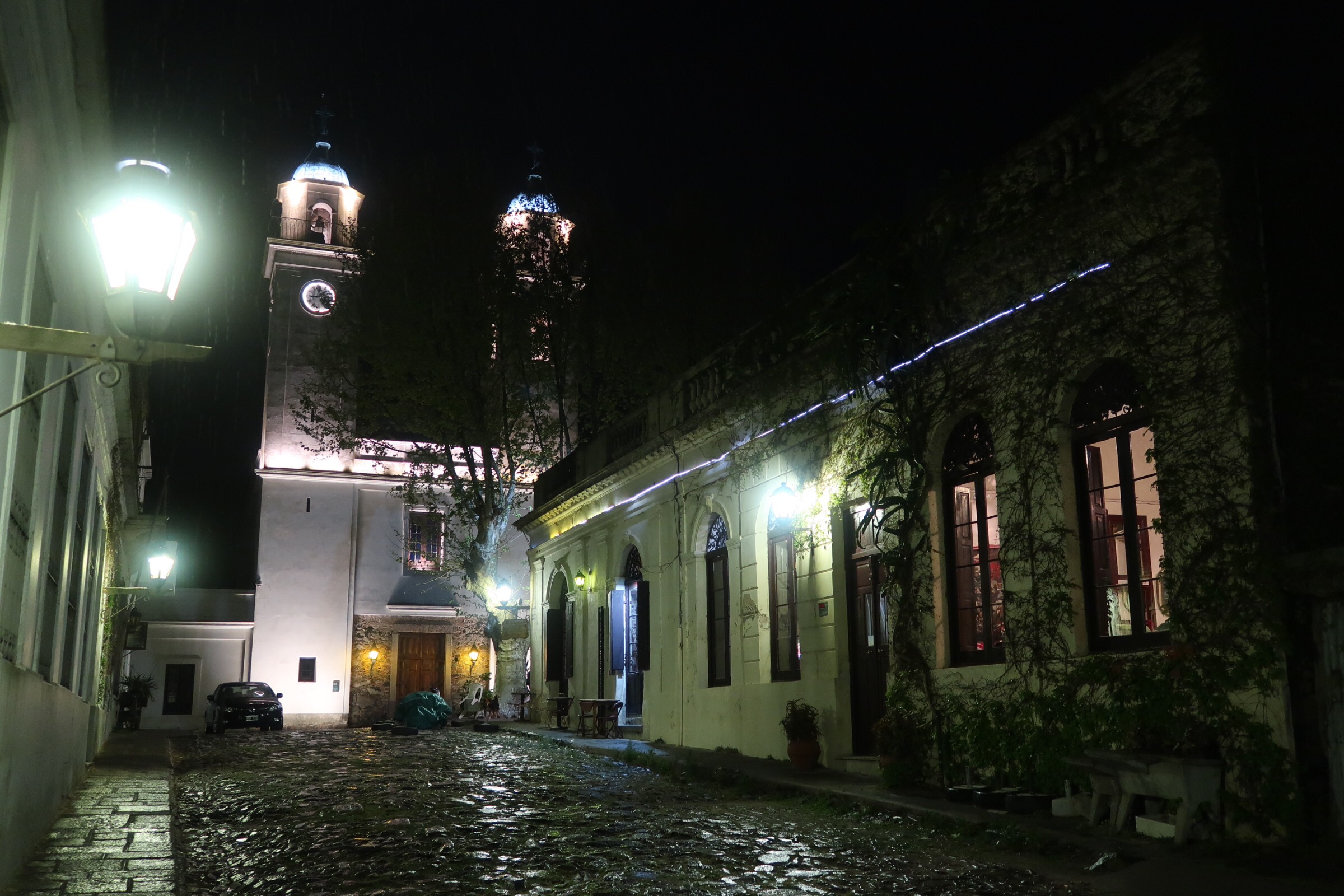
Glad to be back on land, we found Colonia – Uruguay’s oldest settlement – to be a charming little town. In it’s small cobbled historic area were remnants of the old city wall, as well as a functioning lighthouse. It’s incredibly expensive to eat out in Uruguay and so we shunned the restaurants for the pleasure of cooking for ourselves in the hostel. 

Colonia's old town
Colonia’s old town


Once again we were fortunate to have relatives to stay with. They lived in a beautiful suburb of Montevideo, minutes from endless beaches and wealthy streets lined with characterful houses modelled after Italian palaces, Moorish villas and English thatched cottages. We were also treated to a traditional parilla, which involves burning logs to one side of a brick oven (open on one side and with a chimney) then raking the embers beneath a grill on which rests slow-cooking meat. Delicious.

One of the places to see and be seen in South America is Punta del Este. This city tapers to a point and is flanked by golden sandy beaches. If you’re lucky you may see a whale pass by. Nearby is the wonderfully surreal whitewashed buildings of Casapueblo, the creation of local artist Carlos Pรกez Vilarรณ.

Taking local bus 24 to San Carlos, then the 12:10 to Cabo Polonio, we found ourselves at a small bus station with our regular coach on one side, large 4×4 trucks on the other. These trucks are the only public transport between the road and the village 7km away. In an adventurous spirit we chose to walk through the forest, over the dunes and along the beach.

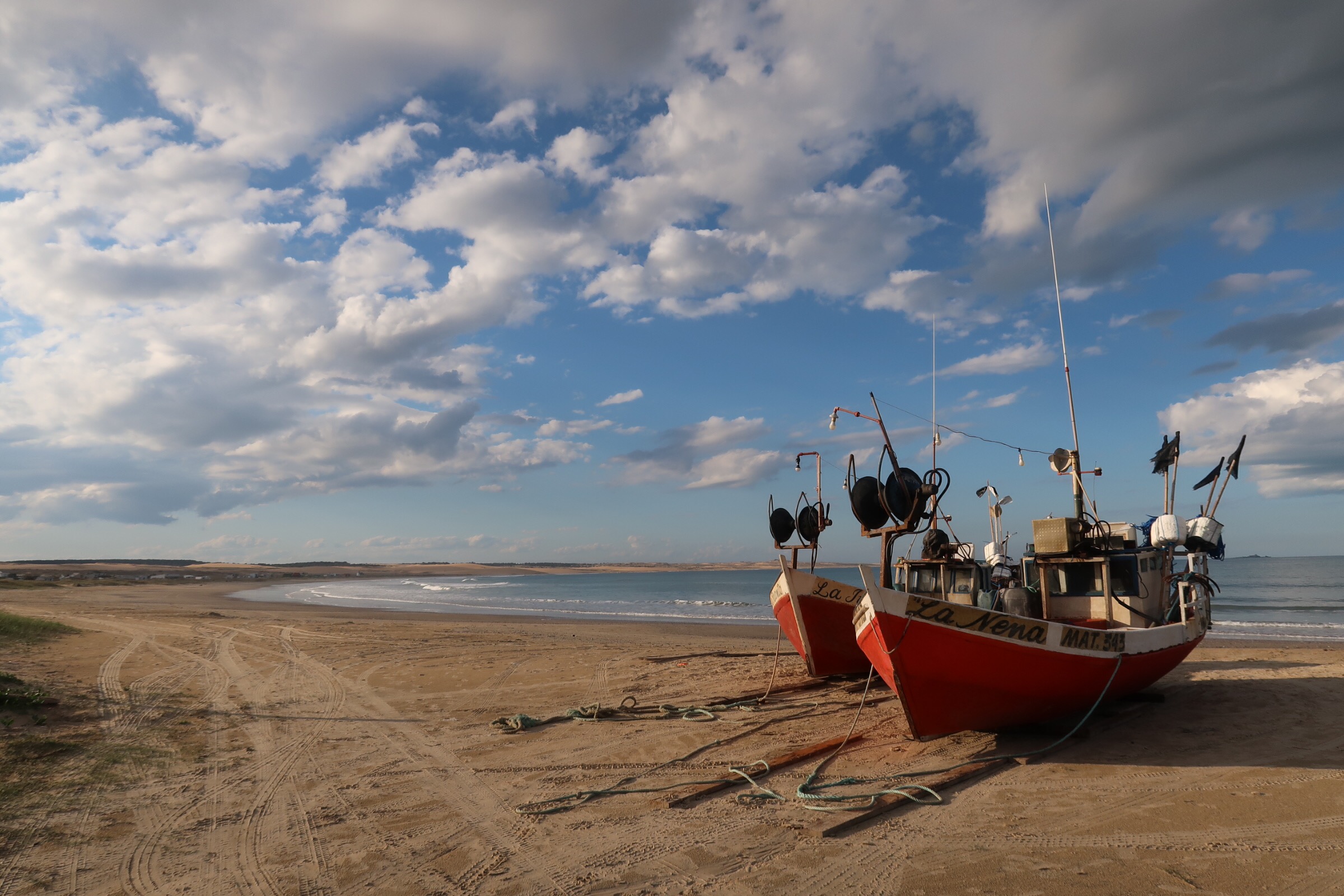
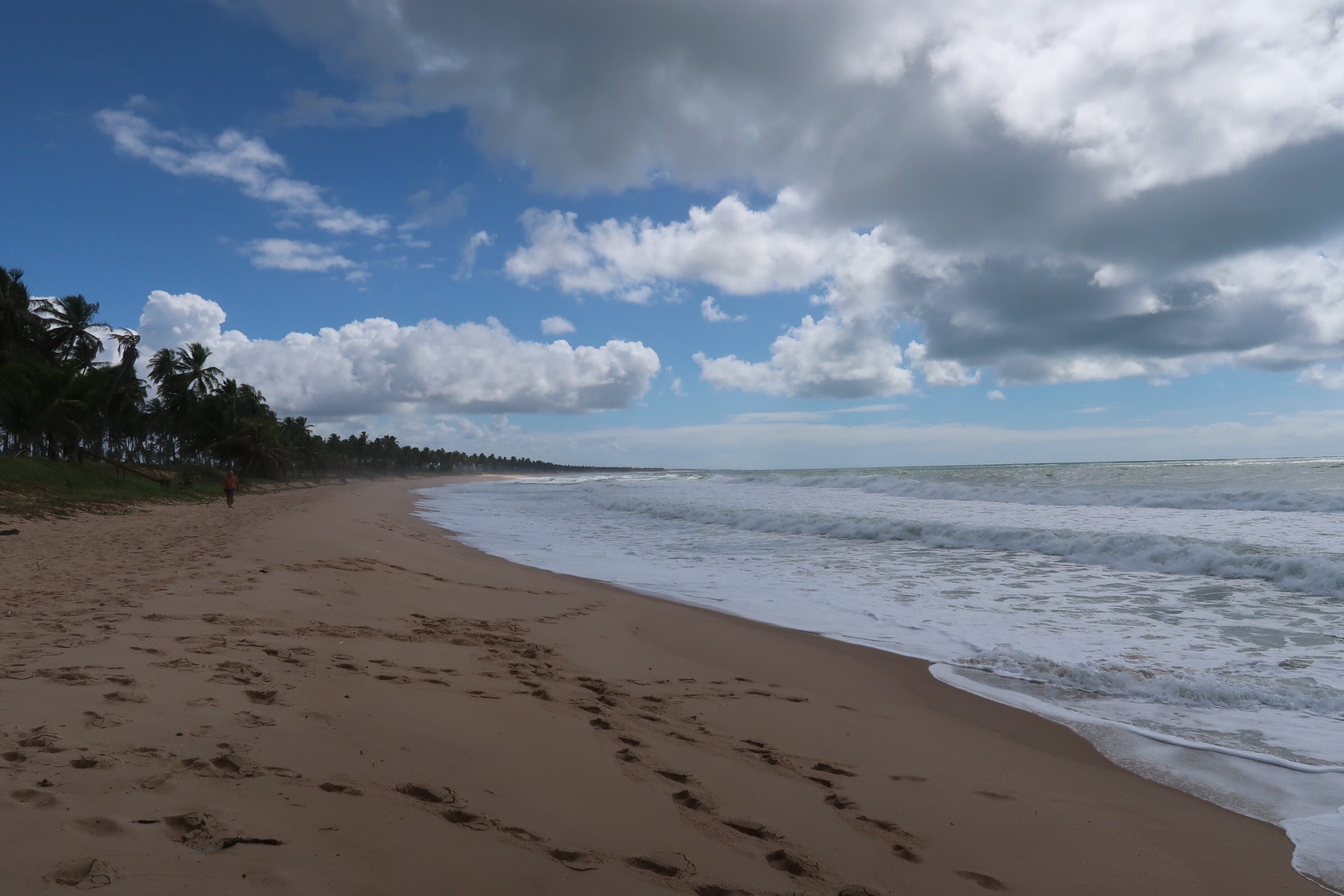
Small white concrete buildings and wooden shacks make up the village of Cabo Polonio. This is a place totally off the grid; no electricity, no running water. What it lacks in services it makes up for in stunning views. Pine forests behind, wide and empty sand beaches either side and rocky islands in front. At the head of this tiny promontory towers a working lighthouse, just beyond rest dozens of bickering sea lions.

The wide empty beaches of Cabo Polonio


Waking up to a view of the ocean and those noisome aquatic creatures splashing about was almost as good as the vast spread of stars visible in the perfectly clear night sky. Sand dunes can be found just beyond one of those vast beaches. Clamber over the dunes and you find yourself in a huge pine forest with not a soul around.

An easy journey on the 3:10 to Montevideo where the next morning I spent an hour talking through my recommendations for email marketing in the travel industry as a favour to Anna’s relative who works in a large Uruguayan agency. Interesting to learn about the Uruguayan market. 

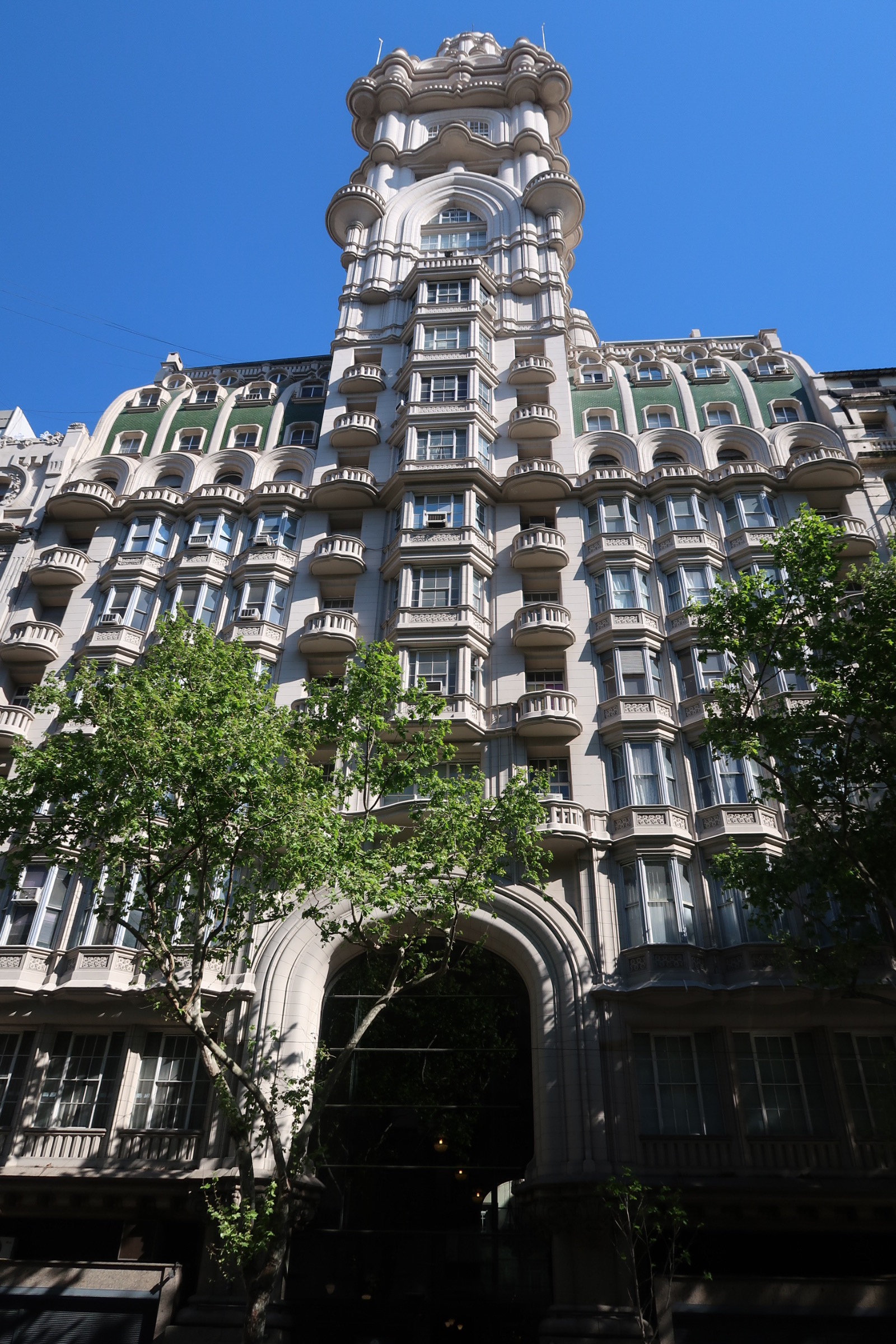
Back in Buenos Aires we enjoyed a long, free (tips encouraged!) walking tour and learned about the history of the country and city, marvelled at some wonderful architecture (including a building inspired by Dante’s Divine Comedy and completed in 1923 – when Argentina had the 7th largest economy in the world) and were given an overview of why the economy and national politics are in such a mess.

Buenos Aires building inspired by the Divine Comedy


That night the opening of the youth Olympics, hosted by Buenos Aires, took place along the huge boulevard in the city centre. After a superb steak dinner at Parilla Pena we found a place to watch the flame being lit and fireworks shooting into the night. The next day we met with someone who’d been in the Cabo Polonio hostel and, as they lived in Buenos Aires, took as to some of her favourite places including a long street market and tango dancing in a lively plaza.

Night fell on the flat fertile Pampas on our overnight coach journey to San Martin de los Andes. Soon after dawn we watched as snow fell and mountains appeared in the distance. We arrive in time to enjoy a 10km hike to a viewpoint overlooking the large lake as well as pine forests and snowy mountains. Further along the way is a tiny island set in the freezing lake water. We’ve over ten days in this area, I think we’re going to like it a lot.

โ€‹

โ€‹

Cordoba, Mendoza and the Andes, San Antonio de Areco, Buenos Aires

Maurizio and I conversed in Spanish for a few minutes before we both realised it wasn’t our native language. He had been in Argentina for a year as part of his Engineering course and was due to return to Italy in a couple of days. He invited use to celebrate with him when we arrived in Cรณrdoba after a flight with the fairly dubious new low cost airline flybondi.

I’m not sure we’d have found this part of town were it not for Maurizio. Nueva Cรณrdoba really comes alive at night with hipster bars flinging open their distressed wood doors to lumberjack-shirted students quaffing craft beers. We left our Italian friend to continue his celebrations so that we could have an earlyish night.

Walk through an open door in downtown Cรณrdoba and, chances are, you’ll find yourself in either a church, cathedral or museum. The cathedral has a stunningly intricate interior, as do most of the churches here. This is an old city – founded over 500 years ago – and history seems to seep through every wall.

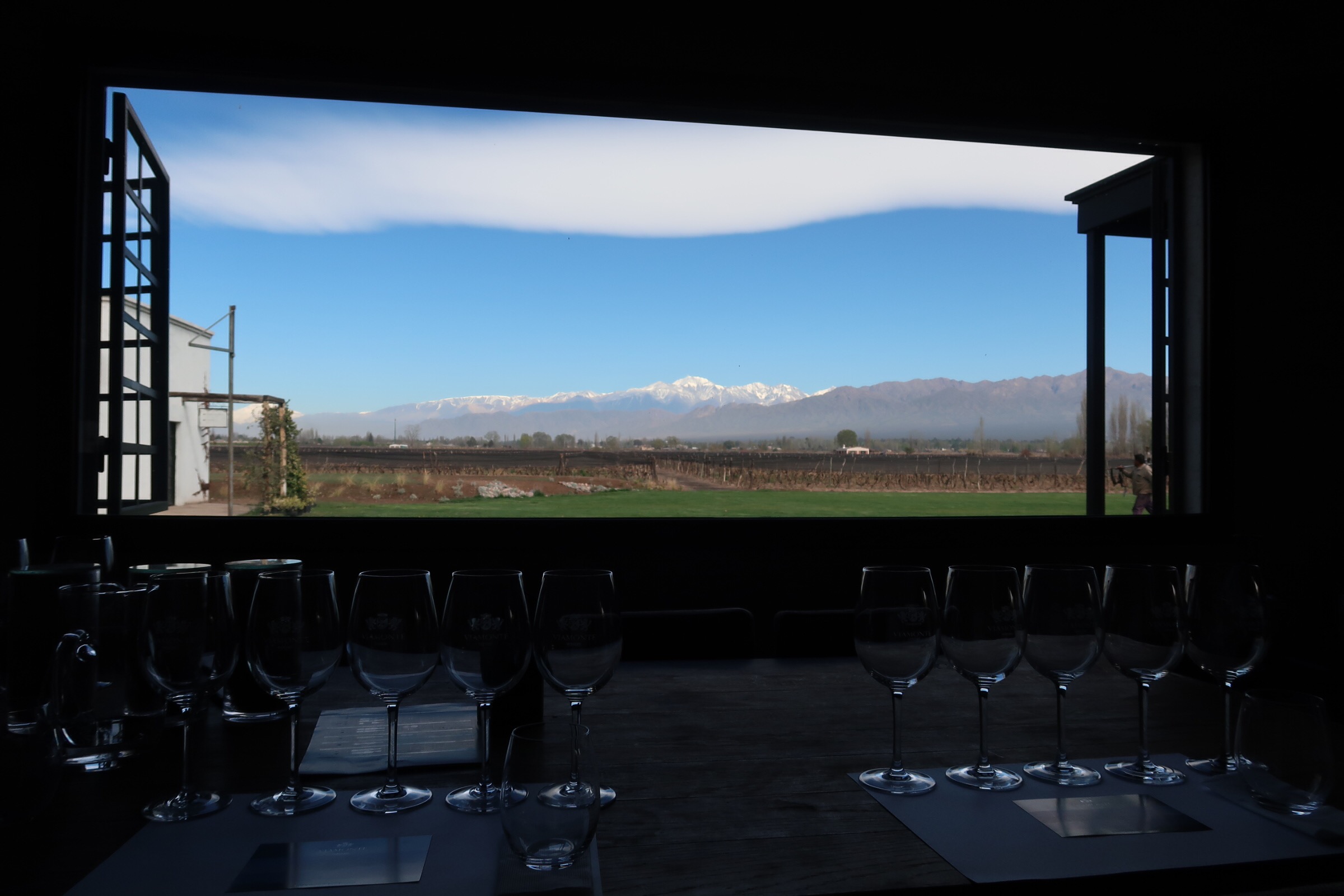
View from a winery near Mendoza


Our first overnight bus from Cรณrdoba to Mendoza was an educational experience. We learned that eye masks are important, that you get a large (though not particularly tasty) dinner, that having a bag to raise your feet on the already generous reclining seat will have you almost horizontal. With these learnings it’s just about possible to enjoy a decent nights sleep.

If you don’t look where you’re going in Mendoza then you risk falling into the channels which run down the sides of each street. These channels are part of an ingenious irrigation system which covers the city and beyond. They are fed by one river and sluice gates portion out the water to different areas on an allotted day of the week.

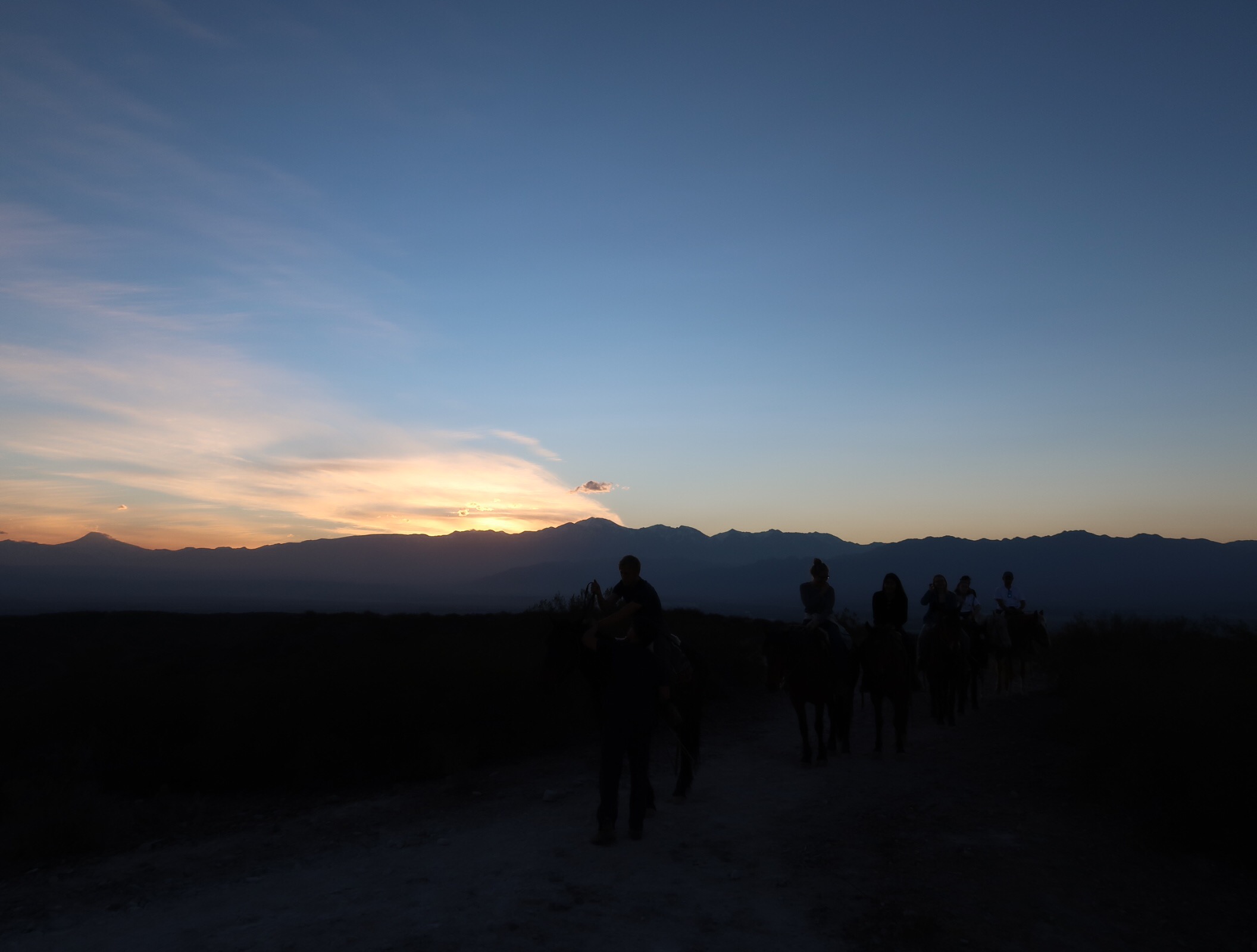
Apart from the irrigation system (and the Diplomatic Hotel- our first taste of South American luxury) there isn’t much of interest in Mendoza. Take bus 15 or 16 out of the city, however, and you’ll find yourself in wine country. Chacras de Coria is a charming village redolent of the pioneering days of years ago and surrounded by vineyards and wineries. Riding a horse into nearby hills as the sun sets over the Andes is a wonderful way to experience this place.

Sunset over the Andes, from horseback


Cycling (bikes hired with the excellently named Baccus Bikes) between wineries along segregated tracks is another great idea, that is until you get to your third glass. Then things get a little wobbly. Still, those effortlessly elegant wineries not only offer tastings of the area’s famous Malbec, but also regionally-produced olive oil and bread, which helps keep you at least a little focused.

Sun-blessed but rain-shunned, those vineyards wouldn’t be here were it not for the nearby mountains shedding their snow every year. We had a good view of them on a horse riding trip into the foothills where we witnessed a magnificent sunset.

Taking a Huantata tour into the high Andes is an unforgettable journey. Foothills become 4,000 metre-high mountains, which become 6,000 metre goliaths. Aconcagua – at 6,960 metres the largest mountain outside of Asia – shoulders above them all.

These aren’t gentle mountains. They stab at the sky with narrow, towering peaks. They’re remote, cold and wind-blasted. A sign of climate change: the glaciers here are in full retreat with a snowless ski resort closed all season and vintners staring with worry at the ever-decreasing water run-off.

Abandoned Transandine Railway at 3,200m


Accompanying the road through the mountains is the abandoned Transandine Railway. Inaugurated in 1910, the railway shut in 1984 after years of battling with huge rockfalls. The rails are still mostly visible as are occasional decrepit stations where the steam trains used to refill. 

Just short of the border with Chile we arrive at a most desolate place, surrounded by inhospitable mountains and furnished with the rusting sheds, signals and water tanks of the Transandine. It must have been a spectacular journey by train, but, apparently, one which was long, uncomfortable and unreliable.

My description of the Andes so far make them seem to be incredibly bleak, but the glistening snow peeks above hills of vivid red, green and yellow due to the large amounts of iron, copper or sulphur in the rocks. It is, in fact, quite beautiful, so much so that Brad Pitt filmed Seven Years In Tibet here.

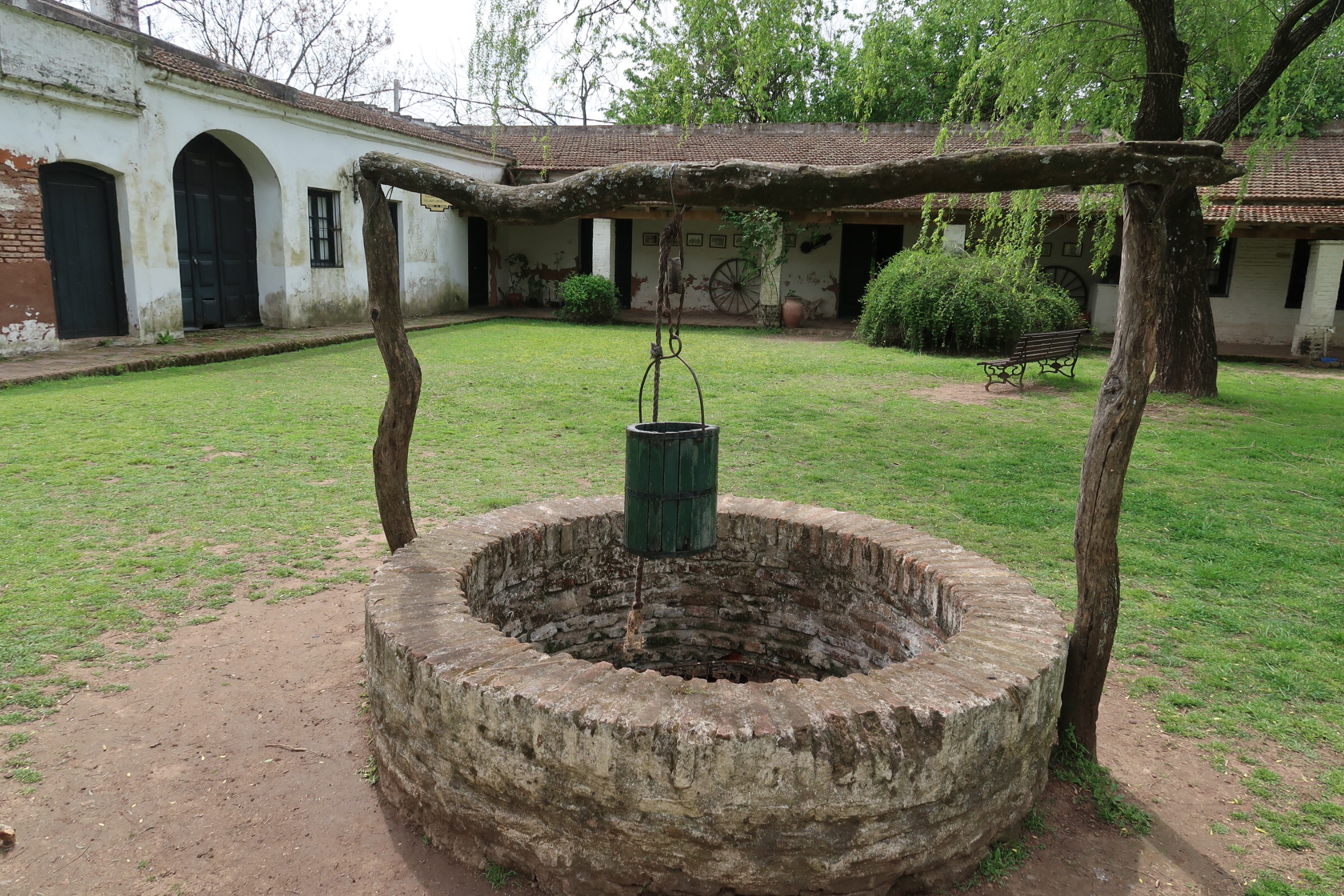
An uncomfortable overnight bus journey away, San Antonio de Areco is smack in the middle of gaucho (Argentinian cowboy) country. And boy howdy does it feel like you’ve stepped into a Western. A lot of the buildings in the centre of town were built in the early 20th century and still have their decorative facades. On the edge of town is a small collection of even older whitewashed buildings where relics of gaucho days are preserved.

San Antonio de Areco


The gaucho lifestyle still exists today. Horses graze on the vast tracts of grassland and the ubiquitous Argentinian barbecue seems particularly prevalent here. Whilst Areco’s glory days may be behind it (I spied more than a few potential gauchos – tall, silver-haired and moustachioed – working as shopkeepers, butchers, waiters etc.) there are many signs of its well-preserved past.

La Posada do Don Segundo was our excellent B&B here. When we realised that a huge strike had foiled our plans to travel to Buenos Aires, the owner very kindly gave us a 1.5 hour lift. Staying two nights in the lovely Palo Santo hotel, we got to enjoy the vibrant Palermo district. Here you’ll find trendy cafes and eateries with seating on the street, as well as a diverse collection of boutique shops. The street art here is magnificent and the low-traffic vibe very chilled out.

Recoleta cemetery
Recoleta cemetery

Beyond Palermo the rest of the city is a riotous cacophony, including the large parks just south of the River Plate – not helped by the 12-lane roads which run past. Recoleta, Retiro and Centro are where the true grandeur begins. Buenos Aires is an architecture fan’s nirvana. If you fancy something a little macabre then the famous Recoleta cemetery is the place for you. Dozens of quiet avenues lined by large tombs are filled with a sense of peace, despite the hordes of tourists seeking out Eva Peron’s resting place.

It’s true what they say; Buenos Aires does feel like a European city. But it’s proudly Argentinian and we’ve barely scratched the surface. Tomorrow we go to Uruguay but we’ll return to this city in several days to see what other delights it holds.

Ilha Grande, Paraty, Sรฃo Paulo, Iguassu Falls

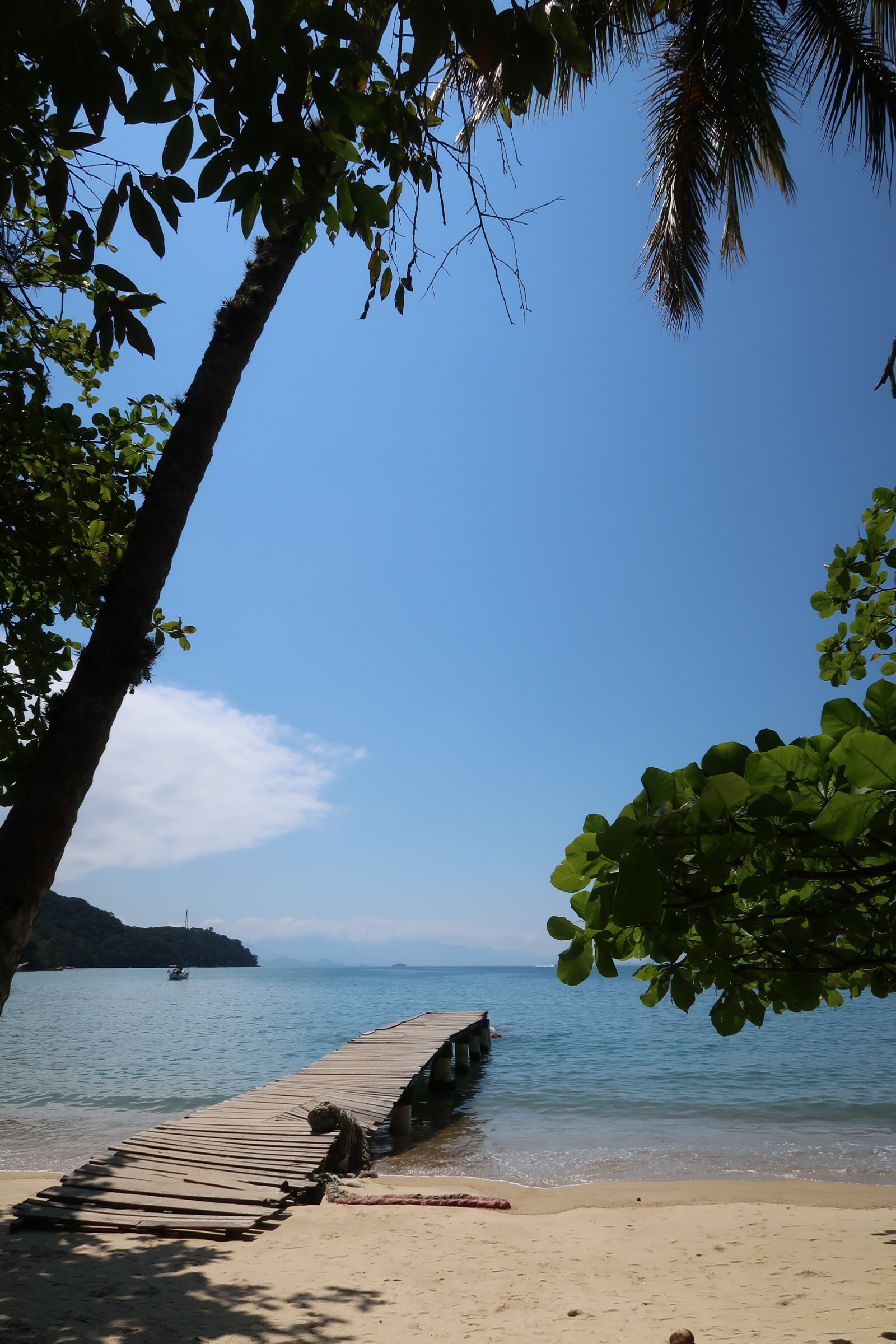
How is it possible that a place such as Ilha Grande exists? It is impossibly paradisiacal with its many, many soft sandy beaches, views into the arboreal interior and easy-to-follow trails stringing it all together. The little main town of Abraao is lively and cute and easy to reach with 15-min speedboats from the mainland (or a slower, cheaper ferry).

What to do here; pick a trail, find a beach and marvel at the magnificence of it all. Return back to town by foot or, if you’re feeling lazy, easily affordable water taxi, and delve into the party atmosphere.

Lopes de Mendes beach is found on the top 10 list of beaches of the world in many publications. This is for a good reason; the sand is so fine and white it’s like walking on flour, the sea is sparkling blue, it’s huge and so never feels in any way crowded and, best of all, there are dramatically spiky hills covered in Atlantic forest everywhere you look. It was a 2.5 hour hike from Abraao and well worth the effort.

Ilha Grande perfection


Ilha Grande is a stunning green hulk that has made it to my number one spot of prettiest islands I’ve ever seen. Reluctantly we departed on a slow ferry to Angra dos Reis from where we caught a bus to Paraty. A very smooth journey, but Paraty was so cold (yes, it can be cold in Brazil!). 

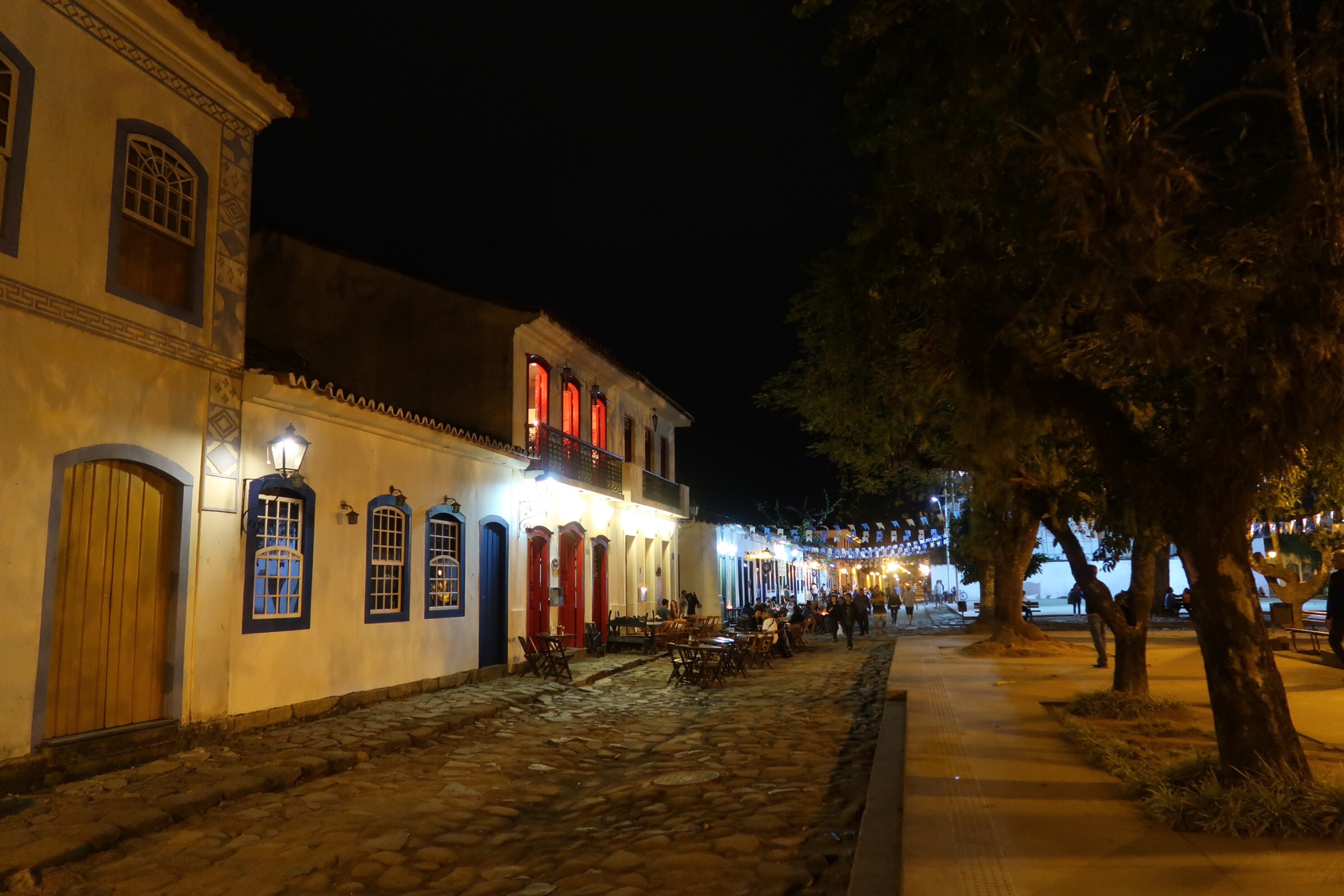
The town grew exponentially during Brazil’s gold rush, but pirates picked off many treasure-laden vessels and a road eventually circumvented Paraty’s port. Business picked up again following coffee and cachaca production, but declined until tourism revived it in the 70s. Now a National Historic Landmark, the cobbled streets and whitewashed buildings of the centre hark back to centuries ago.

Our first meal here was a typical Brazilian affair; find the restaurant, pick up a plate, select your meal from a buffet then pay a sum based on the weight (minus the plate) – a fun and great value way to eat which, happily, the ice cream parlours also offer.

Paraty grew off the back of the (slave-powered) gold rush then the (slave-powered) coffee exports and (slave-powered) sugar exports. Pirates sailed nearby waters to pick off gold-laden ships. They occasionally moored on Ilha Grande – clever things – might there still be treasure stashed away there? When the money stopped flowing the town declined until a road was created from Sรฃo Paulo and tourism injected new life.

Paraty's cobbled streets
Paraty’s cobbled streets

On a free walking tour we learned this history and much more (the cobbles were, for example, used as ballast on ships from Portugal and replaced with goods for the return journey) then enjoyed our last bit of Brazilian beach time. A 6-hour coach journey the next morning took us to the vast city of Sao Paolo.

This city really surprised me. It feels affluent, buzzy and bursting with character. It feels very different to the rest of Brazil, perhaps due to the mix of huge skyscrapers and rich multicultural mix. The metro here is also superb (and classical music plays in the carriages), but it’s not good enough for the wealthy who zip from tower to tower in a fleet of helicopters which is larger than any other city.

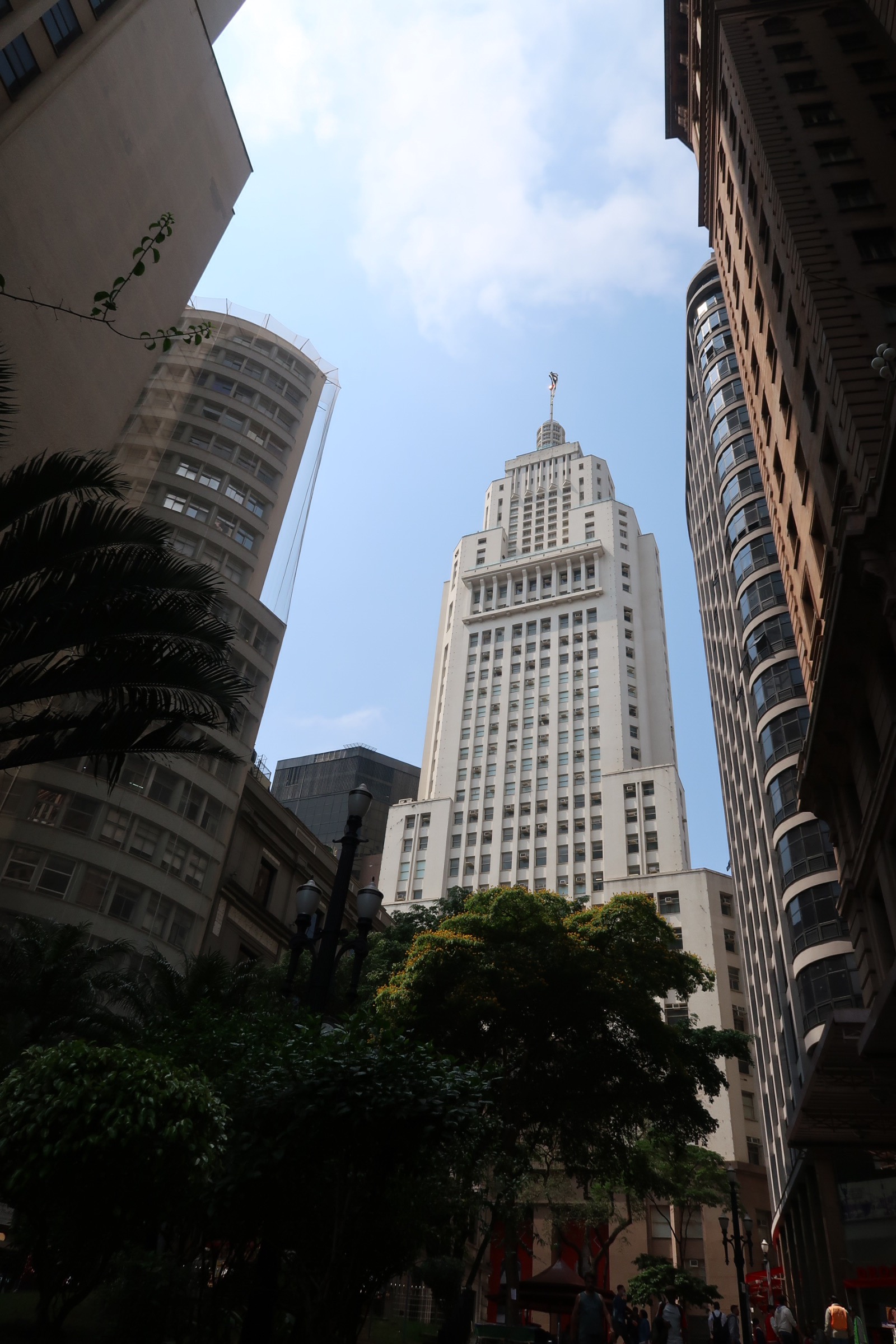
Another key difference of Sรฃo Paulo to other cities we’ve seen in Brazil is that it isn’t a particularly photogenic. It seems to have been plonked in a nondescript, non-strategic place which millions and millions of immigrants decided to make home. This is true of ultra-wealthy Avenista Paulista, but the older part of the city does at least have some charm, with numerous Art Deco skyscrapers reminiscent of Manhattan, and the location where the city was founded over 500 years ago.

Martinelli building, Sรฃo Paulo

When you first arrive at the Brazilian side of Iguassu Falls you will be astounded at how immense they are, but also how beautiful. Streams of water crashing down through misty forests complement the thundering curtains of falls up to 26 stories high. After turning a corner in the trail you realise that what you’ve seen is merely the entree. 

The falls are at their most impressive where the channel into which they cascade is at its narrowest. It’s deafening here, surrounded as you are by waterfalls – there is even a platform extending into the river between falls to put you right in the action. Hopefully the video below will describe what words cannot.

We had some spare time and so decided to pop in to Paraguay, which was a short walk away across a very high bridge. People from Brazil and nearby Argentina flock here to snap up duty free bargains and the Paraguayan side of the border is therefore a bustling cacophony of street markets and malls. Whilst not a particularly safe country right now, we hung around for a couple of hours to see if we could find any bargains (we could not, although it was fun speaking Spanish again).

Terrifying, tremendous, totally worth the massive cost. These were just some of the thoughts that crossed my mind as I stared into the maw of the Devils throat (or ‘Garganta funda’), where some of the largest falls meet. The Argentinian side of Iguassu Falls is like a waterfall theme park, complete with cute little train to shoo you along from one sight to the next. 

โ€‹

โ€‹

Garganta is reached by walked several hundred metres along a metal walkway above the river which tumbles into the many cataracts here. At the end you find yourself perched above where the largest falls meet to hurl their water 82 metres below. Certain death has never looked so spectacular.

But this isn’t the only viewpoint. Whereas just one of these falls would have crowds of tourists coming here from all over the world, there are dozens here, each viewable from various angles – above, from the side, up close, far away and beneath. On our second day here we truly experienced ‘beneath’.

An extremely powerful speedboat hurried us upriver over huge rapids until we were staring up at those giant falls. Then, to add even more excitement, the boat nosed up to the very base of one of the larger falls until we were showering in its powerful tumult. Ridiculous fun that thoroughly tested our waterproofs and placed wide smiles on our dripping-wet faces.

Salvador, Praia do Forte, Amazon, Rio

Like most Brazilian cities, Salvador at night is a no-go zone. After our (slightly drunk, distracted by the dashboard TV screen) taxi driver deposited us at the wonderful Bahiacafe hotel at 11pm we were too tired to see the city anyway. We breakfasted the next morning with a view of one of the main squares and the sound of people in the street chatting and children laughing.
A rainbow of pastel-coloured buildings, cobbled streets and ornate churches make up the pretty historic centre of Salvador. With a temperature of no more than 27C and a constant sea breeze this is a pleasant city to stroll around.

Beach-fringed Barra is dotted with centuries-old coastal forts. This is where Amerigo Vespucci landed in 1501 and the neighbourhood feels very wealthy with lofty cliff-top apartment blocks boasting opulent lobbies and views across the stunning Bahia bay.

Three hours north of Salvador lies the touristy Praia do Forte. Like many such places people flock here for a good reason, in this case the perfect powdery beaches backed by gently swaying palm trees. Praia itself is a cute little town with a long pedestrianised street flanked with boutique shops and restaurants.

Praia do Forte beach


We were staying with Anna’s distant relative who lived in a condo on a huge Iberostar resort. Ken kindly opened his home to us and we enjoyed a glimpse into his life living in a place where only a few live permanently in beautiful apartments, thus affording us with what felt like sole use of the immense pool and wide beach. 

The walk along the endless beaches here is magnificent, although in places you have to be careful not to step on (well marked) turtle nests. We’ve been eating a lot of local food, including plenty of fish, stewed beans, rice and the ever-present ‘farinha’, which translates as ‘flour’ and has the same consistency, but has a subtlety delicious savoury flavour and is made from manioc or cassava.

Bidding farewell to our host we flew with low-cost airline (although they gave us drinks, a snack and films on our iPads) Gol to Fortaleza where we had 35 minutes to transfer to another flight to Manaus – which happened to be on exactly the same aircraft. 

Manaus is big, busy, bright and in the middle of the Amazon. As a city of 3 million, though, you feel as though you could be anywhere. After a night at the Local Hostel (full of young backpackers selfishly making me feel old) we only started seeing the rainforest after an hour’s drive. 

City became towns, which became villages, which became isolated habitations. Fewer and fewer vehicles appeared on the road. After about 220km from Manaus we hurtled along a side road to a huge river – not the Amazon, just a mere tributary. 

A motorised canoe spirited us along the waterway for 30 minutes until we reached the Amazon Eco Adventures lodge. The lodge is a floating platform anchored on the banks of the river and boasting 6 simple (but air-conditioned!) rooms, large decks and a good number of hammocks. 

The water here is warm, brackish and slightly acidic which means few mosquitoes and no piranha. Swimming is blissful. In late afternoon we re-boarded the canoe and the large lake-like part of the river on which the lodge was located grew narrower and narrower until it was a rushing channel of fast water up which we wended between verdant banks.

Toucans, kingfishers and storks flew above us. The current grew stronger and stronger. A few simple wooden houses hove into view besides fruit plantations. And then; the Amazon. At this point on the epic river it was barely possible to see the other side. Large cargo ships – some carrying soya beans – powered along in the distance. You don’t imagine such a large body of water to be moving very much, but the Amazon was carrying water down to the Atlantic at a swift 7-9km an hour. Immense.

Amazon sloth
Amazon sloth


Night fell and the return journey became a caiman hunt, which consisted of hurtling along the water whilst shining a torch along the banks. That tiny glowing dot caught in the beam? That’s a caiman eye. The guides steered the canoe straight at each eye but the creatures kept splashing away. Soon, however, a baby caiman was grabbed and held up for us to see. It’s jaws were wide open and, after a close-up look, it was quickly released so that its stress wasn’t prolonged.

Above us the stars and Milky Way shone brightly. All around us the forest was alive with the sound of nocturnal critters. Into our faces flew clouds of insects but, close to where the lodge floats, that acidic water meant that the insects lessened considerably.

We rose early the next day to enjoy sunrise from the boat. Pink river dolphins appeared with the sun, snorting and giving tantalising glimpses of their dorsal fins before submerging. Unlike grey river dolphins, the pinks don’t leap out the water and so it isn’t easy to spot them.

A stroll through the jungle educated us on the many medicinal plants and trees to be found here. We spied Capuchin monkeys and avoided the dreaded bullet ants – one of the most feared things here due to the terrible pain they inflict, which lasts for up to 24 hours.

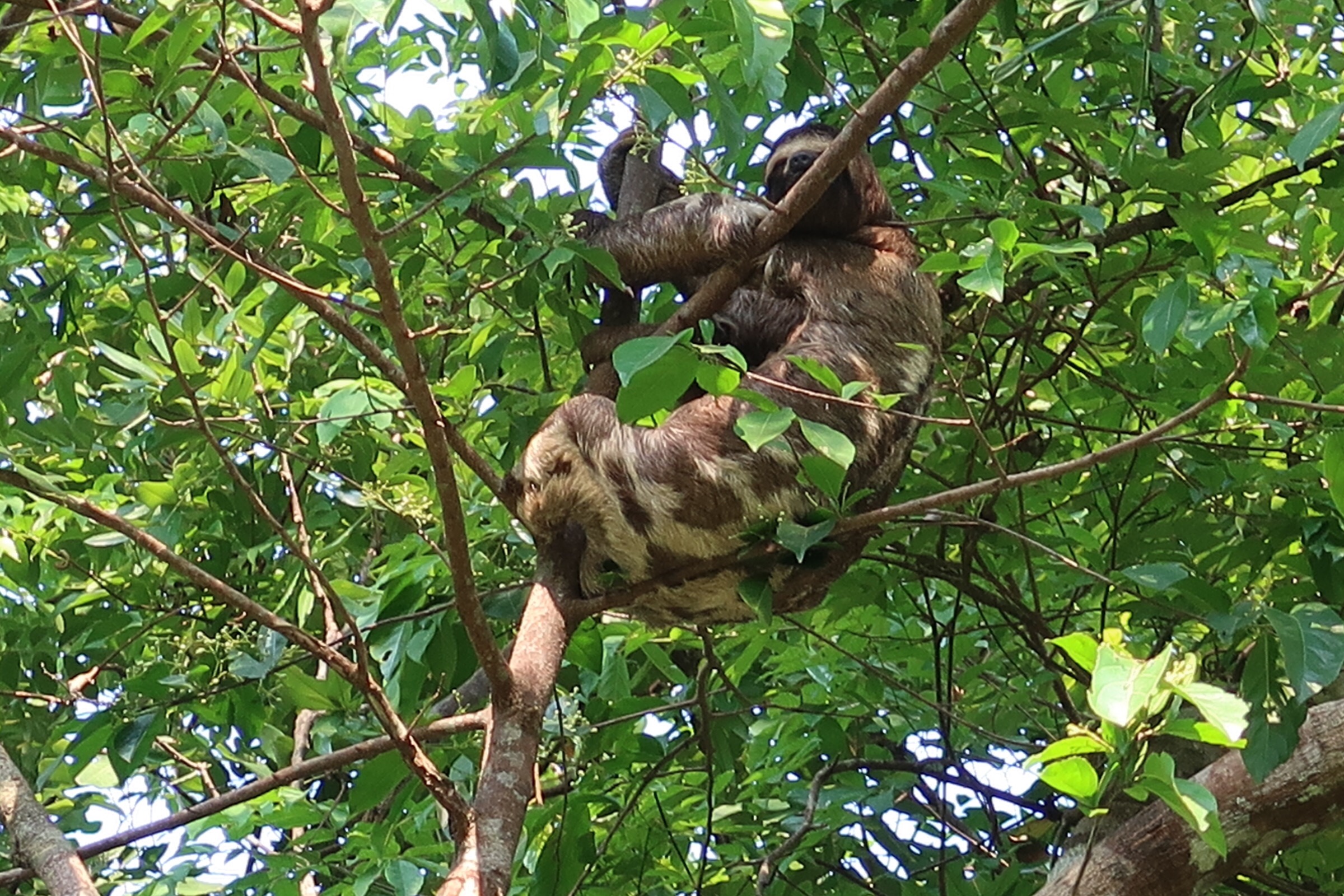
Early evening brought with it the opportunity for a spot of piranha fishing. On the way we saw a sloth (a sloth!) clinging on to the top of a tree, it’s long claws wrapped around the trunk. It didn’t take much bait to attract the piranhas. Within minutes their ferocious jaws were clamping onto our hooks and their colourful bellies flashing out of the water. We released them all so that they may sink their teeth into more meat another day.

The lodge has a wooden canoe that can be borrowed and there’s an island across the water which makes for an interesting early-morning circumnavigation. A little later we visited a nearby native’s dwelling and learned about life in the rainforest. 

Returning to the city I had the opportunity to visit somewhere I’d long wanted to see; the Manaus theatre. Built in 1896 in the midst of a rubber-fuelled economic boom, the pink-painted building is a work of architectural art both on the outside and on the inside, which still boasts most of the original features including seating, the massive curtain and numerous paintings. The vast majority of the materials for the theatre were shipped over from Europe. It must have been quite a sight to see after returning from months on a rubber plantation.

Flying to Rio I got to see where the black waters of the Rio Negro met the brown waters of the Amazon. We flew over the forest for almost three hours – it’s easy to see how people (and cities?) can get lost in there forever. 

Rio de Janeiro
Rio de Janeiro


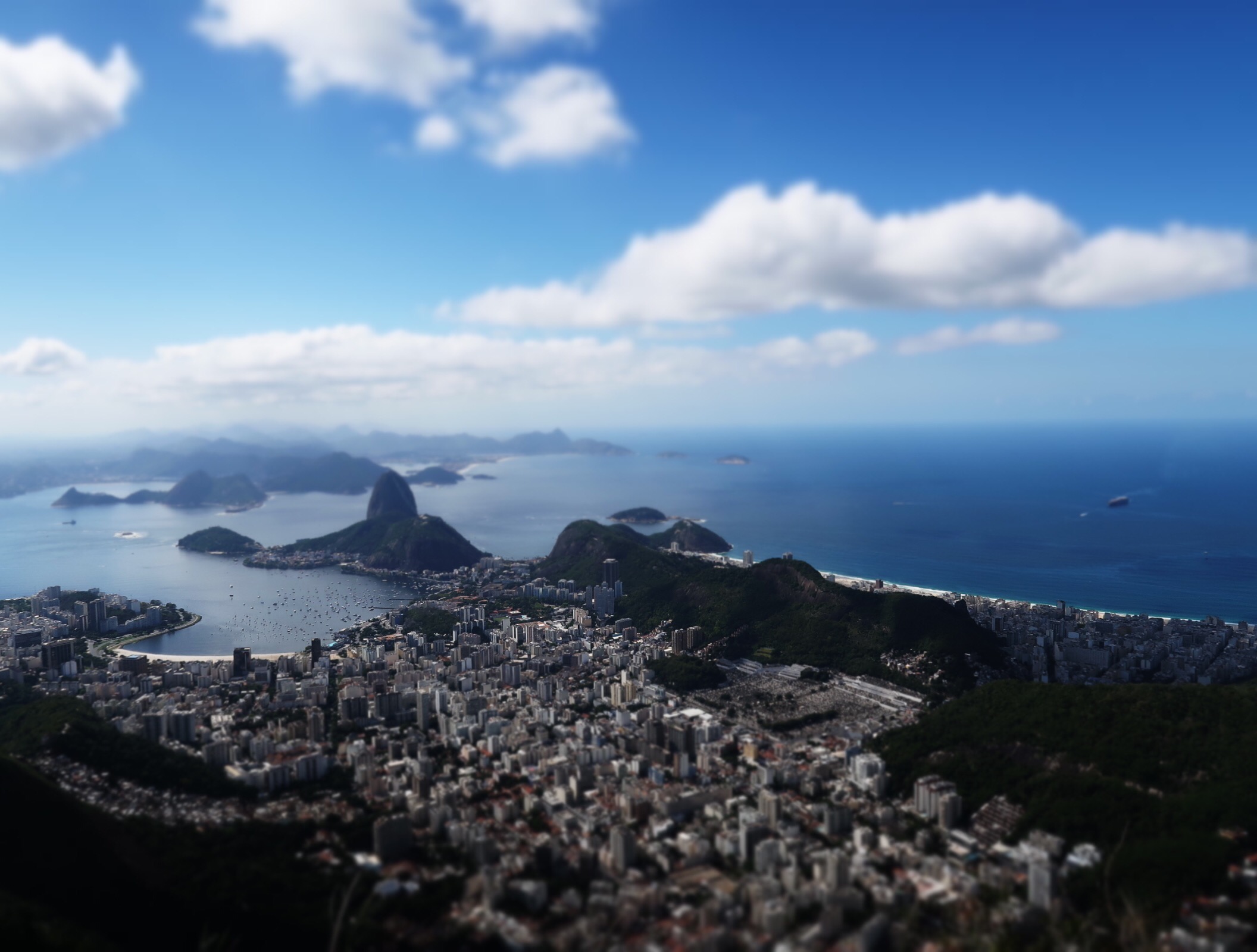
Rio de Janeiro is a buzzy and beautiful city blessed with jagged, tree-clad mountains, blue sea and long sandy beaches. Ipanema and Copacabana are just as you hope they will be; miles of soft sand, big surf and unforgettable views. Our visit to nearby Sugarloaf Mountain began with a hike up to a cable car station (there’s one at street level too if you can’t manage the walk). From there the journey takes 3 minutes and suddenly you’re on top of an 800-metre rock with views that result in endless staring and wondering how one city can contain so much beauty
The view from Sugarloaf is surpassed only by the one from Corcovado, reached by van if you’re on a budget or funicular if you wish to be sedately carried up through the forest. Today was Brazil’s Independence Day which was being celebrated by a Christian group at the feet of the Christ the Redeemer statue. Serenaded by their passionate music we gazed down upon Rio and pointed out Ipanema, Copacabana, the Macarena Stadium etc. Wow, what a view. Amazing, too, to be so close to such a famous edifice

Closer to sea level, the botanical gardens were perfectly serene, with a large variety of trees as well as pleasing water features such as a small lake, numerous burbling streams and a waterfall. We walked from here along the Rodrigo de Freitas lake to Ipanema and Copacabana. This being a public holiday the beaches were full to bursting

Rio is such a happy, friendly city with a huge variety of things to see and do. It is blessed with so much natural beauty and has become a surprising highlight of this trip so far. 

Planning

In the years since we last travelled the world I’ve become an almost obsessive planner, both because I enjoy planning but also because it allows us to spend more time enjoying a destination and less time faffing about. It also helps to save a lot of money. I’ve done a poor job of pasting in the itinerary I have planned for South America but as you can see it’s all very planned out!

My planning formula is the basis for A Plan To Go – it’s been tried and tested in dozens of countries worldwide, now it’s time to see if it works in South America.

  Date Where? How? When? Where to stay? Notes How much?
Dep Arr
Thu 30-Aug LHR to Lisbon TAP 363
TAP 22
11:20 14:05 Bahiacafe Arrange airport pickup T
A
ยฃ328
ยฃ21.54
Lisbon to Salvador 16:45 21:20
Fri 31-Aug Salvador       As above A ยฃ21.54
Sat 01-Sep Salvador to Manaus Gol 1808 16:45 21:30 Local Hostel Pay R$98.60 on arrival T
A
ยฃ147.80
ยฃ12.11
Su-Mo 2-3 Sep Amazon       Jungle lodge Amazon Eco Adventure tours ยฃ219.00
Tue 04-Sep Manaus       Local Hostel Pay R$98.60 on arrival A ยฃ12.02
Wed 05-Sep Manaus to Rio Gol 2105 15:25 20:25 Villa 25 T
A
ยฃ82.16
ยฃ17
Th-Fr 6-7 Sep Rio     As above A ยฃ34.00
Sat 08-Sep Rio to Jacarei
Jacarei to Ihla Grande
Bus
Boat
06:15
10:00
08:45
10:20
Biergarten Hostel Costa Verde bus A ยฃ24.13
Sun 09-Sep Ihla Granda     As above Cancellable. R$399.5 to pay A ยฃ24.13
Mon 10-Sep Ihla Grande Angra dos Reis
Angra dos Reis to Paraty
Boat
Bus
10:00 13:00 Pousada Casa do Rio R$ 166,25 to pay T
A
ยฃ17.25
Tue 11-Sep Paraty     As above A ยฃ17.25
Wed 12-Sep Paraty to Sao Paulo Bus Reunidas Paulista 13:40 19:20 Royal Jardins  R$38 to pay at hotel A ยฃ25.23
Thu 13-Sep Sao Paulo to Foz do Iguacu Gol 1172 16:00 17:40 Che Lagarto Hostel T 85.77
ยฃ10
Fri 14-Sep Foz do Iguacu to Puerto Iguazu    
Sat 15-Sep Puerto Iguazu
Sun 16-Sep Puerto Iguazu to Cordoba Flybondi 5433 18:05 20:05 Kube Apartments T ยฃ42.25
A ยฃ24.13
Mon 17-Sep Cordoba       As above  
Tue 18-Sep Cordoba to Mendoza Andesmar 22:15     T ยฃ40.00
Wed 19-Sep Mendoza 07:00 Diplomatic Hotel   A ยฃ41.44
Th-Sa 20-22 Sep Chacras de Coria Lares de Chacras   A ยฃ132.86
Sun 23-Sep Mendoza to San Antonio de Areco Chevallier 16:00   T ยฃ41.00
Mon 24-Sep San Antonio de Areco 06:30      
Tue 25-Sep San Antonio de Areco to Buenos Aires Palo Santo Hotel   A ยฃ40.85
Wed 26-Sep Buenos Aires As above  
Thu 27-Sep Buenos Aires to Colonia      
Fri 28-Sep Colonia      
Sat 29-Sep Colonia to Montevideo      
Sun 30-Sep Montevideo      
Mon 01-Oct Montevideo to Punta del Este      
Tue 02-Oct Punta del Este      
Wed 03-Oct Buffer
Thu 04-Oct Punta to Montevideo      
Fri 05-Oct Montevideo to Colonia      
Sat 06-Oct Colonia to Buenos Aires      
Sun 07-Oct Buffer
Mon 08-Oct Buenos Aires Retiro to San Martin de los Andes Via Bariloche 16:00 T ยฃ63.00
Tu-We 9-17 Oct San Martin de los Andes/Villa La Angostura/Bariloche 12:10
Th-Sa 18-20 Oct Bariloche Charming Luxury Lodge & Private Spa A ยฃ103.00
Sun 21-Oct Bariloche to San Antonio Oeste Overnight train 17:00 MUST take this train on Sunday (arrives Monday) T ยฃ57.53
Mon 22-Oct San Antonio Oeste to Puerto Madryn 15:10 07:14
18:50
     
Tue 23-Oct Puerto M/Peninsula Valdez      
Wed 24-Oct Peninsula Valdez      
Thu 25-Oct Puerto Madryn to Esquel 20:15      
Fri 26-Oct Esquel 06:30      
Sat 27-Oct Esquel to El Calafate 17:00      
Sun 28-Oct El Calafate 13:00      
Mo-Sa 29 Oct-3 Nov El Calafate      
Sun 04-Nov Buffer
Mon 05-Nov El Calafate to Ushuaia      
Tu-Fr 6-23 Nov Ushuaia/Antarctica     ######
Sat 24-Nov Buffer
Sun 25-Nov Ushuaia to Punta Arenas      
Mon 26-Nov Punta Arenas to Puerto Natales      
Tue 27-Nov Buffer
We-Sa 28 Nov-1 Dec Torres del Paine      
Sun 02-Dec Puerto Natales      
Mon 03-Dec Puerto Natales Check in to ferry 09:00-18:30 T ยฃ580.65
Tue 04-Dec Pto Natales to Pto Montt 06:00      
Fri 07-Dec Puerto Montt 08:00
Sat 08-Dec Pto Montt to Castro (Chiloe)        
Sun 09-Dec Buffer
Mon 10-Dec Castro (Chiloe)        
Tue 11-Dec Castro to Pt Montt     Hotel Cabaรฑa del Lago Puerto Varas A ยฃ44.34
Pto Montt to Pto Varas
We-Sa 12-15 Dec Pto Varas     As above A ยฃ177.36
Sun 16-Dec Pto Varas to Cochamo     Refugio Cochamo http://www.cochamo.com
Mo-We 17-19 Dec Cochamo      
Thu 20-Dec Cochamo to Pto Varas        
Pto Varas to Valdivia
Fri 21-Dec Valdivia        
Sat 22-Dec Valdivia to Pucon       Apart Hotel del Volcรกn A ยฃ44.30
Su-Sa 23-29 Dec Pucon       As above A ยฃ313.80
Sun 30-Dec Pucon to Santa Cruz       Hotel Boutique Vendimia    A ยฃ43.45
Mon 31-Dec  Santa Cruz       As above   A ยฃ43.45
Tue 01-Jan Santa Cruz to Santiago Hotel Plaza San Francisco   A ยฃ76
We-Th 2-3 Jan Santiago As above   A
Fri 04-Jan Santiago to Cajon del Maipo Lodge Andino El Ingenio Pay US$261.80 at property A ยฃ50
Sat 05-Jan Cajon del Maipo to Algarrobo Cinque Colori Via Casablanca A ยฃ110.00
Sun 06-Jan Algarrobo As above
Mon 07-Jan Isla Negra to Valparaiso Hotel Fauna   A ยฃ56.23
Tue 08-Jan Valparaiso As above  
Wed 09-Jan Valparaiso to Zapallar Car hire https://www.airbnb.co.uk/rooms/24137328   A ยฃ95.25
Thu 10-Jan Zapallar Car As above      
Fri 11-Jan Zapallar to La Serena Car Enjoy Coquimbo   A ยฃ167.67
Sa-Su 12-13 Jan La Serena Car As above Cerro Tololo observatory    
Mon 14-Jan La Serena to Calama
Calama to San Pedro De Atacama
JetSmart 11:16
13:00
12:56
14:30
Calam to San Pedro transfer reserved, pay $12000 at desk   ยฃ51
Tue 15-Jan Buffer  
Wed 16-Jan San Pedro de Atacama to Uyuni Tour      
Th-Fr 17-18 Jan Uyuni    
Sat 19-Jan Uyuni to La Paz Plane 08:40 09:25      
Sun 20-Jan La Paz to Copacabana Bus 08:00 12:00      
Mon 21-Jan Copacabana to Puno Bus 09:00 19:00      
Tue 22-Jan Puno      
Wed 23-Jan Puno to Cuzco      
Th-Fr 24-25 Jan Cuzco      
Sa-Th 26-31 Jan Salkantay Trail      
Fri 01-Feb Buffer
Sat 02-Feb Cuzco to Lima VivaAir 08:05 09:44     ยฃ37.69
Sun 03-Feb Lima to Quito      
Mo-Fr 4-8 Feb Quito/Otavalo/Cotapaxi      
Sat 09-Feb Quito to Galapagos      
Su-Fr 10-15 Feb Galapagos      
Sat 16-Feb Galapagos to Guayaquil      
Sun 17-Feb Buffer
Mon 18-Feb Guayaquil to F Lauderdale Spirit 00:59
13:54
05:30
18:21
    294.00
Fort Lauderdale to Barbados ยฃ112
Tue 19-Feb Buffer
We-Sa 20-23 Feb Barbados Sugar Cane Club Hotel And Spa     ยฃ143.54
Sun 24-Feb Barbados to St Lucia LIAT 17:05 17:45 Stonefield Estate Resort       ยฃ226.84
Mo-We 25-27 Feb St Lucia      
Thu 28-Feb Castries Harbour Vista Inn $71.50 payable at property   ยฃ56
Fri 01-Mar St Lucia to Dominica Ferry 07:00 11:15 Calibishie Cove     ยฃ167.72
Sa-Tu 2-5 Mar Dominica      
Wed 06-Mar Dominica to Guadeloupe Ferry 12:15 14:30 Habitation Grande Anse     ยฃ137.86
Sa-Su 7-9 Mar Guadeloupe      
10-Mar      
Mon 11-Mar Guadeloupe to NYC Norwegian D84900 08:20 13:00 The Blakeley   T ยฃ145.20
A ยฃ119.74
Tu-We 12-13 Mar New York        
Thu 14-Mar NYC to LGW Norwegian DI7016  23:30     ยฃ174.90