
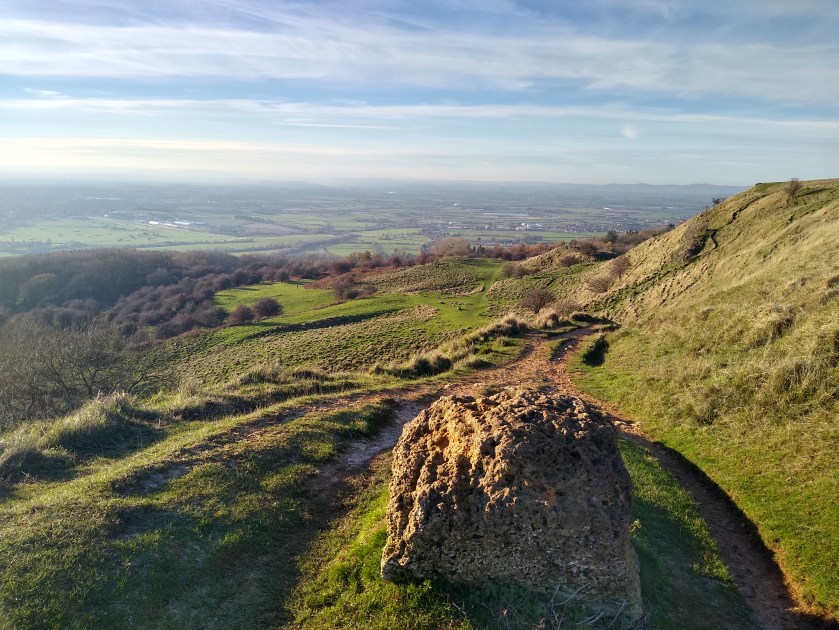
Over the past several years I’ve become increasingly familiar with the Western Cotswolds, roaming remote routes leading to cute villages with good pubs. Using the severely underrated town of Winchcombe as a base I head out in all directions over hills and into forests. Occasionally I’ll walk to this base from Cheltenham train station, passing through the apparently very haunted village of Prestbury before climbing Cleeve Hill. Recently I took a slightly different route, dropping down to between the hill’s base and Cheltenham’s famous race course. I’ve always known there was something special here, this is the first time I’ve seen it for myself.
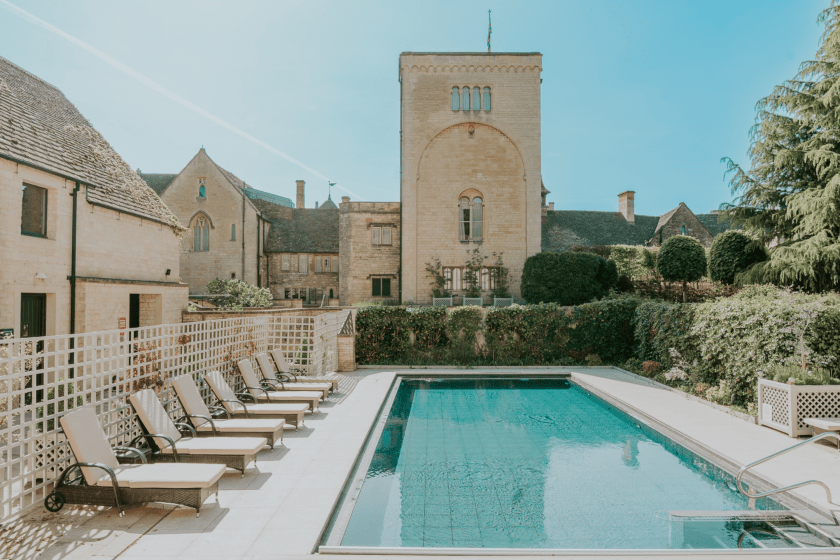

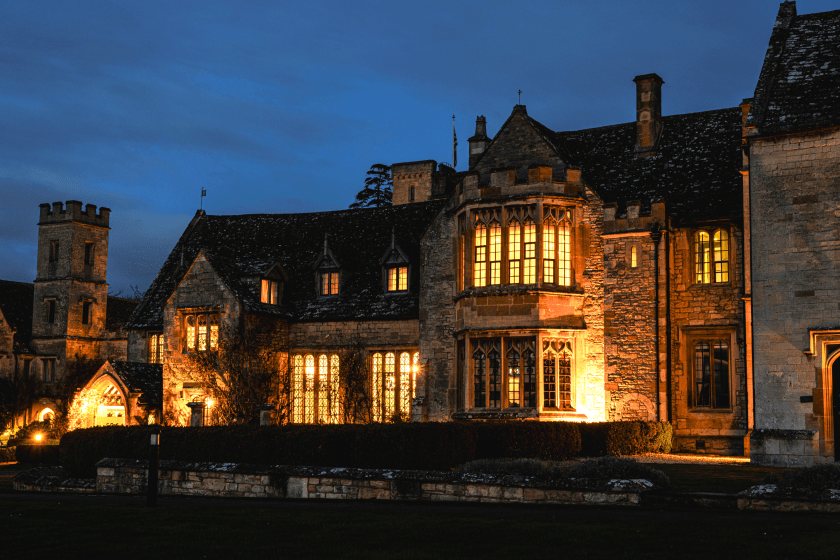
Ellenborough Park is an ancient place. Parts of the building date back 540 years, nearby the remains of a Beaker person believed to be from 2000BC were found. It’s a grand and rambling old building, with extra wings having been added over the centuries. I was staying in one of the more recent sections, built in a separate complex in 2011 and yet, thanks to the use of Cotswold stone, fitting in perfectly with the main building’s olde aesthetic.
For this trip I travelled with my wife, Anna, and dog, Bounty. Ellenborough Park is a refreshingly dog-friendly place. Although Bounty turned his little black nose up at the ‘Paw Star martini’ (I had a taste, I’m not sure a passionfruit and chicken stock drink was designed for humans) he thrilled at finding a large and comfy dog bed in our room. We were staying in a Garden Luxury Room room, which comes with its own enclosed 81sqm outdoor area – handy for our furry friend’s bathroom needs. Our bathroom had a subtle Art Deco feel to it, double sinks, a luxuriously deep bath and walk-in shower. In addition to a bed for the dog, the bed for the humans was king-sized and supremely comfortable. I particularly liked the free mini bar and large sofa.
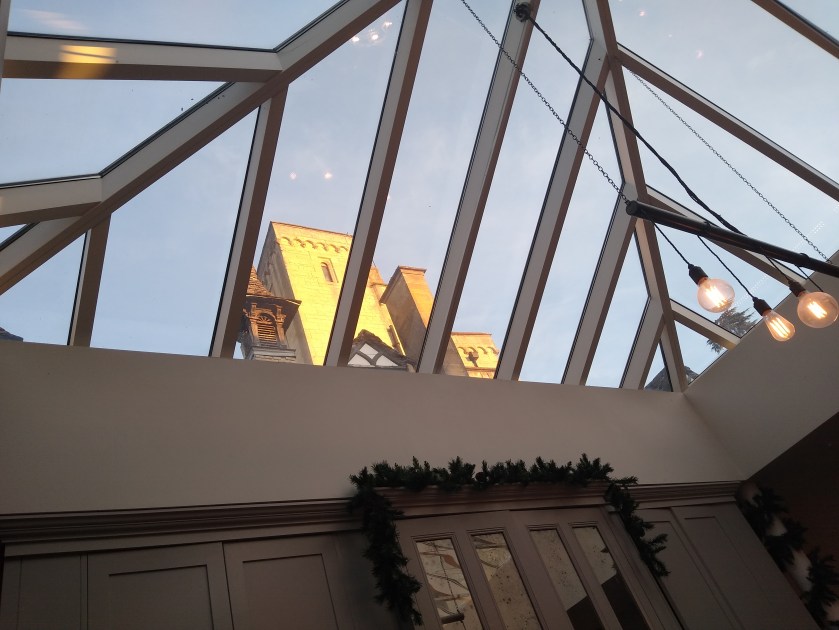
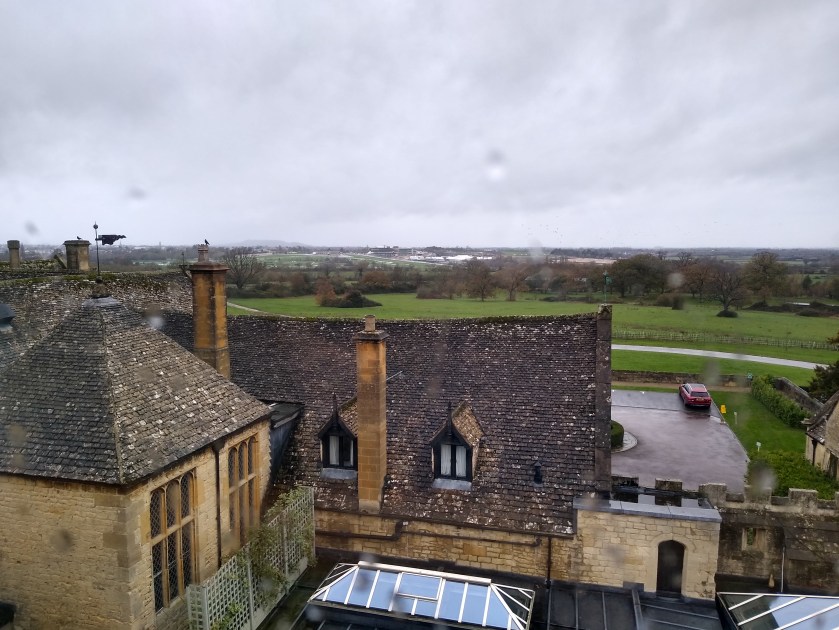
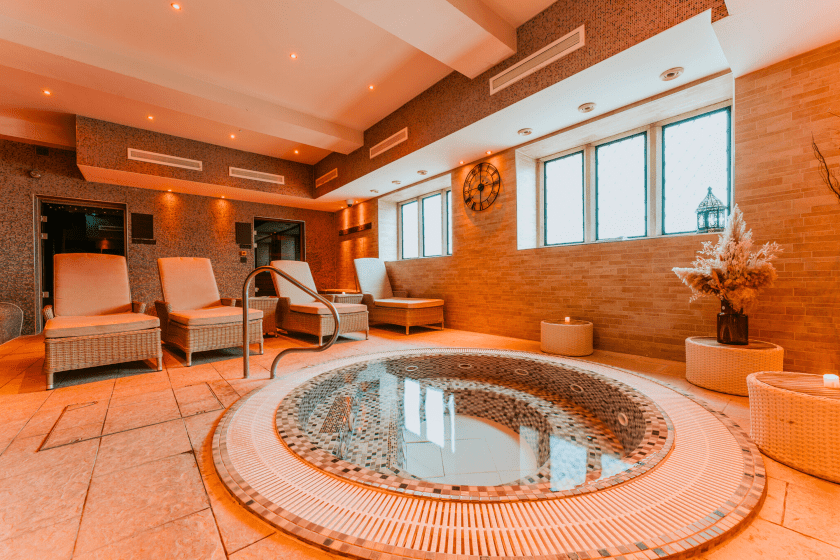
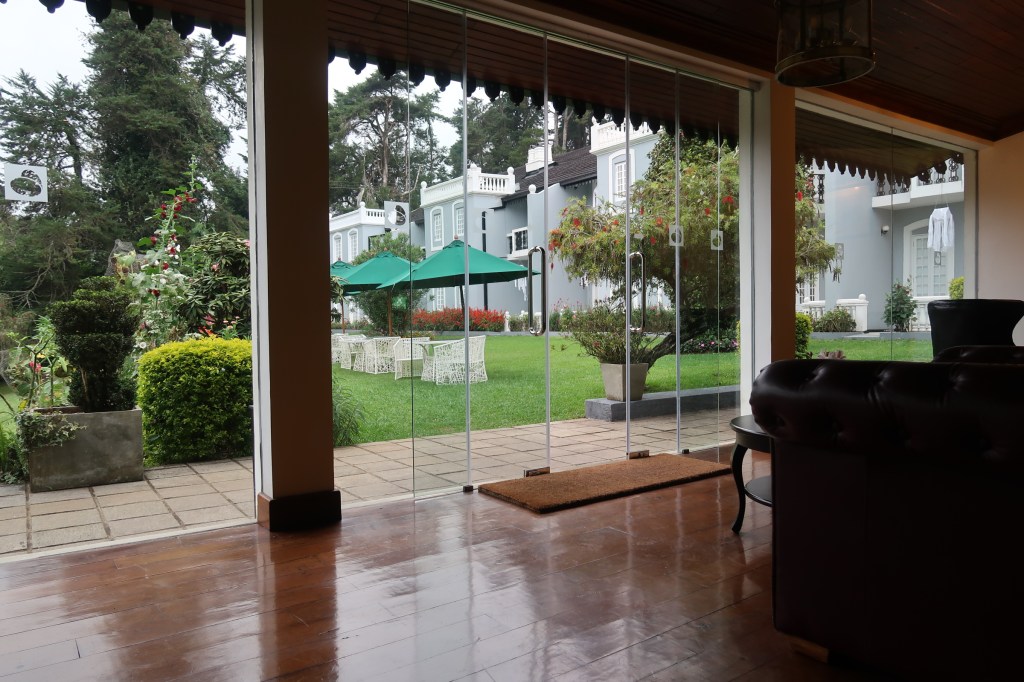
There are rooms available in the main building, too, as well as a small spa. One of my favourite Scottish words is dreich – meaning dreary, rainy conditions – and during our visit we sure had some dreich conditions. However, beside the hotel’s bar, in what was once the courtyard, is now a large area covered by a glass roof through which to watch the rain while eating breakfast or despairing at your pampered pooch snubbing doggy cocktails. Cosy is most definitely a theme of this hotel, despite its size.
In total there are 67 rooms here of varying size and character. Wannabe damsels can book themselves into one of the tower suites, situated 30 metres high in a part of the building dating to between 1833-1862. The stairs to these suites limit who may be able to stay there, but the 270° views are well worth the climb. There’s even a telescope for those who want to follow the horses on the nearby racecourse.
Back outside and I dipped a toe in the pool, which steamed in the cool weather. It was, however, already wet enough outside and so I didn’t feel the temptation to dive in. What makes a good hotel great is the little details. At Ellenborough Park these included a dog spa in which to wash off the Cotswolds mud, a boot room away to which my footwear was whisked to wash off the Cotswolds mud, and activities such as chocolate making to help me forget all about the Cotswolds mud.
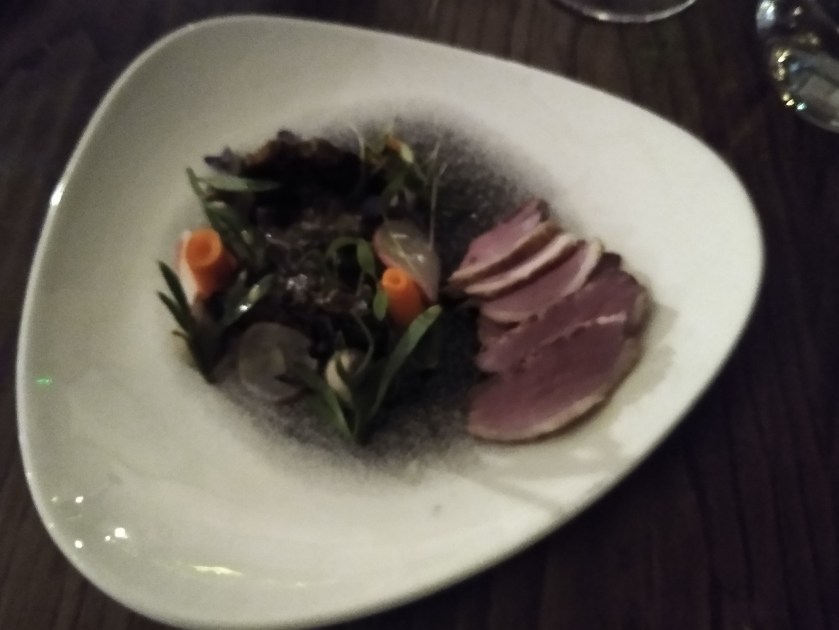
‘Creedy Carver’ Smoked duck breast, beetroot, clementine, almond 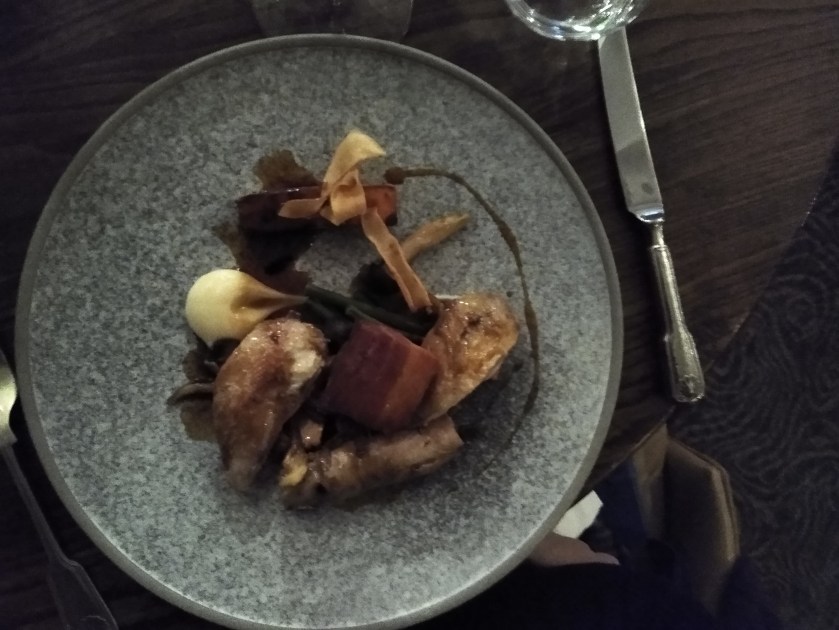
Cotswold partridge, parsnip, sweet potato, raisin, wild mushroom, pancetta 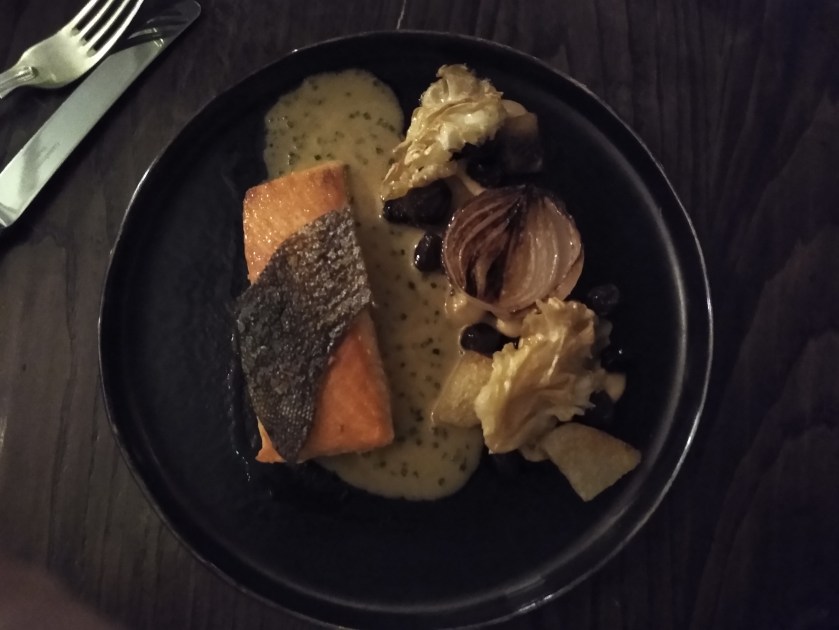
Chalk stream trout, cauliflower, Roscoff onion, mushroom, kohlrabi, raisin, beurre noisette, vermouth fish cream 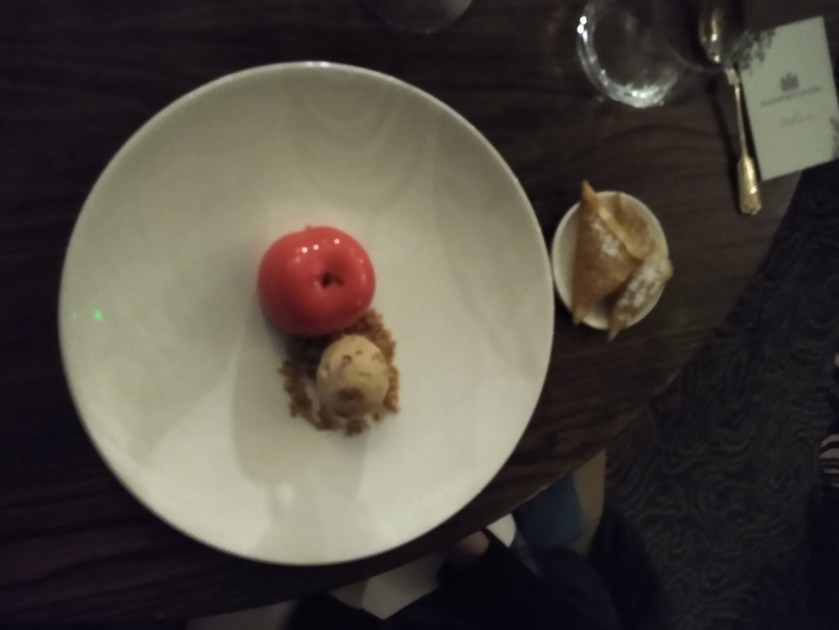
’Ellenborough Park’ apple, salted caramel ice cream 
White chocolate & orange pave, cinnamon, blood orange
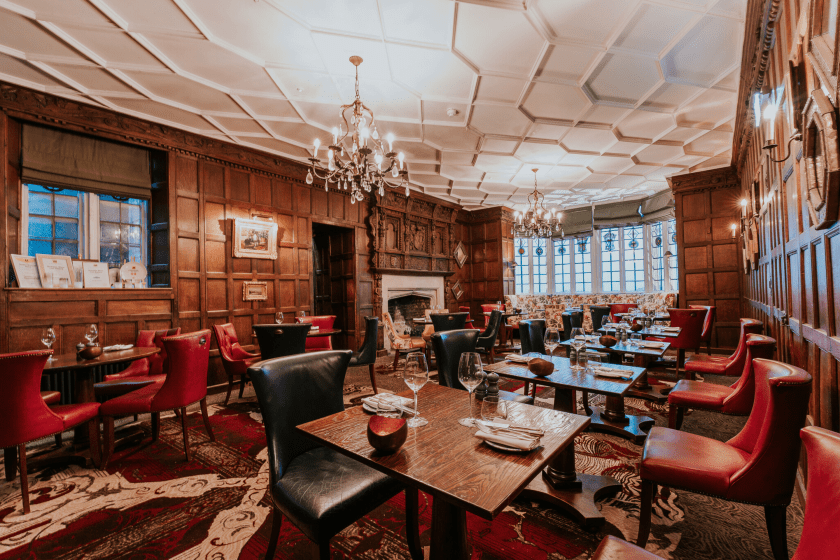
Dinner is usually a main event during a stay such as this. If you’re happy to leave your dog in your room you can dine in The Restaurant. Here I admired the wood panelled walls and honeycomb ceiling which, like the room itself, date to the 15th century. Amused by the characterful statuary either side of the fireplace, we were soon distracted by the menu, which ranged from excellent value burgers to fine dishes such as or Cotswold partridge or chalk stream trout. I chose the latter and was deeply impressed by the way in which the fish flaked, was delicately seasoned and artfully matched with the kohlrabi puree and sweet Roscoff onion.
Being a fish dish fan I recognised that Ellenborough Park has a chef (Richard Simms, who first graced the hotel’s kitchen 8 years ago) who was a true master of his art. Perhaps it was the depth of history in this hallowed hall, perhaps it was the feeling of reward having marched here over Cleeve Hill, whatever it was the meal was one of the very best I’ve enjoyed in a long time.
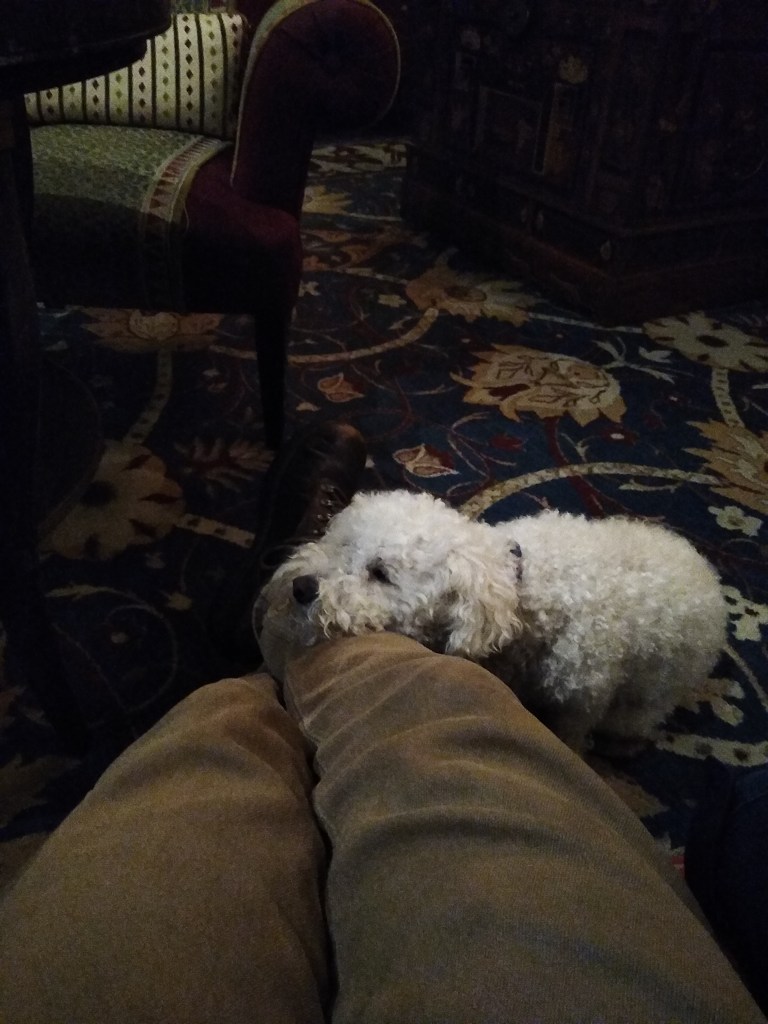
Towards the end of dinner, when we were midway through our sublime desserts (white chocolate and blood orange pavé for me, Ellenborough Park apple for Anna) the manager quietly approached our table and told us that there was a loud squeaking noise coming from our room. Unused to being left alone in an unfamiliar place, Bounty was voicing his unhappiness and was disturbing both a nearby chihuahua and a baby. We were graciously allowed to bring him to our table. The look on his fuzzy face as he marched triumphantly into that grand dining room was one of pure satisfaction at having got his way.
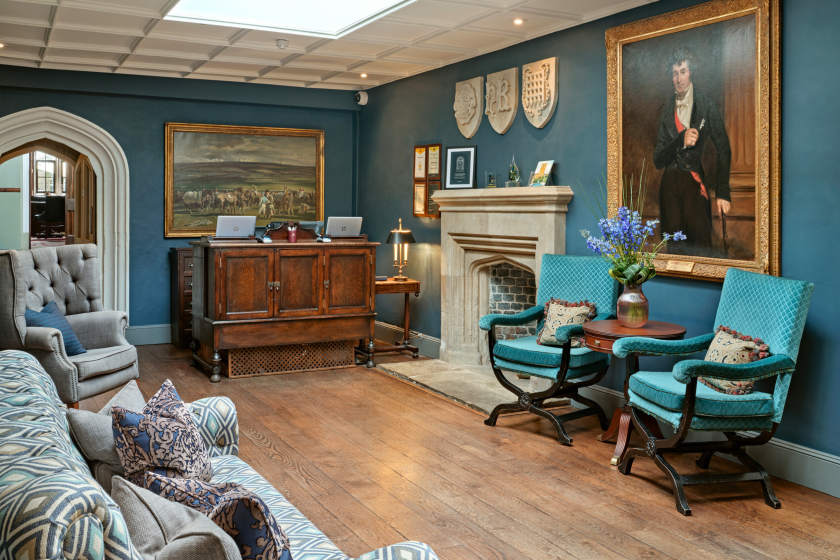
We took both Bounty and the remnants of our bottle of wine into the Grand Hall. This was my favourite part of Ellenborough Park. It had been built by the original owner – a tenant farmer – in 1485 and contained very old portraits of previous owners, huge silk rugs and chandeliers. An open fire along one side of the room kept this large space warm.
Towards the end of the evening we ventured through a wooden door and followed some steps to a seating nook that overlooked the Great Hall. We found yet more steps that led to a gallery along the top of the hall. There were plenty of cosy corners and secret spaces in which to curl up and imagine who must have passed through this place over the centuries.
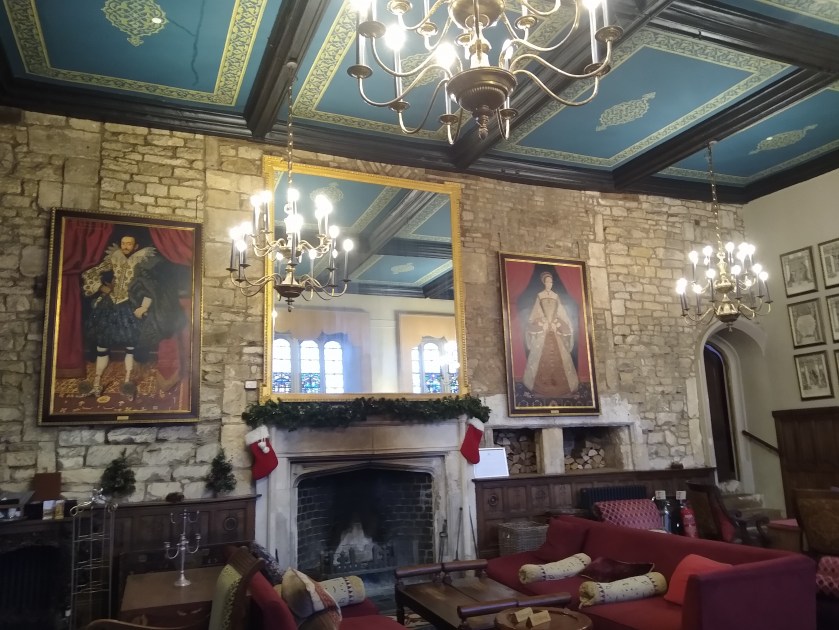
King George III was one of those people, along with various viscounts and lords. One of the previous owners, Lord Ellenborough, had a tunnel dug to a corner of the estate in 1833. According to legend Lady Ellenborough used this tunnel to meet with a secret lover. The story may not be real but the tunnel very much is.
The weather remained dreich on our departure day. Yes, the drizzle added atmosphere to an already very atmospheric place, but I imagine that the hotel’s personality shines in all weathers. Although haunted Prestbury is a 15-minute walk away, although Cleeve Hill is easily accessible for hikers, and although there’s a private back way into Cheltenham Racecourse, Ellenborough Park has a way of captivating visitors, encouraging them to spend their time on its well-kept grounds and in its history-soaked walls. It’s a captivating place. Bounty, Anna and I walked away relaxed, rested and ready to face the climb back to Winchcombe.
Ellenborough Park is a 5* hotel 10 minutes’ drive from Cheltenham and less than 3 hours from London. It can be reached by public bus from Cheltenham. The Gloucestershire Warwickshire Steam Railway Cheltenham Race Course station is only a 2.6km minute walk away and heritage trains from there will chuff you to Broadway via Winchcombe.
Prices for a Garden Luxury Room start at £390. Other rooms include a Traditional Room which you can stay in from £269. A two-course meal with a glass of wine in The Restaurant can be enjoyed from £60, I encourage you to explore the menu.


















 A Plan To Go