2-minute read about why there’s nothing shameful about enjoying something which enhances your holiday experience.
Cruising past the Olympic Peninsula, WA, USA
Hi. My name’s Olly and I’m a backpacker. And a luxury tourist. And a cruise fan. In fact, I enjoy travel in just about all of its many, many forms, but too often I read or hear that you have to be a travel purist. Apparently you can’t fully appreciate hostel culture if you also like to stay in 5* hotels. Well, b*llocks to that.
My conversion
When I first started travelling independently (a long, long time ago), I didn’t have the budget to see the world in anything other than chicken buses and staying in very basic accommodation. And then I got a job working for a cruise line. One day, on a ‘familiarisation trip’*, I found myself alone in a luxurious spa located at the very front (or ‘bow’ – see, I really did work for a cruise line) of a brand new ship looking out high above Naples. It was then that I realised that this world can be appreciated from various aspects. Sometimes it’s best enjoyed in a particularly well-located hostel, sometimes nothing can beat experiencing it than from the deck of a cruise ship.
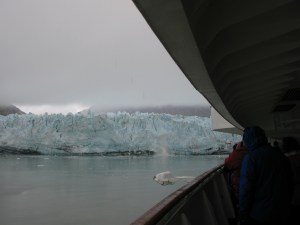
Glacier Bay, Alaska
Take Alaska, for example. Yes, I’d love to stay in a boutique remote lodge, or hike through the extreme wild of Gates of the Arctic National Park, but to fully appreciate the size of Glacier Bay it’s best seen from the sea. Experiencing those mammoth icy cliffs with a cocktail in hand, or from the waters of a hot tub can, perhaps, make the event even more special.
What I find missing from an experience such as that is the satisfying sense of achievement. My recent hike across the Cairngorms reaffirmed how memorable (in a good way) it can be to be self-sufficient in the wilderness, and that bedding down in a warm tent in the middle of nowhere, having successfully made a delicious hot meal, can be supremely enjoyable.
Enhancing the experience
When luxury gets it right, it really, really gets it right. The best luxury hotels, for me, enhance the travel experience. The Grand Tatras Kempinski, for example, doesn’t look inward to its opulent rooms and spa, but rather makes use of large windows to bring the views of the mountains into the hotel so that you feel you are experiencing the Tatras from the tasteful confines of your room, or the bar, or the magnificent spa.
Of course, the best hostels are also the ones which enhance your experience. They often do this by having common spaces which encourage socialising, but without disturbing those that actually want to sleep. The best hostels help you to make the most of the destination you’re in, whether that be through advice, useful noticeboards, tours, or discounts.
View from Grand Tatras Kempinski room
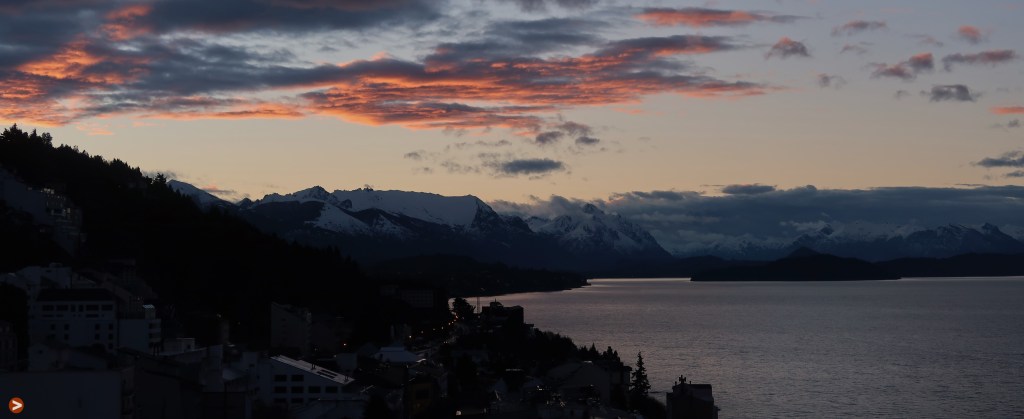
Some hostels have views which are better than any you’d get from even the best hotels in town. One which immediately springs to mind is Hospedaje Penthouse 1004 in Bariloche, Argentina, which has astounding views of the lake and surrounding mountains from ten stories up.
View from Hospedaje Penthouse 1004
Of course, cruise ships don’t just offer amazing views from the sea. Many are destinations in themselves, where passengers can enjoy go-karting, or ice skating, or surfing, or any number of fantastic activities. And then there’s the restaurants. On the world’s largest cruise ship – Symphony of the Seas – there are 65 (65!) restaurants, cafes, bars and lounges, some of which are found in a huge park with real trees.
Although it’s absolutely worthwhile stepping out of your accommodation, or off of your ship, to experience somewhere, there’s absolutely nothing wrong with the highlight being the accommodation/ship itself. Just don’t let anyone try to put you in a box and judge you accordingly. You may even be lucky enough to experience that magical combination of experience-enhancing accommodation/ship in an already-perfect destination. If so, I’d love to hear about it…
*Familiarisation trips are where a travel agent/someone working for a travel company is sent to experience a destination/ship/holiday product so as to then be more effective at selling/marketing it. They are/were a massive perk of working in travel.
A 3-minute story about my adventures in Triglav National Park, Slovenia, along with tips on how to experience this for yourself.
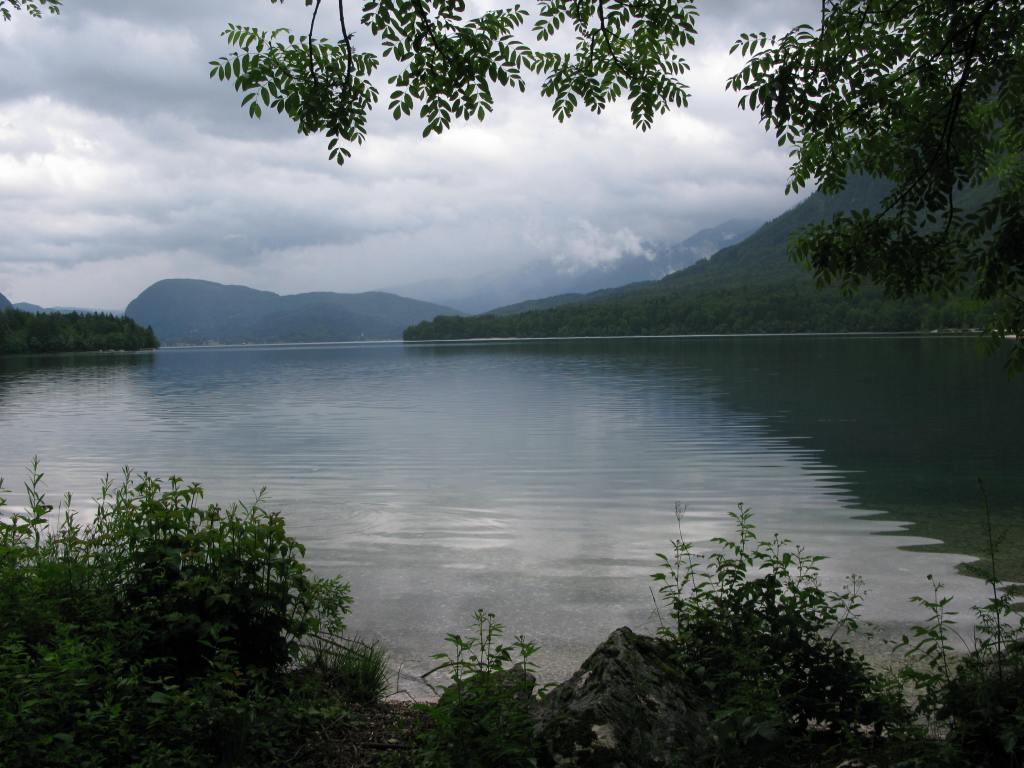
Lake Bohinj
Being on the path of Romans, Franks, Slavs, and possibly even Dracula, Bled in Slovenia has some fascinating myths and legends baked into its churches and castles. But have you ever heard of the witch of Triglav?
Into the wild
Encompassing a large part of the Julian Alps, Triglav National Park is named after this mountain range’s largest peak (which reaches 2,864m/9,396ft). On the edge of both the park and the mountains, Ribčev Laz can be reached by direct bus from Ljubljana in just under two hours. When the bus passed through Bled I dialled a number I’d been given by the National Park. Franci spoke just enough English to tell me where to meet him and, sure enough, he was waiting for me in Ribčev Laz beside his 4×4.
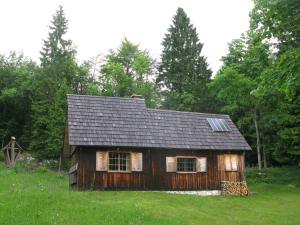
Vogar Hut
Minutes later it became obvious why a 4×4 was necessary. Franci was a National Park ranger, and he’d been tasked with driving me up to the mountain hut I’d rented in the tiny hamlet of Vogar. To get there required a drive up a very steep track which twisted through a huge pine forest. When at last we emerged into a clearing we passed a few simple wood huts.
‘If you want dinner then knock on that door.’ ‘OK. Who lives there?’ ‘A witch.’
Now I hadn’t been in Slovenia long enough to assess the local sense of humour, but I wasn’t entirely certain that Franci was joking. When he drove away, leaving me beside my hut, irrational thoughts began to seep into my head, in the way they can do when you’re standing in a remote mountain clearing by a lonely hut.
The hike
My mood wasn’t improved when I discovered a scorpion in the bathroom (it was subsequently yeeted far into the twilight). Grateful for the daylight which appeared the next morning, I embarked on a long hike which I thought I had planned carefully. However, good plans don’t necessarily mix well with poor maps.
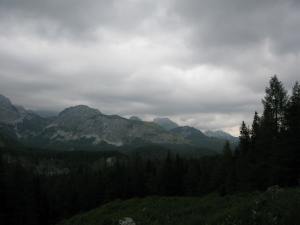
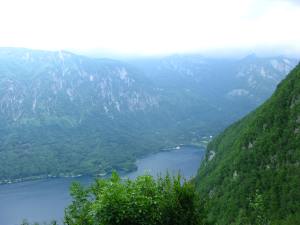
I had bought the best map of the park that I could find in Stanfords, but even this didn’t provide sufficient detail. Although there weren’t many paths to follow, when the one I was on split in two I went the wrong way and ended up, miles later, at the top of some very high cliffs. Hundreds of metres below me were the frigid waters of Lake Bohinj. A stunning view, but one I couldn’t enjoy due to having to follow a particularly precarious route (I refused to give up and turn back).
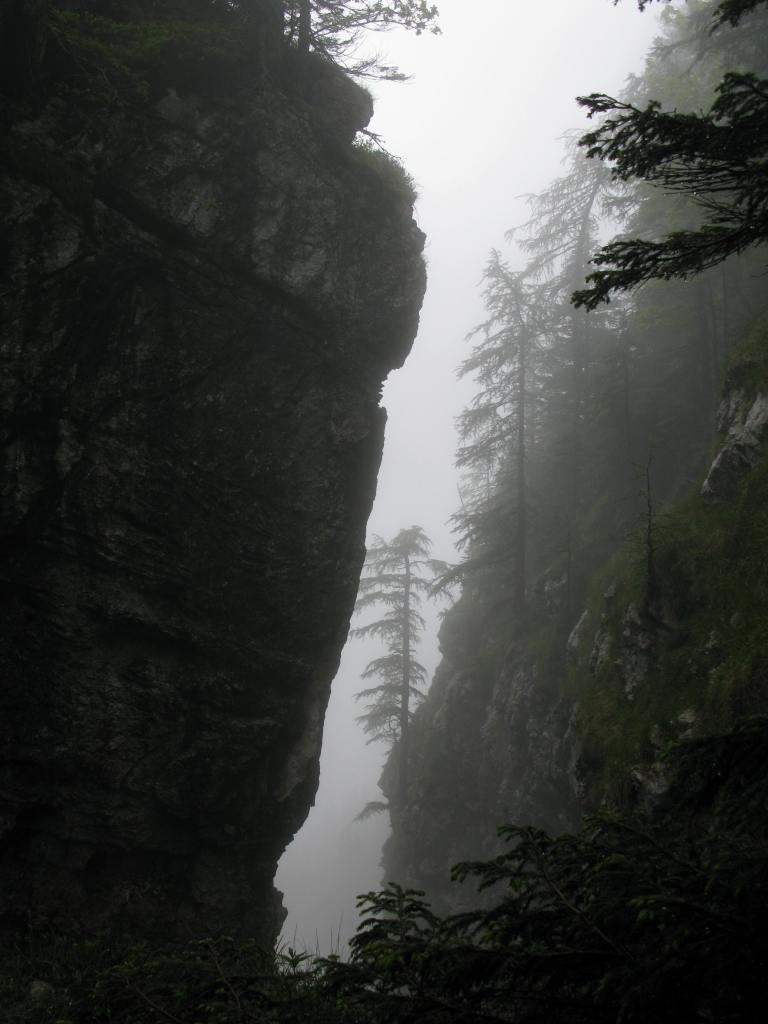
Triglav National Park
Fortunately the path eventually turned away from the cliffs and I was rewarded with a view of snow-capped mountains. A little further on was a small collection of rustic mountain huts, all of which appeared to be uninhabited. When planning this hike I knew that at some point I had to get down to the lake. My hopes that it would be a nice sedate descent were dashed when I saw a series of ladders and narrow metal steps screwed into the rock.
The Julian Alps
Managing to not look down once, I white-knuckle climbed down and down and down. It was an impressive via ferrata, which I managed to fully appreciate once I was back on terra firma. Here was my sedate path which led to the lake shore. Relieved to be on flat ground, I walked a little over 2km along Lake Bohinj, before turning uphill to return to Vogar.
A magical dinner
The one eatery in the vicinity was closed for the season, hence why Franci had pointed out the witch’s home. Hence why, that evening, I found myself timidly knocking on her wooden door. I was welcomed in by an attractive lady in her 40s, as well as two handsome men who were sat at a rustic table inside.
‘Dinner?’ she asked. ‘Ja, hvala,’ I replied.
She smiled and shooed the men away into another room. From the ceiling hung a cornucopia of drying herbs, on shelves were jars of pickles and jams and chutneys. My host quickly put together a wooden board overflowing with cheeses, salamis, bread, vegetables and herbs. This was accompanied with a mug of delicious herbal brew.
Lake Bohinj from the cliffs
We conversed in that awkward way that two people with barely any shared language do, but she (and the men who had crept back in) was excellent, friendly company. With a full belly, topped off by a fiery home-brewed spirit, I found my way back to my hut through the dark.
If my host really had been a witch (and I did spy a cauldron, although I expect it was used for cooking something considerably more palatable than eye of newt), she was one who knew how to expertly concoct a delicious meal from local delicacies. Besides, I always thought that witches got a bad rap. If anyone can pull the tastiest food from the earth, they surely can.
Under the spell of being well-fed, I slept the satisfying sleep of someone who survived perilous cliffs, and who had been bewitched by Triglav’s wild beauty.
Visit Triglav as part of this 12-day Slovenia & Croatia itinerary (for Budget, Mid-range, and Luxury travellers)
In this post I described how I was taking a whole bunch of lightweight equipment to try out on a 3-day Cairngorms hiking trip. Below I’ve scored everything I actually used out of 10, and briefly explained why it received this score. Please note that I haven’t been paid to use or write about any of this.
Questions? Lemme know below!
Hyke & Byke Quandary -10 Degree C Down Sleeping Bag
Score: 8/10 Price: £119.97 Good value for such a warm bag at a relatively light weight. There are cheaper bags out there, but none at this weight.
Inov8 Roclite G 286 GTX
Score: 3/10 Price: £116.88 Not particularly expensive, extremely light boots. But they let water in, and the sole is so thin you can feel every stone.
TBS Army Firesteel & Fire Dragon alcohol fire lighters
Score: 7/10 Price: £4.95+£3 Great combination. Firesteel produces lots of sparks when used correctly (!), gel lights immediately and can burn for 10 mins. Not so good in breezy conditions
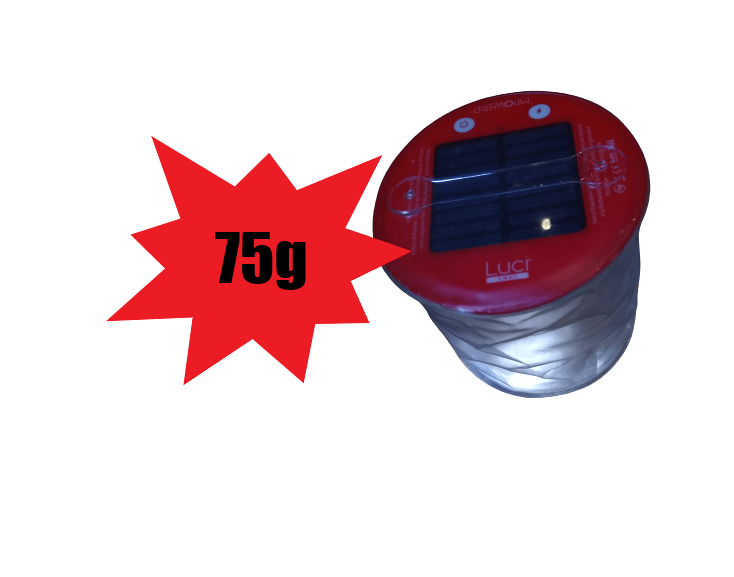
Luci inflatable solar light
Score: 8/10 Price: £14 Worked really well in the tent, very easy to use. After charging on overcast day for 8 hours it only produced 45 mins of bright light.
Thermarest Neoair Xlite R
Score: 8/10 Price: £144 Kept me very warm and comfy, quick to inflate, and packs down very small. Expensive, so I hope it lasts many years!
SwissPiranha BF120 Tent Pegs
Score: 5/10 Price: £14.99 for 10 Managed to keep the tent pitched during very strong wind. Saves a few grams, but hard to push into ground, and pulls out a lot of mud in teeth.
Fizan Compact Ultralight Trekking Poles
Score: 10/10 Price: £50.96 Wow, such great value. Incredibly light, yet robust – even held a tarp up during a storm!
EVERNEW Titanium UltraLight Pot 1.3L
Score: 9/10 Price: £41.67 Really not cheap, but very tough and light, and holds more than enough for feeding 2 people
Salomon XUltra3P GTX
Score: 10/10 Price: £78 These are so comfortable and light that they’ve become my regular shoes. Despite all that use they don’t look worn and are still waterproof
Score: 7/10 Price: £44.99 Perhaps a bit flimsy for the price, and a pain to clean, this stove is easy to assemble, and makes great use of lightweight firelighters/wood. Double wall burns most of the smoke too
FORCLAZ 2 Seasons Tarp 900
Score: 7/10 Price: £49.99 Tough, despite being light – survived being bashed about in a storm. For this price I would expect more hooks/holes for poles/pegs.
Score: 9/10 Price: £7.99+£15.99 Spork was comfortable, and a good length for both cooking and eating. Bowl is 20fl oz and so plenty for a decent meal
One of my favourite sites for buying and researching equipment is Ultralight Outdoor Gear. Great selection of products, competitive prices, and very fast delivery. Reminder: I’m not paid to promote anything here!
Description and pictures of a 3-day hike from Blair Atholl to Aviemore
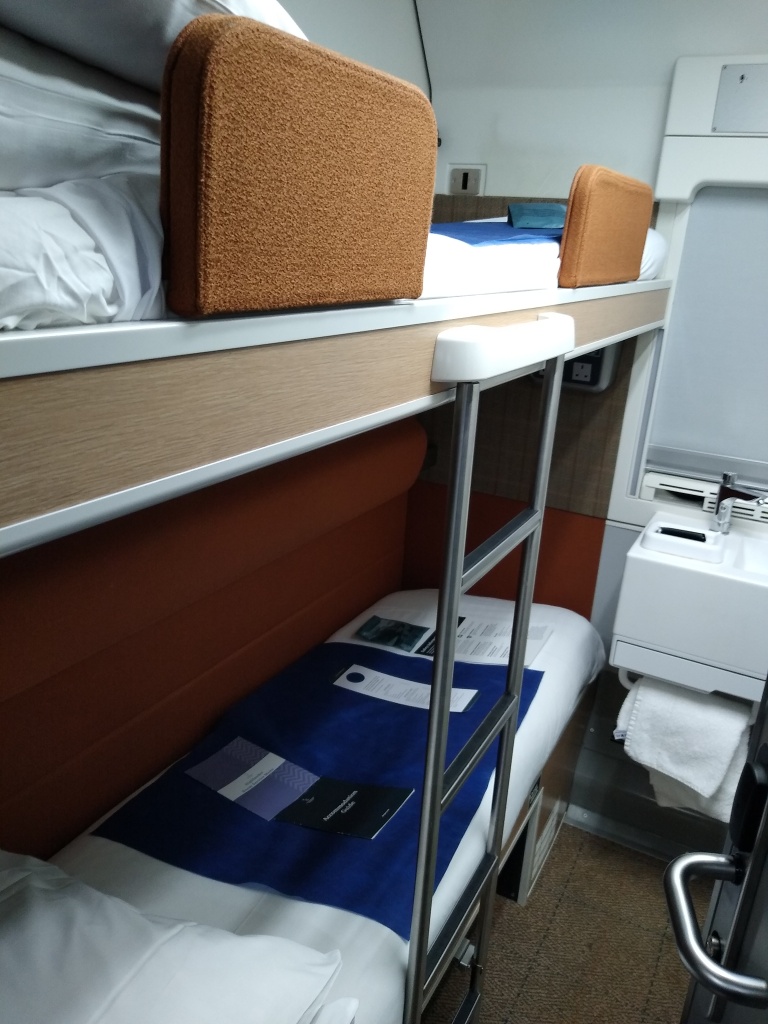
This 3-day hike through the heart of the Cairngorms began at Blair Atholl station, after a sleepless night on the overpriced Caledonian Sleeper train. On our backs was lightweight camping equipment (see review here), food, plenty to keep us warm, and a carrier for Bounty the dog, should his little legs get tired. Our target was Aviemore where, if we timed it right, we’d arrive before the sleeper train back to London.
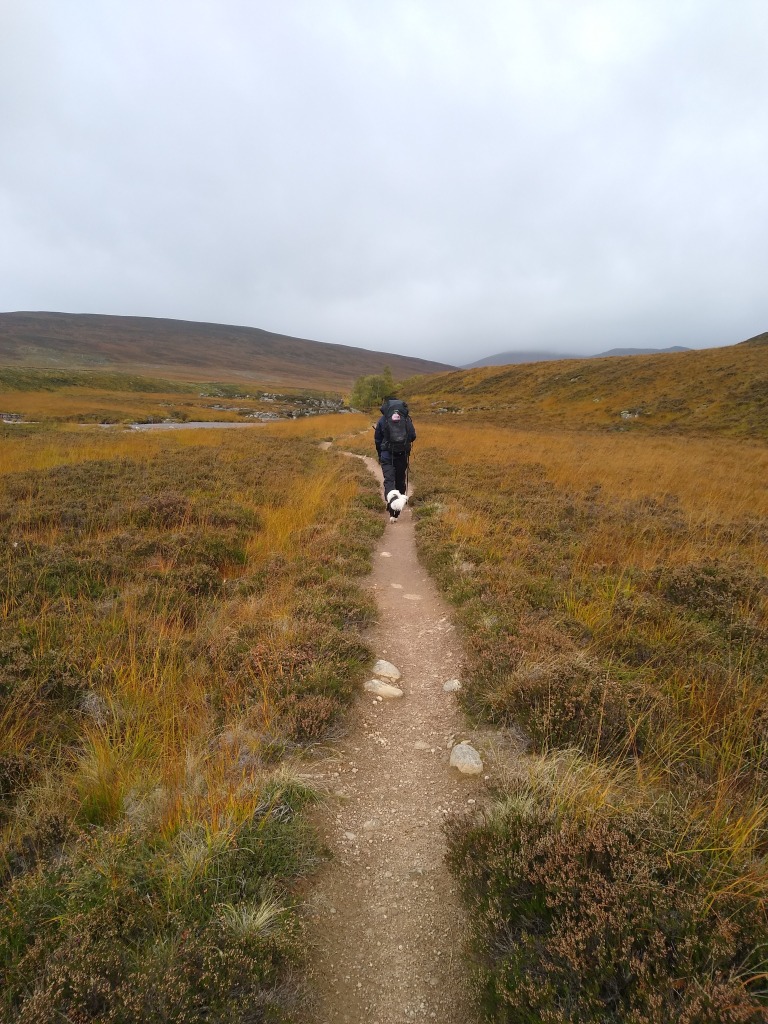
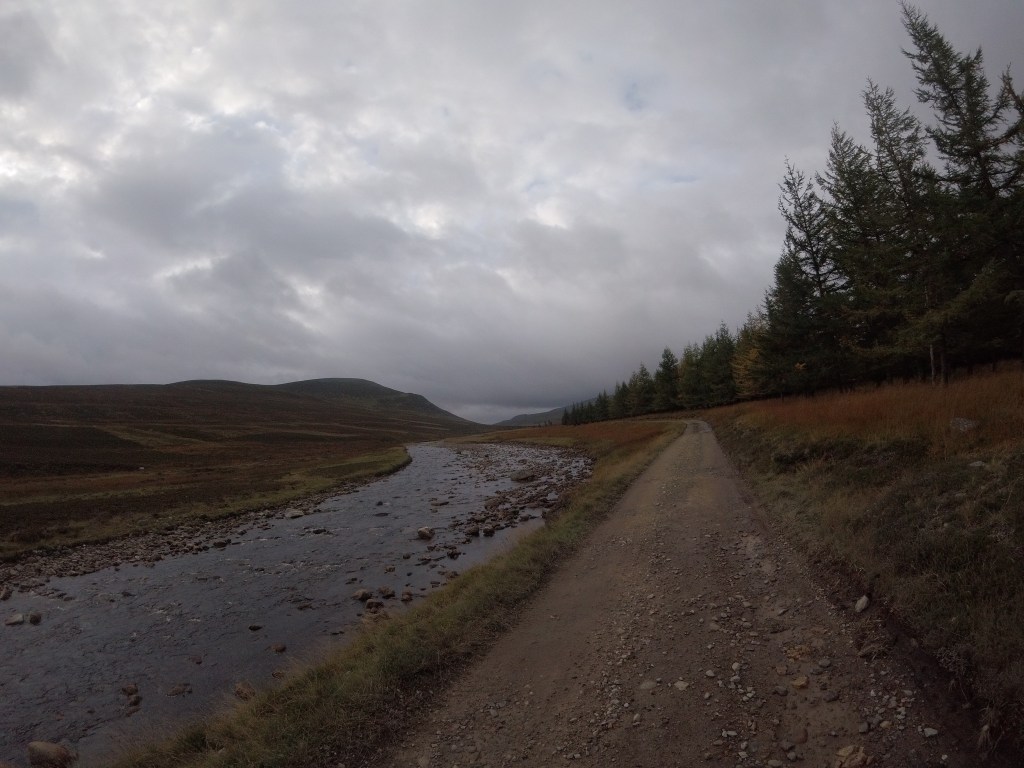
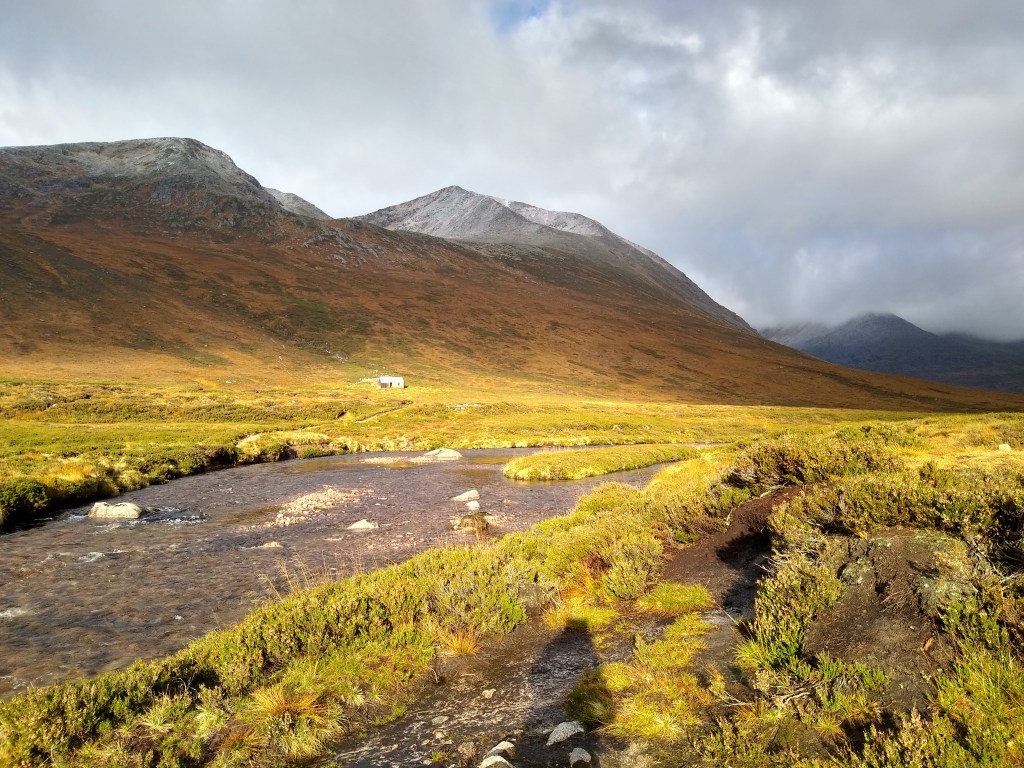
Arriving before dawn, we donned headtorches and set off. After a short jaunt along a road we were on a forest track that followed the River Tilt, raging in the canyon below. The first day’s walk was around 18 miles long and took us through valleys and past waterfalls. The calls of rutting stags echoed off the slopes of mountains.
Amazingly we only passed one other person that first day. We were going to camp by the ruins of Bynack Lodge, but after a very cold barefoot crossing of a river we were invited to set up our tent beside the Red House bothy, which was being restored and should re-open soon.
Caledonian Sleeper cabin
The older man who had invited us was staying at the bothy, despite it being a building site. He was waiting to be housed and so was living in bothies until he once again had his own roof over his head. He was also very generous with his beer and whisky.
Images from day 1
DCIM100GOPROGOPR0222.JPG
DCIM100GOPROGOPR0225.JPG
DCIM100GOPROGOPR0236.JPG
DCIM100GOPROGOPR0238.JPG
DCIM100GOPROGOPR0241.JPG
DCIM100GOPROGOPR0249.JPG
DCIM100GOPROGOPR0250.JPG
DCIM100GOPROGOPR0253.JPG
DCIM100GOPROGOPR0258.JPG
DCIM100GOPROGOPR0259.JPG
DCIM100GOPROGOPR0260.JPG
DCIM100GOPROGOPR0264.JPG
There had been a pretty strong wind overnight and so we didn’t get much sleep. I had also made the mistake of quenching my previous day’s thirst with whisky. Hungover, I helped Anna pack up camp before we trudged off along the track to the River Dee. After crossing this we turned left up a path through the heather and began the climb into the mountains. Soon after, the weather worsened considerably.
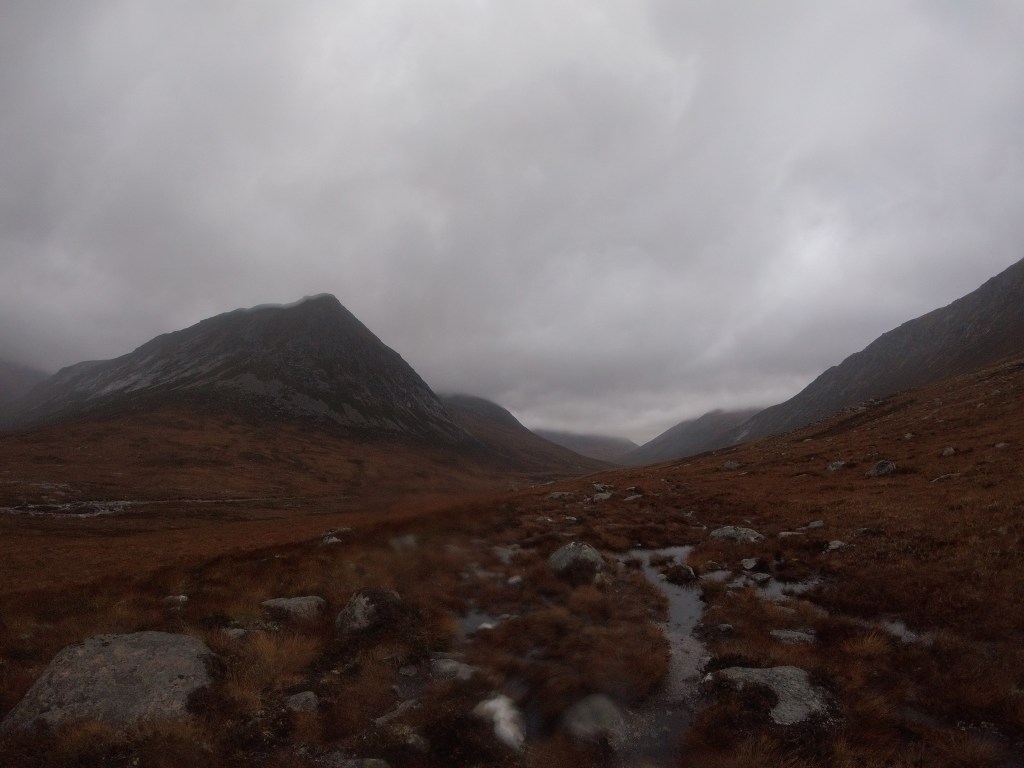
The gusts were so strong that, at one point, Anna was knocked off her feet. Fortunately our waterproof clothing held out and we were able to enjoy the experience of being amidst gloomy mountains. We were even happier to see Corrour bothy in the distance.
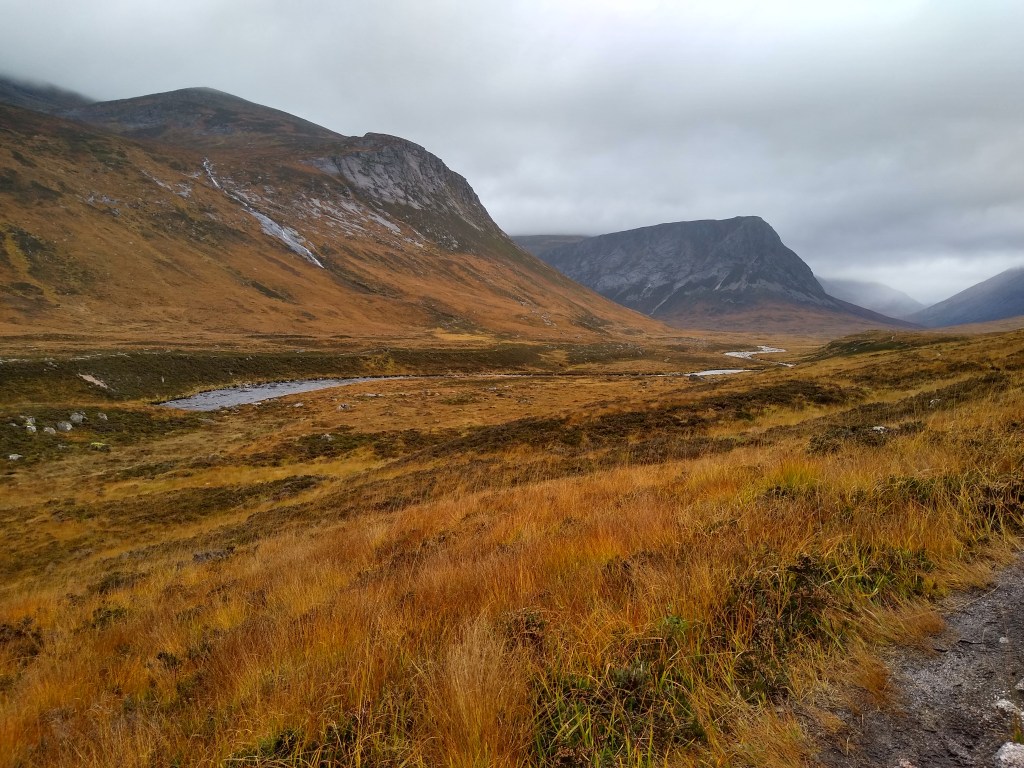
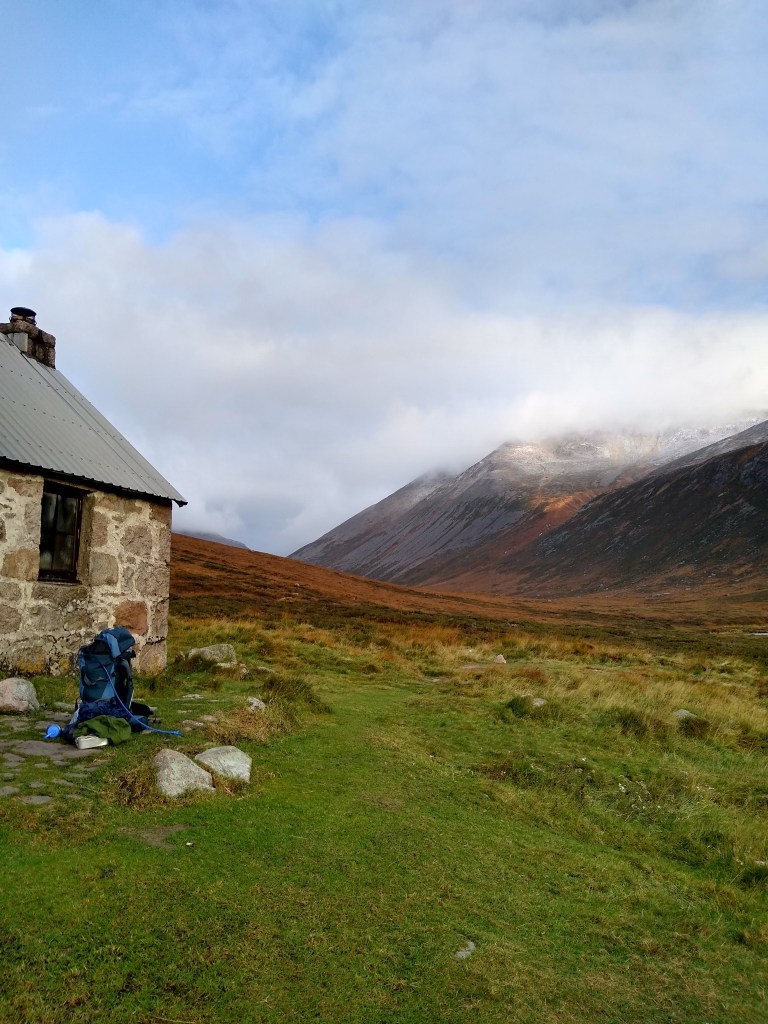
Nestled beneath the imposing Devil’s Point, Corrour bothy is perhaps one of Scotland’s best known. Like all other bothies it had a fireplace, a wood floor to sleep on, and not much more. Despite being basic, it was a welcome refuge against the storm.
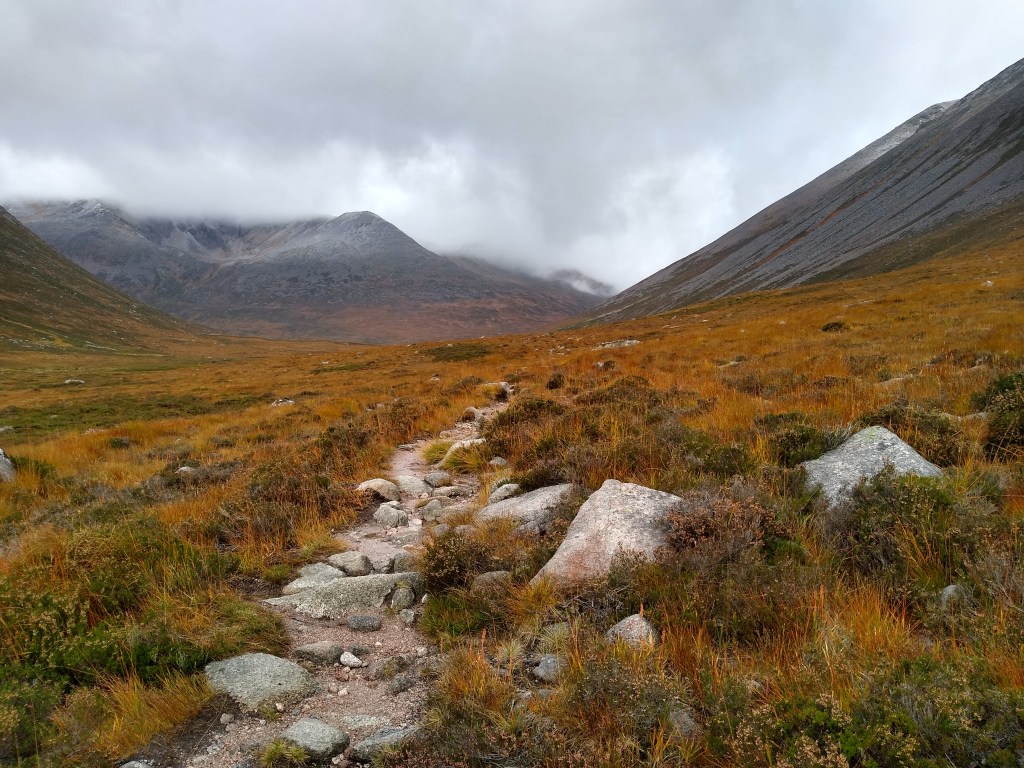
Typical, easy-to-follow path
Two Belgian men, and two intrepid Scottish women were at the bothy when we arrived. Despite the inclement weather the women marched out to bag a munro (a munro is a peak over 1,000 metres, Scotland has 282 munros), leaving us to chat with the lovely Belgians. Having bagged the munro, the women returned at dusk but then decided to continue on back to Braemar, many miles away. Just before the four of us turned in I noticed three lights in the darkness. 20 minutes later 4 people stumbled in – amazingly they’d walked all the way from Blair Atholl in one day, but were now exhausted, drenched, and possibly on the verge of hypothermia. One hot meal later and they, too, were ready for sleep in the cosy – and somewhat cramped – bothy.
Images from day 2
DCIM\100GOPRO\GOPR0269.JPG
DCIM\100GOPRO\GOPR0271.JPG
DCIM\100GOPRO\GOPR0274.JPG
What a glorious day to wake to. Blue skies and snow on the peaks. Having heated up an energising breakfast (I’d pre-mixed oats, sugar, cinnamon, raisins and powdered milk) we set off from Corrour bothy and up towards Lairig Ghru pass. Despite a constant upwards slope, this was a much easier walk than the one we’d endured the day before through a storm. And hangover.
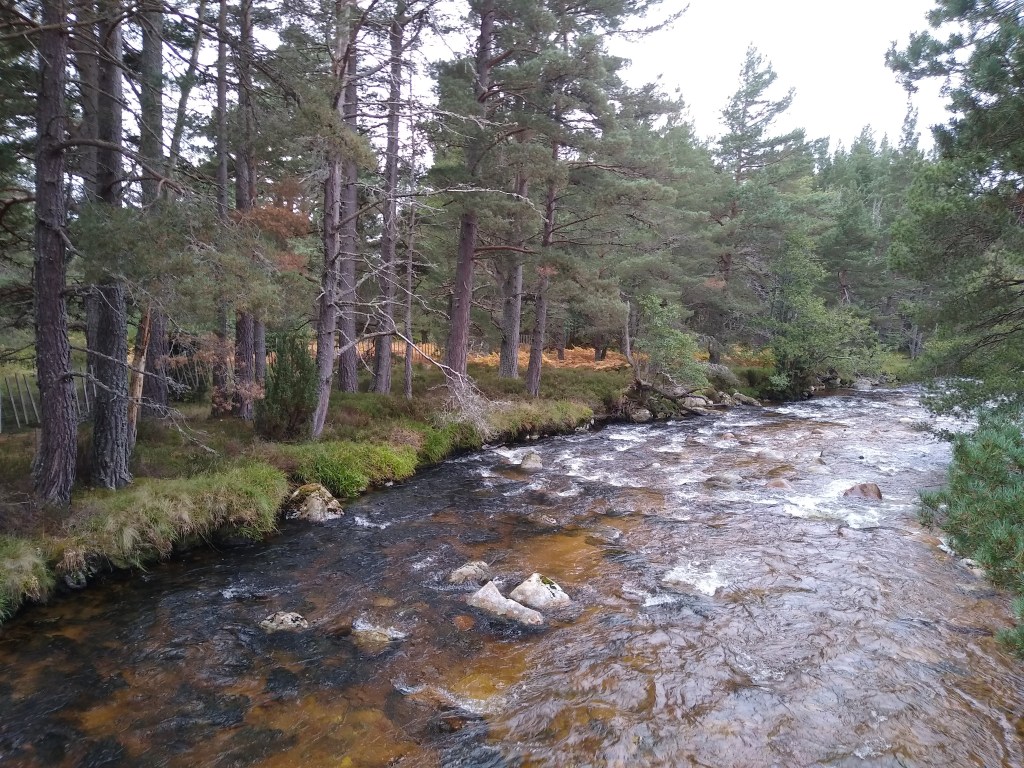
It took us a few hours to reach the Pools of Dee at the pass. Just over the other side we stopped for lunch. Although still far away, Aviemore was now in view. From here it was a constant descent, first through a large heathland at the edge of a deep canyon, and then into a serene pine forest.
Eventually we found ourselves at a track and, 6 hours into the walk, we passed the first people we’d seen since setting out. The walk out through the forest near Colyumbridge seemed to go on forever.
Corrour bothy
Eventually, though, we got to the road and, 30 minutes later, we were in Aviemore. Our equipment had held out through storms and freezing conditions, our legs were aching but had carried us here, and Bounty the dog had, all along, bounced along beside us. If we had wanted to catch the sleeper train back to London we would have arrived into Aviemore with at least 5 hours to eat, drink and relax before the train departed.
My list of lightweight equipment for a hiking trip through the Cairngorms.
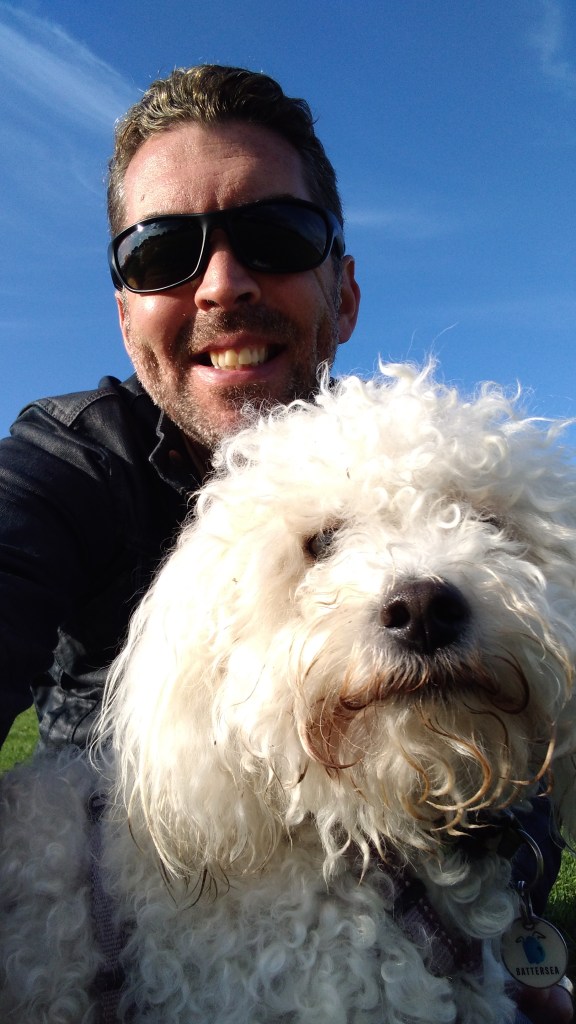
I enjoy hiking. I tend to endure camping. I’m about to hike for 3 days through Scotland’s Cairngorms (the UK’s largest national park), wild camping with my wife (Anna) and dog (Bounty).
Bounty is small. He’s also very cute, but that’s not relevant here. He can’t walk too far on his little smooshy legs. Anna will carry Bounty for some of the way, I am responsible for carrying everything else bar most of the tent. For the past year I’ve been researching and collecting lightweight equipment from purveyors such as the excellent Ultralight Outdoor Gear, now it’s time to put it to the test. Here’s most of what I’ll be carrying:
Hyke & Byke sleeping bag – 1127g
inov8 boots – 572g
Fire starter and 8x Fire Dragon alcohol gel firelighters – 290g
2 x breakfast, 3 x lunch, 2 x dinner plus snacks – 2293g
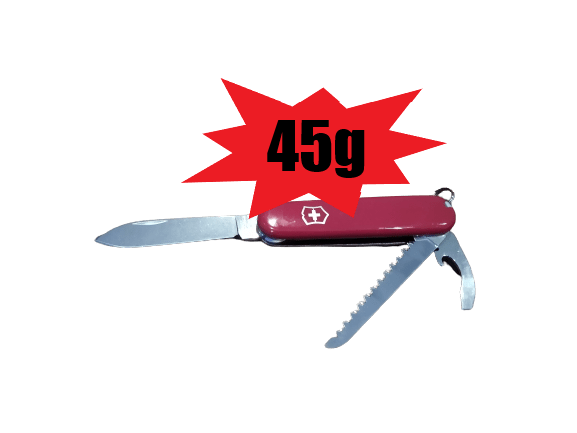
Victorinox knife – 45g
Luci inflatable solar light – 75g
Thermrest Neoair Xlite (regular) – 340g
20 x Swisspiranha BF120 pegs – 120g
Fizan Compact Ultralight Trekking Poles – 170g (we’ll have one pole each)
Evernew titanium pan – 153g
Salomon XUltra3P GTX – 380g (I’ll probably not take these, but will add to total)
2 x SNOW PEAK Titanium Trek Bowls and TITECOUGO Titanium Sporks – 160g
TOTAL: 8.86kg
There are other items I haven’t included here (clothes, my Osprey backpack, Anna’s Xlite Thermarest, Bounty’s food, lightweight towels, filter water bottles etc.), but this will probably be all that I carry when Anna has Bounty, and so hopefully my heaviest load.
Once I’ve completed the trip I will write a post reviewing both the hike, and the equipment used (and will link to it from here).
A 4-minute read about my challenging experience of cycling around the Norfolk Broads.
The river at Potters Heigham
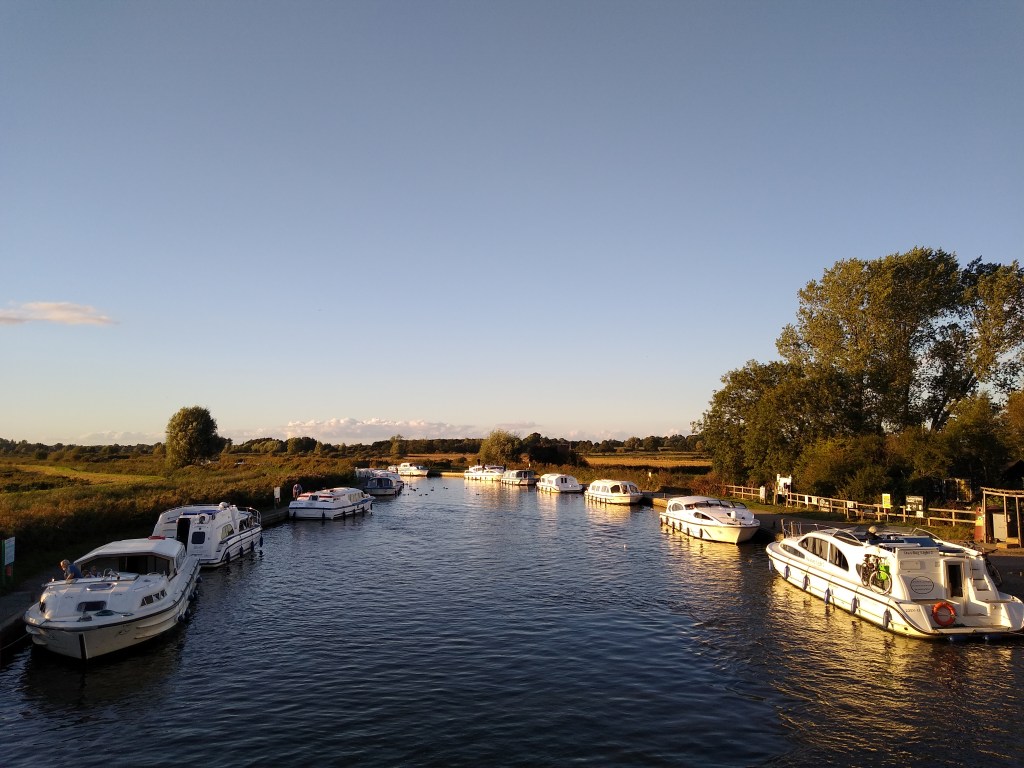
I had come to Norfolk for two reasons: to look at potential holiday home investments, and to enjoy myself. Norfolk is blessed with the Norfolk Broads – a large area which in medieval times was dug for peat, the resultant hollows in the land subsequently becoming flooded to create a landscape of rivers and lakes (the Broads).
Because this is such an aquatic area, perhaps the best way to see it is by boat along the many, many navigable channels. I, foolishly, thought that, because the area is notoriously flat, it would be a good idea to see it by bicycle. This was a mistake.
Hickling, Horsey, and Sea Palling
The train to Norwich, and then to the Norfolk town of Acle, took 2.5 hours. In the UK you have to book ahead to get a place on the train for your bike, which proved a fairly smooth process. Once in Acle I began the pedal into the countryside, and it was then that I realised this may have been a mistake
Despite being known as a cycling destination, the Norfolk Broads are severely lacking in cycling infrastructure. My routes often took me along dangerously fast A roads, as well as B roads full of traffic. I was glad to make it to the little village of Martham, and then on to Hickling Broad
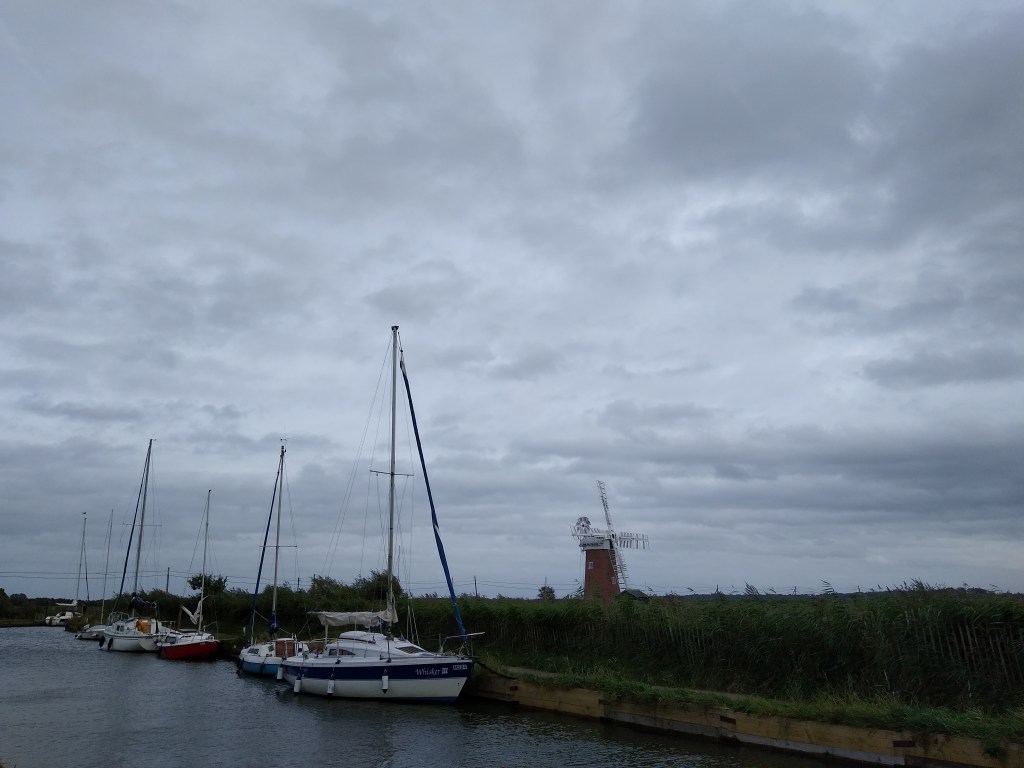
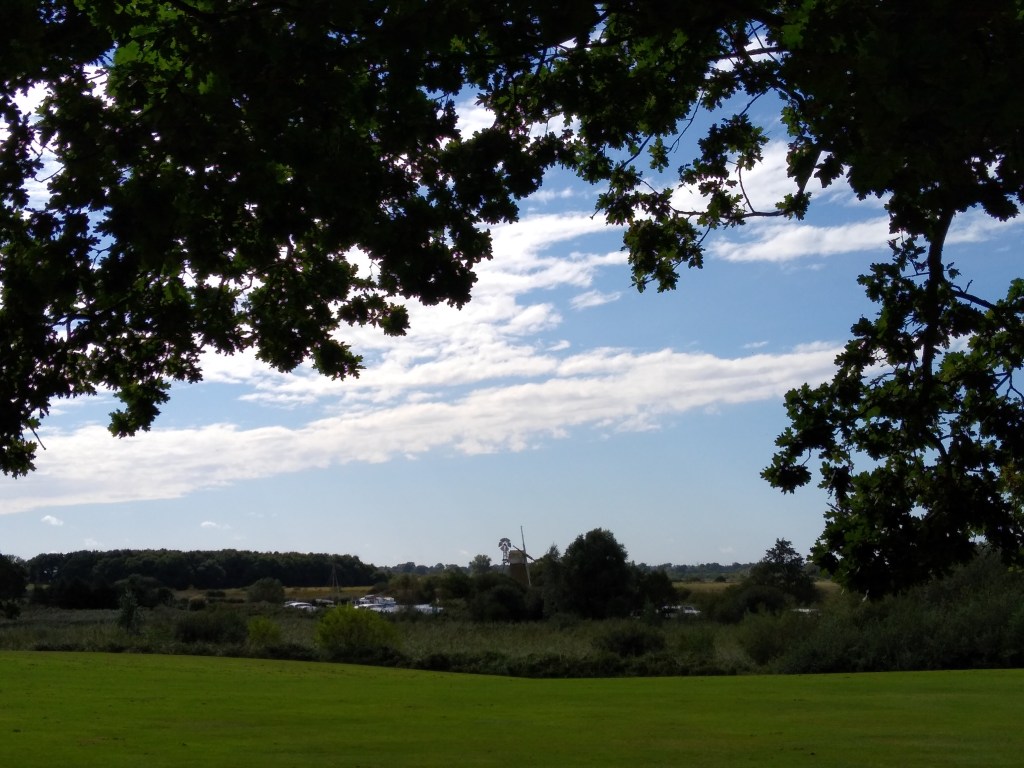
It was a relief to get to Hickling. Here was a view I associated with the Broads: an old windmill by a watercourse full of boats. It was peaceful here and I was tempted a little way along a path beside the waterway. But I had another sight to see today.
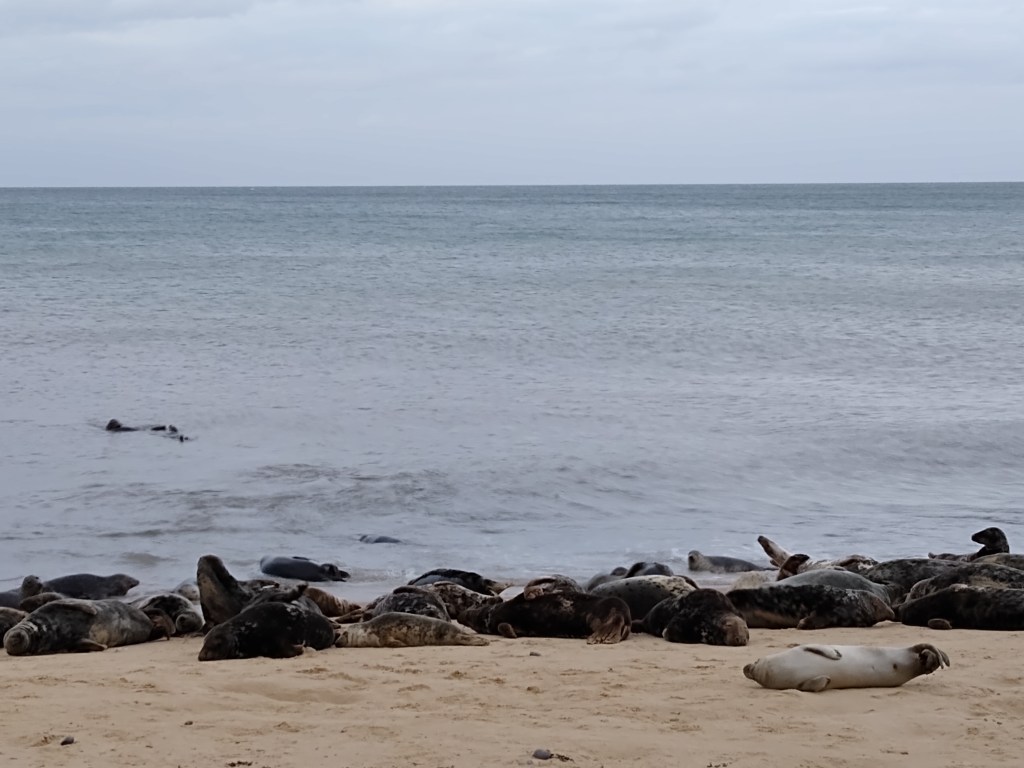
The UK is a severely nature depleted country. It’s therefore a rare pleasure to come across the sort of scene that greeted me at Horsey Beach. Only in the Galapagos have I seen this many seals in one place. They were flopped in a large group on the sandy beach (which would be a lovely place to be in warmer weather), or splashing around playfully in the sea.
Miles along that same beach is the village of Sea Palling. There isn’t much human habitation in this area and so the beach – and dunes behind – feel particularly wild. Sea Palling provided a shop, a few eateries, and a sea rescue centre…everything the visitor could need.
Thurne, Potters Heigham, Ludham and Coltishall
After a long cycle through a heavy rain storm to see a house we didn’t get, we cycled a long way back to where we had originally intended to go – Thurne, which is a very small village at the end of a Broad. It has a cute pub, but not much else going for it. Onwards to Potters Heigham, which felt as though it were the main centre of the Broads.
The bridge at Potters Heigham is believed to date back to 1385. Its aesthetic is somewhat ruined by the traffic lights which are necessary to control the flow of traffic (traffic which doesn’t fit on the adjacent more modern bridge that carries a noisy A road). This strange little hamlet has a large marina and dozens of boatyard buildings. Little shacks stretch either side of the river, the occupants of the furthest must walk 20 minutes from the car park. A factory-like tearoom serves dry scones and meager cream portions. Onwards!
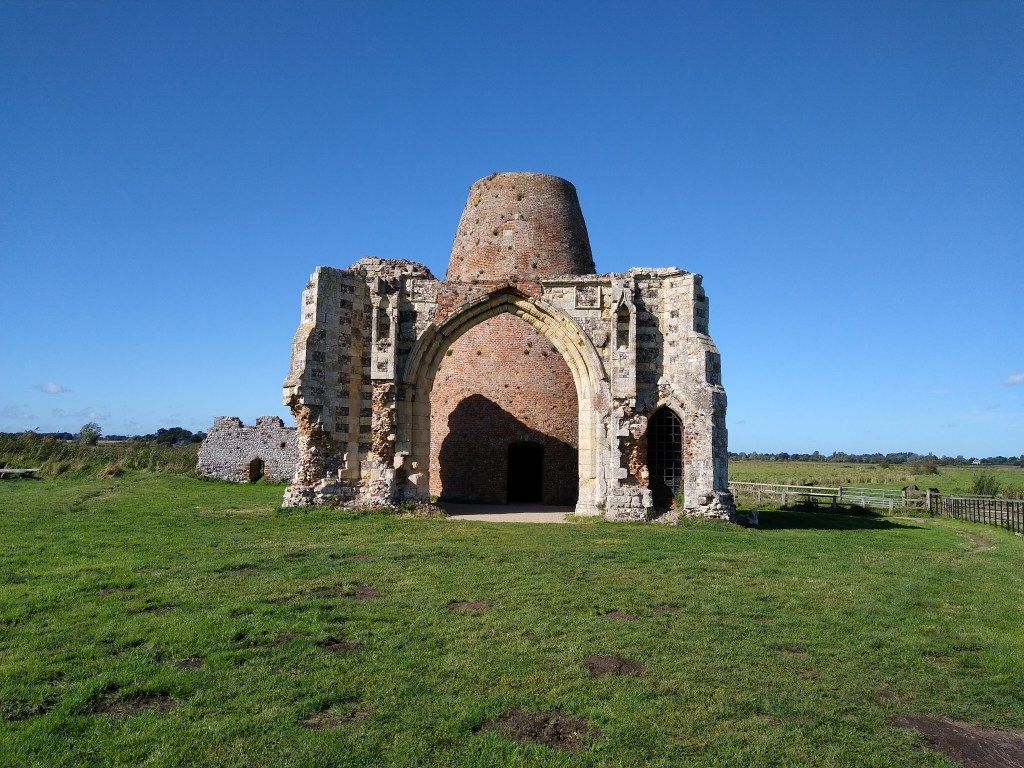
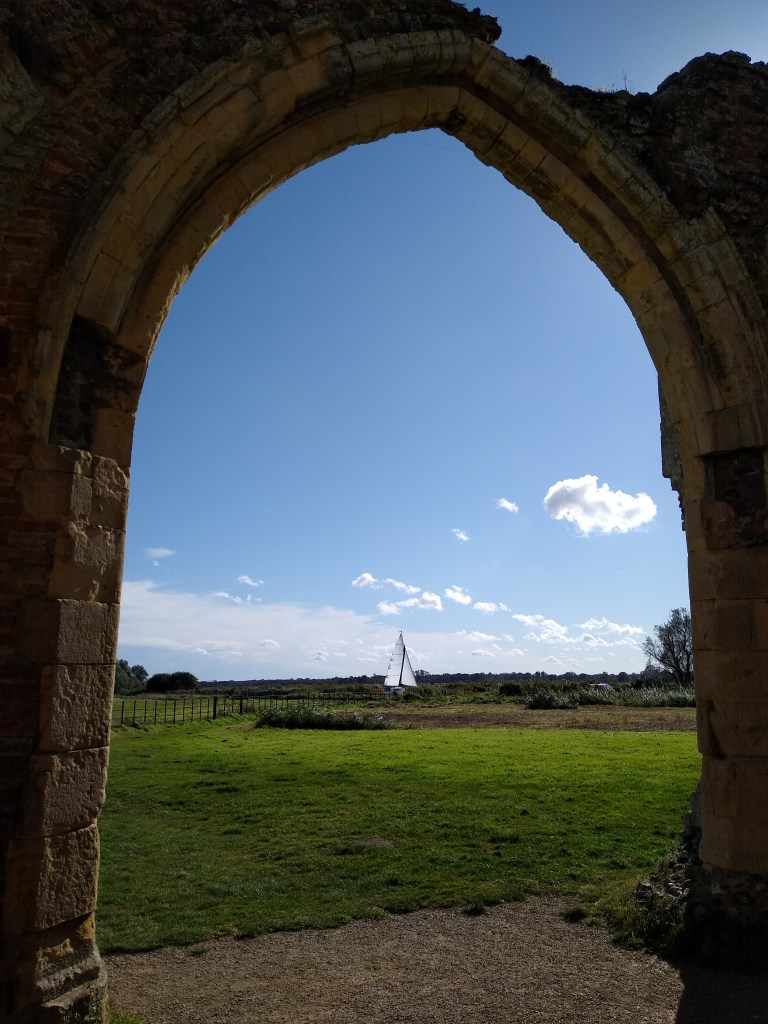
Along a thankfully quieter road I cycled on to Ludham. This is a village that has everything; a marina, a butcher, a good local shop, and (most importantly) a pub. There are many sights to see around Ludham, including How Hill, where you’ll find a formal garden, well-preserved mills, a millkeeper’s cottage, and wildlife trails. Also close to Ludham are the ruins of St Benet’s Abbey, which had the rare honour of being spared by Cromwell. It was once a massive and impressive place, but now just the gatehouse survives, and even that has in years past had a mill built into it.
Unfortunately we didn’t have much time to explore Coltishall. The one thing I can say about this village is that it’s surrounded by roads that are actually quiet and pleasant to cycle along. Oh, and it has a great pub called The Recruiting Sergeant which serves excellent food.
Wroxham, Stokesby and Reedham
St Benet’s Abbey
Although Potters Heigham is busy with boats, Wroxham is considered the actual centre of the Norfolk Broads. Here there are dozens of boat yards, and lots of different types of boats to hire for hours or days. I opted to hire a canoe for a couple of hours, to see what all this river fuss was about. Several minutes after leaving the dock I was in a wonderland of tree-fringed river. So THIS is what it’s all about.
The watercourse somehow reminded me of the Amazon, perhaps because the trees at the water’s edge dipped their branches into the river. I paddled into a gap through the trees and into a broad. On this large lake were sailing yachts and people fishing. I wondered what type of fish there were in those murky depths – here the water was fresh, but at some point the river turned salty where it met the sea.
My final stop in the Broads was Stokesby, which really is off the beaten path. Unfortunately I only saw the place at night, but its delightful pub sits right on a river and I imagine it’s a wonderful place to be in the summer. The same can be said of Reedham, which I did manage to see during daylight. This village has a waterfront with pubs and cafes, a swing bridge to let through large boats, and a ferry further upriver.
Norwich
Before returning to London I spent a night in Norwich. The cathedral here is almost one thousand years old, and has the second-largest spire in the UK. Norwich also has a castle (closed when I tried to visit), as well as many charming pedestrianised streets.
A river runs through this city and the waterfront varies from modern malls, to tree-lined footpaths. All around town are plaques informing visitors about historic events which took place in the city. I liked it, but one day felt about right to see the place.
Norwich Cathedral
🏨
I stayed at, and can recommend, the Dairy Barns in Hickling, the Recruiting Sergeant in Coltishall, and the Barn Apartment in Stokesby. I also stayed in the Nelson Premier Inn in Norwich, which I absolutely do not recommend.
Take a Greater Anglie direct from London Liverpool Street to Norwich, and then you have a choice of destinations in and around the Broads, including Acle, Reedham, and Hoveton & Wroxham.
The best hot chocolate ever was not a thick concoction of rich, creamy liquid. In fact, it tasted fairly average. What made this the best hot chocolate ever were the circumstances in which it was enjoyed.
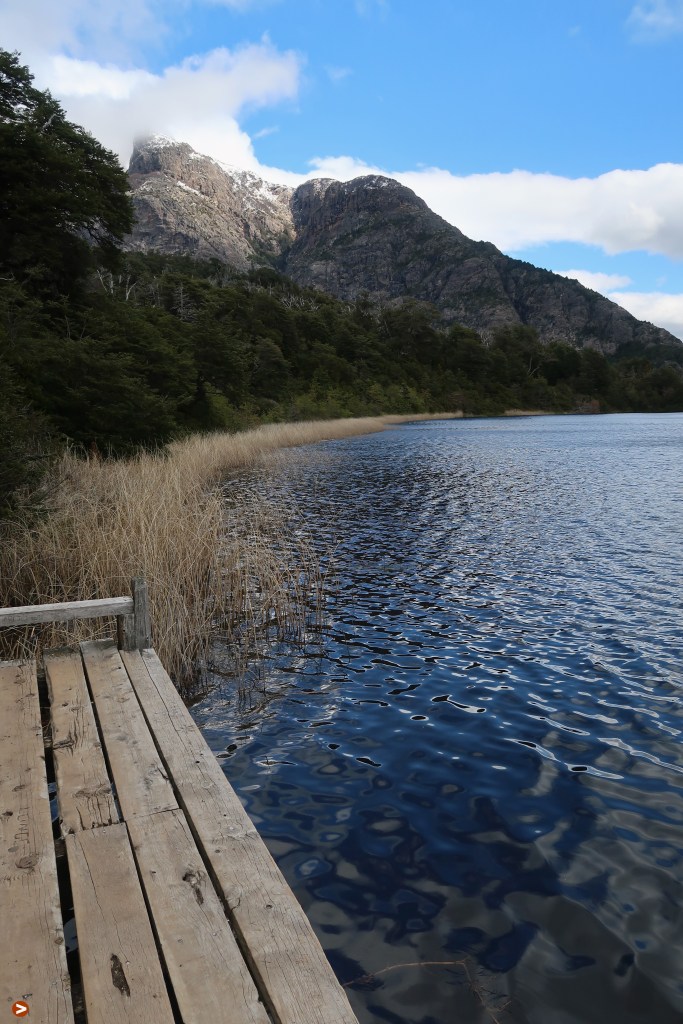
Bariloche is blessed with a large lake at its feet and the awesome Andes at its back. Patagonia stretches for many miles south, with coaches and sleeper trains connecting the city to the coast or to adventure-filled destinations such as Esquel and El Calafate. You can even take a boat (and then a bus, boat, bus, boat, then yet one more bus) to Puerto Varas in Chile.
This Argentine gem is a chocoholic’s dream, with top-quality chocolate shops lining the high street. With so much choice, my favourite had to be Rapa Nui, which even has a very chocolatey café with an ice rink in the middle.
But the best hot choc is harder to find…
Been to Buenos Aires? Then maybe you picked up a contactless SUBE card, allowing you easy travel on public transport. The good news is that your card is also valid in Bariloche (the bad news is that I found it a challenge to top it up). The better news is that there’s bus #20 to the forested Llao Llao park (stupendous views), as well as bus #55 to Cerro Catedral, and it’s from here that the hike to the best hot chocolate ever begins.
When you step off of #55 you’ll notice that you’re already high in the mountains. Look for a wooden sign marked ‘FREY’, and you’re on your way.
Lovely lovely Llao Llao
Oh snow
Should probably have brought proper hiking poles
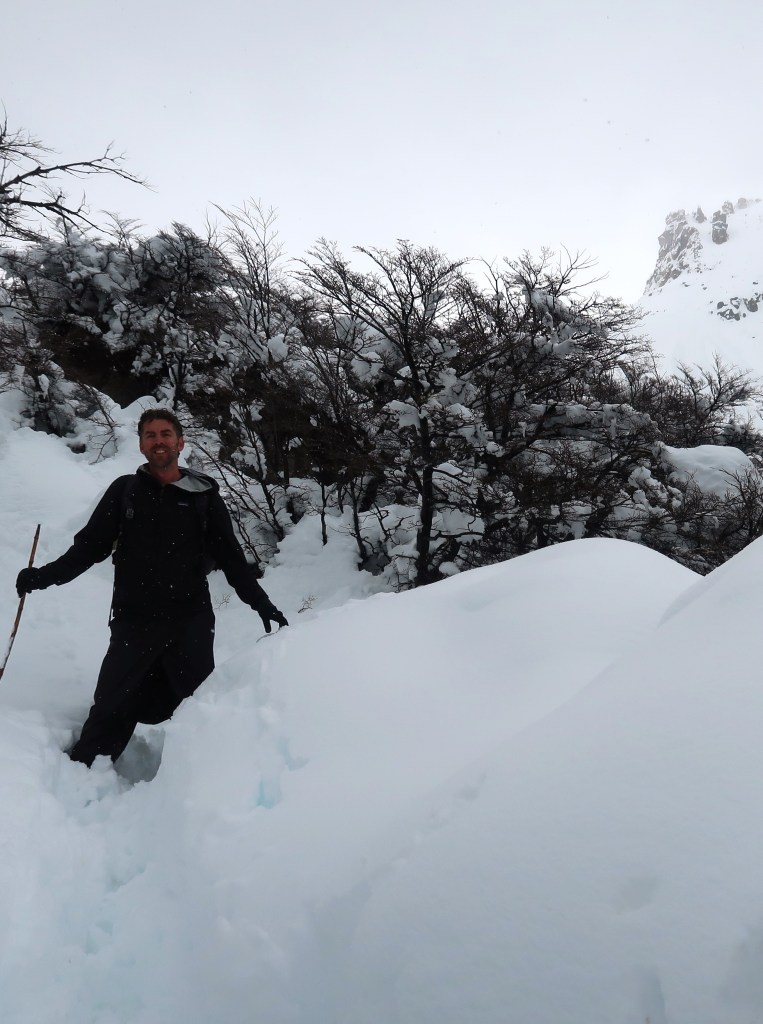
This trek is supposed to be easy. During warmer months it probably is. But we were told by the friendly national park lady in town that Refugio Frey – the mountain refuge we were aiming for – was closed due to snow. But I was determined to undertake this hike, and so we donned waterproofs and set off.
First there was a path along the edge of mountains and with views of many more. Then the path turned up a forested valley, with a rushing stream below. Then we hit the snowline.
What makes it so good?
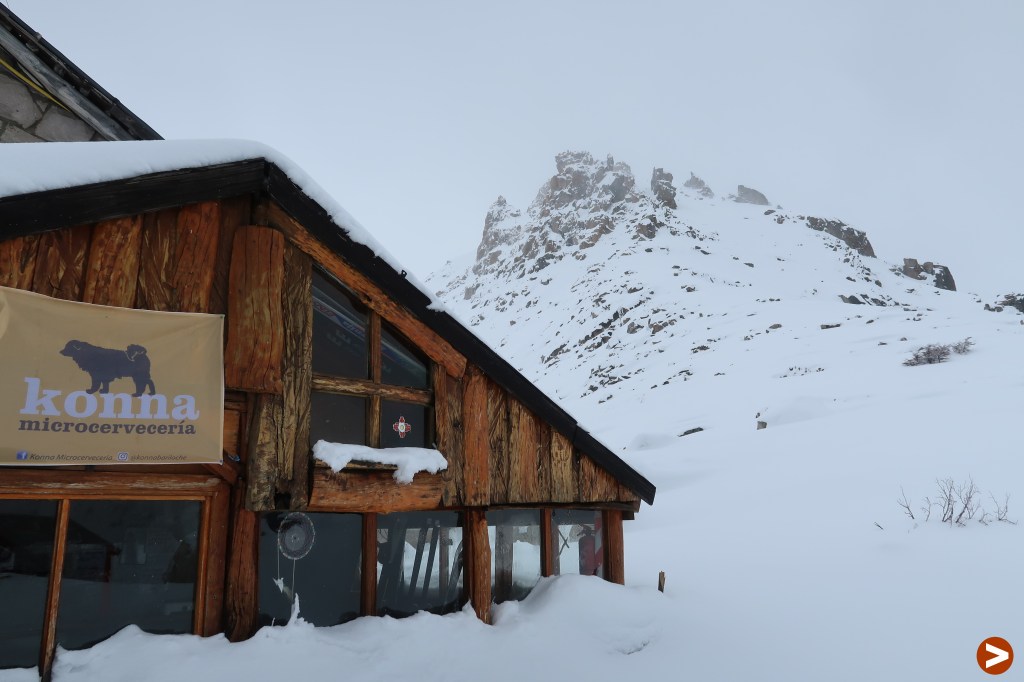
Refugio Frey beside Cerro Catedral
Fortunately someone had hiked up here since the most recent snowfall. But it was that challenge of wading through waist-high snow in a remote mountain valley that made the hot chocolate taste so good.
When we arrived at the refuge we thought that the national park lady had been right – it looked closed. But then the door opened and we were beckoned inside. A charming man offered us coffee. ‘Chocolate?’ I enquired. He nodded, smiled, and pointed to a table. Three rugged-looking mountaineers sat at another table and gave us a friendly hola.
We were in a remote refuge with a view of the mountains, we’d forged through the snow having passed others who’d decided to turn around, we had (I like to think) the respect of some random mountaineers. That hot chocolate, though not notably tasty, was still the best hot chocolate I’ve ever had – better, even, than the exquisite beverages I’ve enjoyed in Belgium.
Getting there
Visit Bariloche as part of this 19- to 21-day Southern Argentina itinerary (for Budget, Mid-range, and Luxury travellers)
A 3-minute read featuring the highlights of Antwerp, with personal recommendations and travel tips
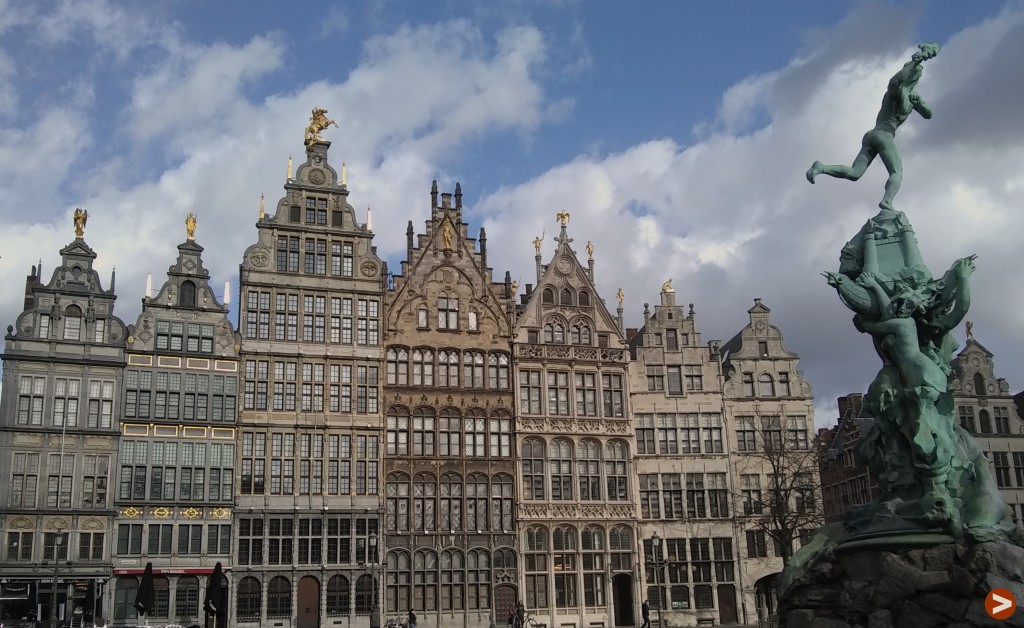
The gilded Guild building’s on Antwerp’s Grote Markt
I’m going to start this post by throwing some Antwerp facts at you. In the 16th century this indomitable city was the richest in Europe, thanks to pepper, silver, and textile booms, and attracted merchants from across the continent. At the beginning of the century 40% of world trade passed through here.
Reformation, riots, and revolt spurred the city’s decline. Napoleon had plans to reinvigorate the city’s harbour, but Waterloo put paid to those. Amidst the wars that Europe suffered in the last century, Antwerp hosted the Summer Olympics, and then in the 90’s became a major fashion centre.
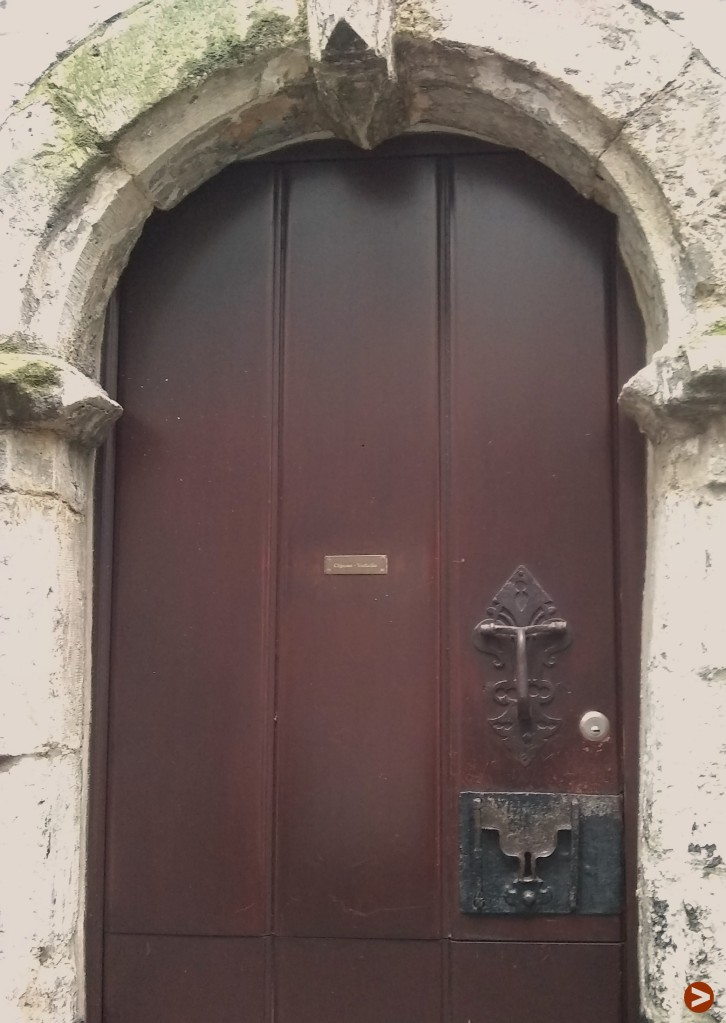
Drunk man’s lock
Antwerp door, with 16th century lock at bottom-left
Antwerp’s history is writ large on the city’s impressive architecture. In fact, many of the buildings reflect the characters who once lived here.
Take this 16th century lock. See how it has a wiggly ‘V’ of metal lines pointing towards the keyhole? This design allowed the owner to return home from a drunken night out and easily locate the hole with his key.
But this little reflection of character pales into comparison with what can be found in the Zurenborg district.
Art Deco wonderland
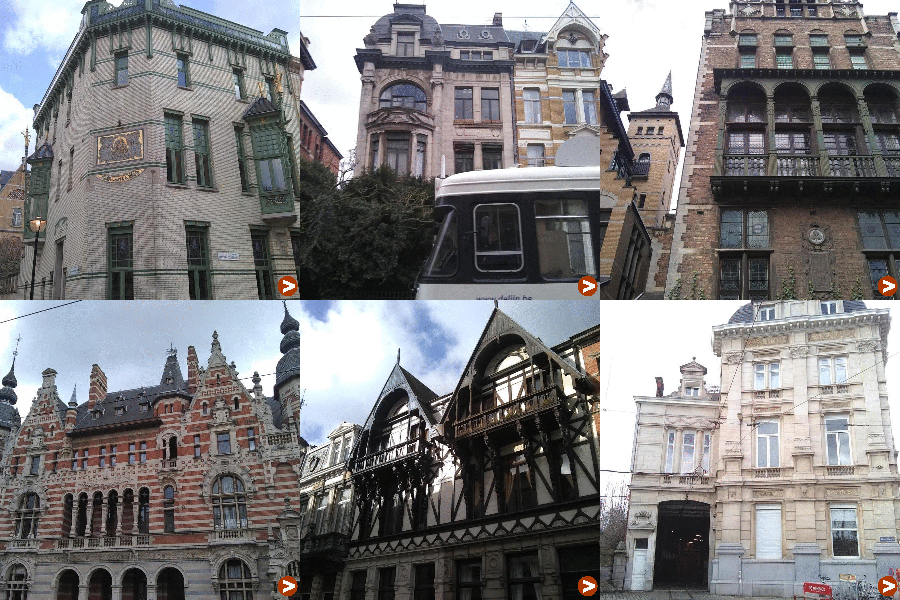
In Zurenborg’s “golden triangle” of Transvaalstraat, Waterloostraat, and Cogels Osylei streets you’ll be treated to a huge variety of architecture. Although you’ll find in this Zurenborg district Gothic Revival, Neoclassical, and other styles, it’s Art Deco architecture which prevails.
The buildings here reflect Antwerp’s growing wealth and were mainly constructed between 1896-1904.
Selection of interesting architecture in Antwerp’s Zurenborg district
They’re in Fashion
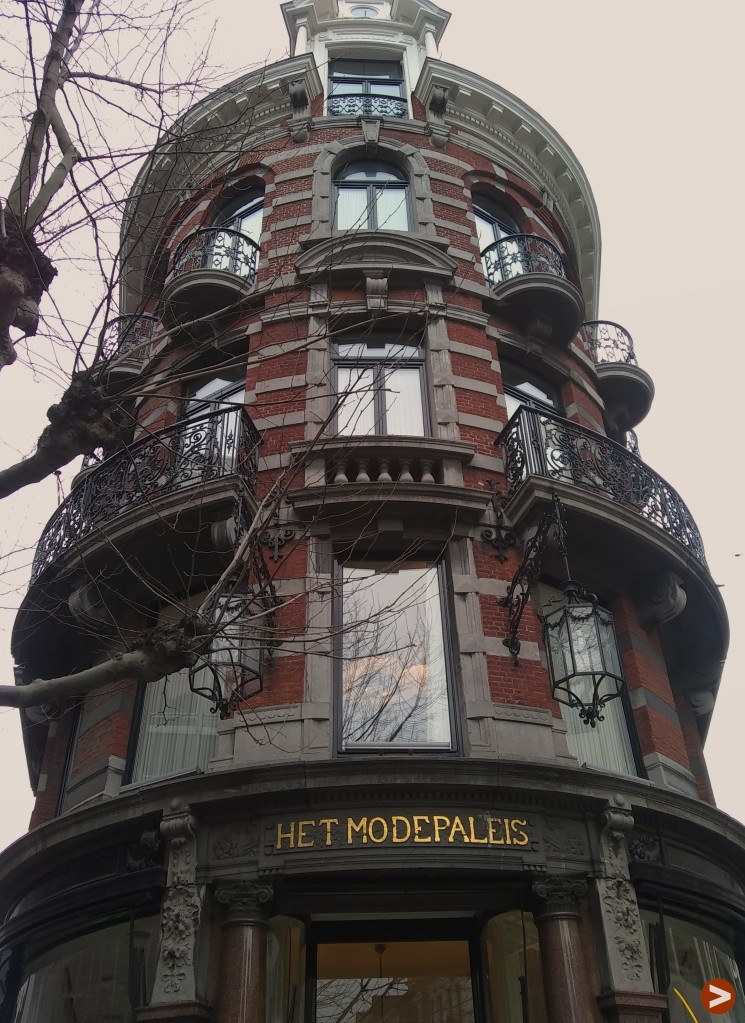
Het Modepaleis, the flagship store of Dries Van Noten (one of the Antwerp Six)
In the early 80s a group of fashion designers graduated from Antwerp’s Royal Academy of Fine Arts. They went on to become hugely influential in the fashion world and are known as “The Antwerp Six”.
Thanks in no small part to this group, the city has a thriving fashion district, in which some of the six set up shop. Here you’ll find a plethora of places to go on a spending spree, all centered on Nationalestraat, and with gorgeous shop fronts that are a feast for the eyes.
Café culture
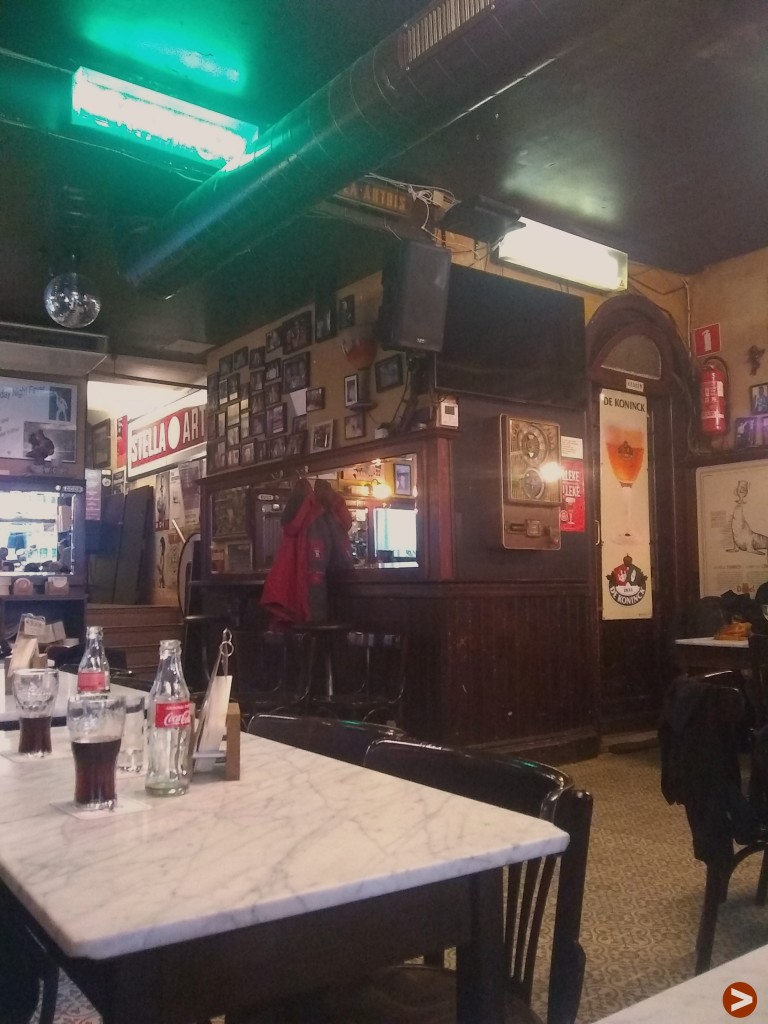
Antwerp is well-known for its “brown cafés”, allegedly named due to the cigarette smoke which once filled the cafes and leaving the walls stained brown. It’s this slightly rough-at-the-edges, very relaxed feel which make these cafés so appealing.
Inside you’ll find friendly staff, locals, and a large choice of delicious beers (try the Trappist brews, but don’t expect to walk straight afterwards).
Interior of Den Engel brown café, on the corner of Grote Markt
More must-sees
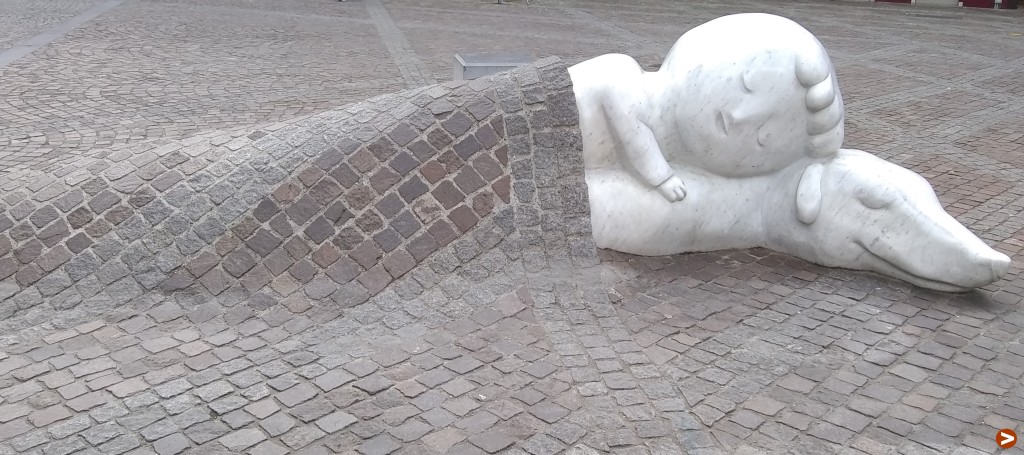
Statue of Nello and Patrasche – a sad tale of a boy and his dog
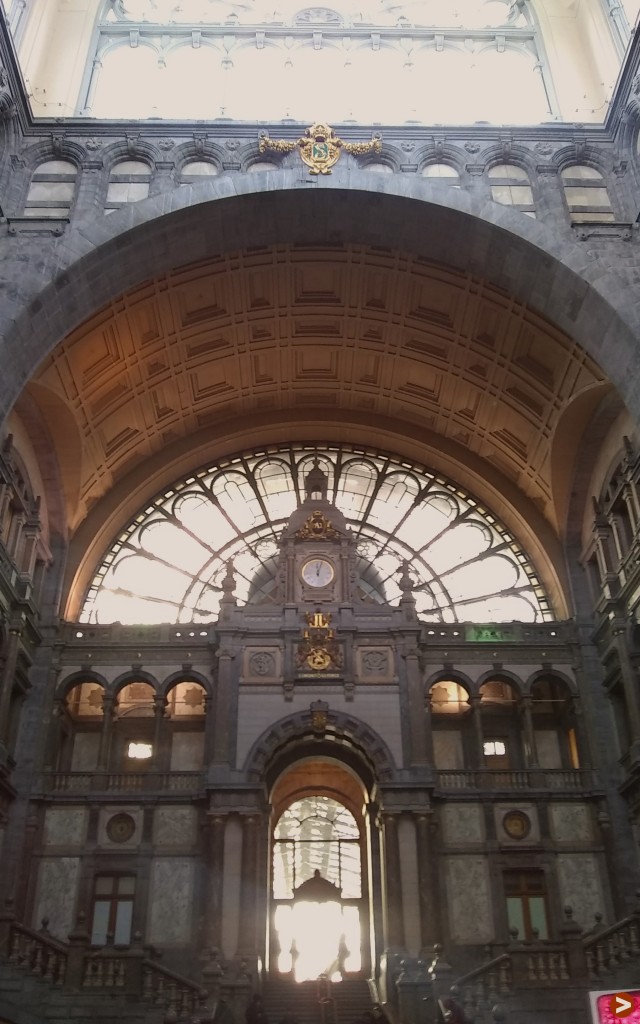
Antwerpen Centraal’s impressive entrance
In addition to the locations mentioned above, when you’re in Antwerp you shouldn’t miss:
Antwerpen Centraal train station, built in 1895 – an architectural marvel
Cathedral of Our Lady, completed in 1521 (although the south tower was never fully finished) and with impressive stained-glass windows
MAS Museum. This museum is bursting with Belgian history, and has a free-to-visit roof terrace with breathtaking views
St Anna’s Tunnel. This pedestrian tunnel – opened in 1933 – links the two sides of the city
Visit Antwerp as part of this 8-day Belgium itinerary (for Budget, Mid-range, and Luxury travellers)
Getting rocked to sleep at night and watching this wonderful world fly by during the day – night trains are as much of a highlight as the destination you’re travelling to and from. There’s a vast range of long-distance train journeys you can choose in Africa, the Americas, Asia, Europe and Oceania. Some offer nothing more than a seat or basic bunk bed, others boast opulent suites with their own bathtub and butler. You can even travel for 2,622 miles for just $10.
2021 is the European Year of Rail, and many more night trains are either starting up or being proposed in this continent – it seems that overnight train travel is becoming fashionable again. In fact, in recent years there has been a trend towards ‘train cruises’, and these luxurious journeys are amongst the most spectacular in the world.
Although the routes listed below aren’t necessarily the longest overnight trains in the world, they do offer some of the most breathtaking scenery.
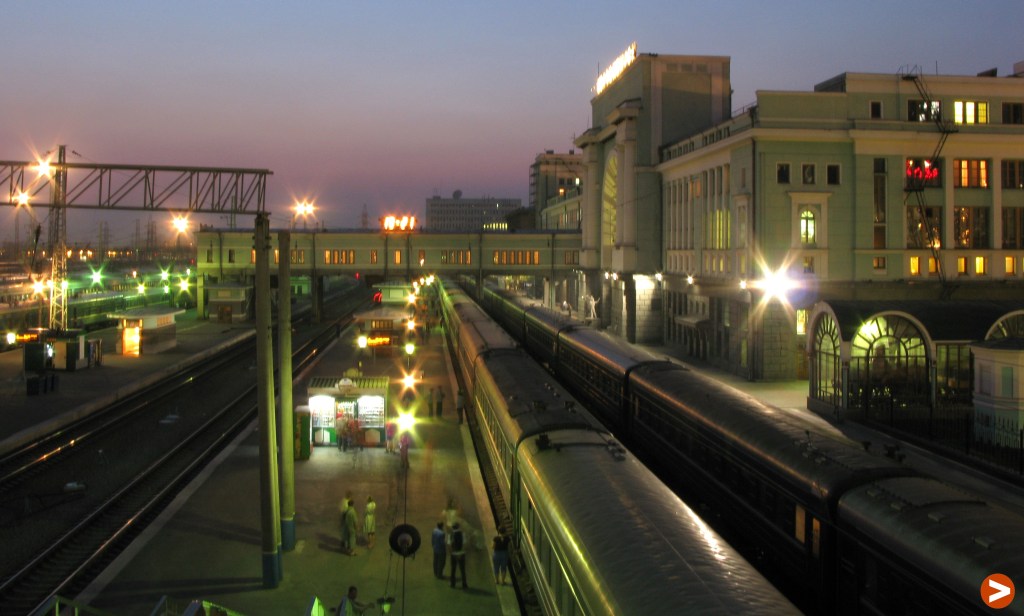
The third longest train journey in the world takes six nights to complete. For the first four days you’ll travel through Russia, skimming through Siberia and vast tracts of silver birch forest. The train speeds along the shores of Lake Baikal – the deepest freshwater body of water in the world – before crossing into Mongolia. Here the landscape changes to dry and dusty, with vast areas free from human habitation. After speeding through the Gobi Desert you’ll reach the Chinese border, where the train gets lifted up so that the wheels can be changed to a new gauge. Onwards through vast hills and beside deep gorges until you emerge into Beijing.
Although you can stay on the train from start to finish, it’s worth stopping off in Russia, as well as spending at least a week in Mongolia. Two trains a week travel between Moscow and Ulan Bator, and two trains a week link Ulan Bator with Beijing.
In 3 days and 10 hours you’re going to see countless lakes and immense pine forests. The scenery then changes to the empty prairies of Manitoba, Saskatchewan, and Alberta, before approaching the gigantic Rocky Mountains. At the rear of the train is the Park car. These carriages were built in the mid-50s and offer views back along the track, a bar, and a raised dome with 360° panorama.
VIA Rail offers long-distance train travellers everything from roomy economy seats to luxurious Prestige class cabins, from where you can watch the Canadian wilderness zoom by from the comfort of your double bed.
Spanning the full length of Eastern India, this route begins in Kanyakumari, on the very tip of this fascinating country, and ends in Dibrugarh, on the banks of the mighty Brahmaputra and on the edge of the Himalayas. It takes a little over three days to complete, and you can travel for as little as $10 (but you’d be much more comfortable in 2AC class, where you get a comfortable bed, fresh linen, and air conditioning for just over $60!). Forests, farmland, wide rivers, and crossing the Tropic of Cancer are all highlights.
Indian Railways runs over 13,000 passenger trains every day, employing over 15 million people. If you’d like to travel in more luxury then the Palace on Wheels and Maharajas’ Express may not travel as far, but they do take several days to complete and make long stops in fascinating cities such as Jaisalmer and Udaipur.
Not the longest train journey in the USA (that would be the 2,728-mile Chicago to Los Angeles route), the Chicago to Portland Empire Builder train is perhaps the most spectacular. It begins amidst the architecturally magnificent skyscrapers of Chicago, before traversing the Wisconsin Dells, the Mississippi river, and the immense plains of Montana. It then climbs into the Rockies to the Marias Pass which, at a height of 1,589m, traverses the Continental Divide. The Empire Builder then stops at Glacier National Park, before continuing on through the Cascades and, finally, downtown Portland.
Whether you stay in a cabin or go budget on a seat, you’ll have access to glassy observation cars. The Empire Builder crosses 7 US states and if you travel all the way between Chicago and Portland you’ll be on the train for almost two whole days.
In 54hrs you will travel coast-to-coast through Australia’s immense interior. Shorter than the Perth to Sydney route (2,704 miles), The Ghan instead offers passengers the opportunity to see Uluru, Nitmiluk Gorge, and indigenous rock paintings, while gaining an appreciation of the scale of Australia that you simply don’t get by plane.
Services along this route were inaugurated in 1929, and in addition to having one of the longest routes in the world, The Ghan is also one of the longest passenger trains. At one point it stretched to 44 carriages – just over one kilometre!
Although you can travel from the border with Zimbabwe to Cape Town by long-distance train, the luxurious Blue Train between Pretoria and Cape Town is South Africa’s longest continuous train journey. And wow, what a journey. Not only is the train a wonder in itself (with a bar that looks like a sophisticated wood-panelled club, an elegant observation car, and suites with marble-lined bathrooms), it also travels through valleys, vineyards and vertiginous mountain scenery.
There is a cheaper option to travel this route, but it stops at Johannesburg rather than Pretoria. However, this is still a long-distance journey which takes 26 hours, and costs as little as $12.
In under three days you’ll travel through three countries – starting in Thailand and the bustle of Bangkok, along the Gulf of Thailand coast, over the infamous River Kwai, into the lush forests of Malaysia and grand skyscrapers of Kuala Lumpur, and finishing in the twinkling lights of Singapore. The train’s interior may well distract you from the views, with plush, old-timey interiors and exceptional cuisine. Your room for the night comes with an en-suite bathroom and wood-panelled walls – all the luxury you’d expect from a train operated by the same people who run the legendary Venice-Simplon-Orient Express.
This route is the end of the proposed Kunming to Singapore railway line, which will continue from Bangkok and through either Laos or Cambodia and Vietnam into China. It’s due to be completed in 2022 and will be 2,400 miles (3,900 km) in length with a journey time of 30 hours from one end to the other.
South America’s longest train journey begins in the magnificent capital of Argentina before gliding along the Pampas 26.5 hours later, through the large city of Rosario, across the huge Parana River, and on to Tucuman – just in sight of the snowy Aconquija mountains on the edge of the Andes.
Train travel is rare in South America, but because of the size of Argentina it has one of the longest networks in the world. The Buenos Aires to Tucuman route is now 73 years old, and although the long-distance train that ran along it was once considered one of the most luxurious in the word, sleeper cabins are now much more basic (but clean and comfortable), but you do get access to the dining car which serves delicious Argentinian cuisine.
Travel at night and enjoy the typical comforts of a basic sleeper cabin, waking up to the scenery of south-west Italy’s Campania region. You’ll soon also be able to see the Mediterranean as the train hugs the coast. Head to the rear of the train for views back along the track – perfect for watching the journey through verdant valleys. Perhaps the highlight of this long-distance train is the ferry that takes the carriages across to Sicily (exit your carriage for the ferry journey to see this unusual sight, before re-boarding for the final leg along the Sicilian coast and Mt Etna).
There are many train ferries in existence worldwide, the one between Villa San Giovanni on the Italian mainland and Messina in Sicily offers views of the island’s mountainous interior, as well as the many shops which cross the Strait of Messina.
Over 21 hours you’ll see the grand capitals of Czechia, Slovakia, Hungary and Croatia. The Regiojet train winds through hills, ancient forests, and villages as you whizz along on the journey south. You’ll pass various mountain ranges both during the day and as you sleep in either a chair or comfy couchette bed (breakfast included). Your first glimpse of the Adriatic precedes the train’s descent into sunny Split – gateway to some stunning Croatian islands.
Although new long-distance train routes are popping up all over Europe, there are many already in existence. Paris to Moscow is the longest on this continent (2,164 miles, 3,483 km), with others covering destinations as far north as Narvik in Norway – 140 miles inside the Arctic Circle – all the way south to the aforementioned island of Sicily.
Reading about places I’d love to visit but which I’m currently unable to (pandemic) may seem like a form of torture, but the best travel bloggers can expertly use words to take you along on their journey and make you almost feel as though you’re there with them. Plus, as evidenced by my own blog, I love to plan and these bloggers provide a never-ending source of inspiration and tips. Here are some of the best that I’ve noticed this month.
What a wonderful way to learn about Stone Town’s rich Arabian and Indian trading history, and the characters who have passed through. I’ll admit that, when I visited Zanzibar, although I noticed the intricate doors, I didn’t fully appreciate them, nor how they linked this tropical island with the subcontinent, and how each door seems to tell a story.
In addition to illustrating this post with dozens of delightful door pics, Madhurima’s fun digressions also give an insight into Indian culture. Now, please excuse me while I shop at B&Q for a door which can deter elephants.
I really didn’t think that a Polish dining car could be so much fun until I read this article, but it seems as though, in the country’s post-war Communist years, they were packed with raucous drinkers having a grand old time. Well, until they woke up with a hangover the next morning hundreds of kilometers from their destination.
Juliette Bretan’s hugely entertaining article brings us up to the modern era, where those 70 year-old dining cars are still in operation today. She describes how they’re now much more chic, and that the food served on board is freshly cooked – far less dubious than the stuff that was once presented in jars – making the dining car a highlight of any journey.
As part of a chat about volcanos, @PlaneTicketAway shared this video of a journey they’d done to Nyiragongo volcano in the Democratic Republic of Congo. It’s a wonderful few minutes’ insight into this tour, including the travel there, as well as quite breathtaking footage of the active volcano itself.
Being ‘stuck’ in the UK has provided many people the opportunity to better get to know their own country. Thanks to bloggers such as Matt, my eyes have been opened to places that rival many I’ve travelled thousands of miles to see. Even better, the page that he’s created contains a wealth of information on how to walk what looks like a spectacular route along the Gower Peninsula coast path. As someone who loves to plan, this has a lot of appeal for me!
I walked the Cotswolds way several years ago, briefly lived in the area after a South America trip, and now run a boutique holiday cottage in Winchcombe. Jackie Scully puts into words my reasons for why I’ve fallen in love with this Area of Outstanding National Beauty.
If you’re interested in visiting then you’ll find no better source for planning than this article, which focuses on the less-touristy, non-crowded, but equally (if not more so) beautiful villages which are scattered along the Cotswolds Ring walk. This route combines, in my opinion, the best walks in the region, as well as delightful villages such as Guiting Power where the coaches don’t dare to tackle the narrow country lanes.
I was just about to publish this post when I saw this article by Mia Bay re-tweeted onto my timeline (thanks @travel4thestars and @travelhistory1). It outlines the abhorrent discrimination faced by Black passengers during the Jim Crow era, including Ella Fitzgerald who was bumped off a flight during a layover on tour, and had to wait three days for the next one.
Although this is a record of what happened decades ago, it’s worth adding that discrimination in travel is far from a thing of the past (watch this Ted Talk by Evita Robinson of NOMADNESS for a glimpse into that).












































 A Plan To Go